Shakespeare
Здесь есть возможность читать онлайн «Shakespeare» весь текст электронной книги совершенно бесплатно (целиком полную версию без сокращений). В некоторых случаях можно слушать аудио, скачать через торрент в формате fb2 и присутствует краткое содержание. Год выпуска: 2005, ISBN: 2005, Жанр: Биографии и Мемуары, на английском языке. Описание произведения, (предисловие) а так же отзывы посетителей доступны на портале библиотеки ЛибКат.
- Название:Shakespeare
- Автор:
- Жанр:
- Год:2005
- ISBN:978-0-307-49082-7
- Рейтинг книги:5 / 5. Голосов: 1
-
Избранное:Добавить в избранное
- Отзывы:
-
Ваша оценка:
Shakespeare: краткое содержание, описание и аннотация
Предлагаем к чтению аннотацию, описание, краткое содержание или предисловие (зависит от того, что написал сам автор книги «Shakespeare»). Если вы не нашли необходимую информацию о книге — напишите в комментариях, мы постараемся отыскать её.
Shakespeare — читать онлайн бесплатно полную книгу (весь текст) целиком
Ниже представлен текст книги, разбитый по страницам. Система сохранения места последней прочитанной страницы, позволяет с удобством читать онлайн бесплатно книгу «Shakespeare», без необходимости каждый раз заново искать на чём Вы остановились. Поставьте закладку, и сможете в любой момент перейти на страницу, на которой закончили чтение.
Интервал:
Закладка:
Shakespeare often baited at the Crown Inn or Tavern in Oxford, in his journey to and from London. The landlady was a woman of great beauty and sprightly wit; and her husband, Mr. John Davenant, (afterwards mayor of that city) a grave melancholy man, who as well as his wife used much to delight in Shakespeare’s pleasant company. 1
Aubrey completes the story with the note that “Shakespeare did comonly in his journey lye at this house in Oxon: where he was exceedingly respected.” 2
John and Jennet Davenant were a London couple – Davenant was a wine-importer living in Maiden Lane – who had somehow become acquainted with Shakespeare. One contemporary stated that Davenant was “an admirer and lover of plays and play-makers, especially Shakespeare.” 3In 1601, after six of their children had died at birth or in early infancy, they decided to move to the healthier atmosphere of Oxford. Here they managed a tavern, then known simply as the Tavern, a four-storeyed building on the east side of Cornmarket. It was not an inn, which could take in travellers, but a place for convivial drinking. If Shakespeare did indeed stay with the Davenants, as seems very likely, he would have done so as a guest rather than a customer. The air seems to have been beneficial, and the Davenants acquired a family of seven healthy children. Their first-born son, Robert, recalls Shakespeare covering him with “a hundred kisses.” 4Their second son William, apparently named after Shakespeare and the dramatist’s godson, has left a more equivocal story.
Hearne and Pope both confirm that William Davenant claimed to be Shakespeare’s illegitimate son as well as his godson. As Hearne notes in a bracket, “In all probability he [Shakespeare] got him.” They both retold the story of how the boy was once asked by an elderly townsman why he was running home; he replied “to see my godfather Shakespeare.” To which the old gentleman replied, “That’s a good boy, but have a care that you don’t take God’s name in vain.” 5
The story was no doubt apocryphal, and had in fact been applied to others beside Shakespeare, but at the time it reinforced the general belief that the dramatist was something of a philanderer. William Davenant, in later life, did nothing to dispel the rumour that he was Shakespeare’s illegitimate son: he continued to advertise the fact with pride. As Aubrey noted, “that notion of Sir William’s being more than a poetical child only of Shakespeare was common in town.” 6Since William Davenant was himself a poet and playwright, he may have had some slight excuse for defaming his mother and claiming such distinguished parentage. He did indeed serve Shakespeare well. He himself revised Macbeth and The Tempest , with the assistance of John Dryden, and helped to maintain the continuity of Shakespearian drama; he was also instrumental in the revival of nine plays after the restoration of the monarchy in 1660.
Murals from the sixteenth century have been uncovered at the Crown, one of them with the monogram of “IHS” which is the characteristic Catholic sign of Christ. William Davenant himself was in later life a Catholic and a Royalist. So Shakespeare stayed in congenial company. Davenant was also said to have a semblance of Shakespeare’s “open Countenance” but the resemblance could not have been exact; he had lost his nose as a result of mercury treatment for syphilis. As a contemporary noted, “the want of a Nose gives an odd Cast to the Face.” 7Certainly he inherited nothing of Shakespeare’s genius.
It is interesting to speculate, however, about the physical appearance of Shakespeare then in his mid-forties. The slimness, if not the sprightliness, of youth had long gone. He had been a handsome and well-shaped man, according to Aubrey’s report, but by now he must have become a little portly. It is not inconceivable that he actually became rather fat. His auburn or chestnut hair had withered on the vine, and it is likely that his cranium was already as bare as it appears in the Droeshout engraving which decorates the frontispiece of the Folio. From that engraving, too, we gain some acquaintance with his full lips, his straight and sensitive nose, his watchful eyes. The beard he sported in his earlier life has gone, leaving behind a small moustache. A professional phrenologist has concluded, from the shape of the head, that the dramatist was possessed of “ideality, wonder, wit, imitation, benevolence, and veneration” with “small destructiveness and acquisitiveness.” His cranium also evinces “great susceptibility, activity, quickness and love of action.” 8
There is no doubt that he would have dressed well; his neatness and general cleanliness are well attested from his work. The standard dress of an Elizabethan gentleman included a bejewelled and quilted silk doublet, with a ruff for formal occasions; the doublet was covered with a jerkin, manufactured perhaps of fine leather or costly cloth. He wore breeches, an Elizabethan form of short trousers, that were fastened at the doublet and tied at the knees. The codpiece, plumped up by stiff packing, was out of favour by the end of the century. The shirt beneath his doublet was of cambric or of lawn. It could be tied or worn open at the front; in some apocryphal portraits of Shakespeare the wide collars of the shirt are draped over the doublet. The tail of the shirt was used as a form of underwear. He sported silk stockings and variously coloured leather “pumps” or shoes, with heels and soles of cork. He owned a cloak, reaching anywhere from the waist to the ankles and characteristically worn over one shoulder. And he carried a sword, as the mark of a gentleman. He had a tall hat; the higher the hat, the higher the social status. Dress was an essential aspect of late Tudor society. As one instructor on the art of being a gentleman put it, “The sum of a hundred pounde is not to be accompted much in these dayes to be bestowed of apparell for one gentleman.” 9There is no reason to believe that Shakespeare was strident or ostentatious in his dress – far from it – but he would have been as elegant as the best of his contemporaries.
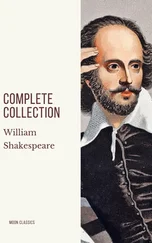
The Droeshout image, approved by Shakespeare’s colleagues after the playwright’s death as a fitting accompaniment to the collected edition of the plays, is perhaps the closest to a true resemblance. Martin Droeshout could not have been working from life, since he was only fifteen at the time of Shakespeare’s death. But he was part of a dynasty of Flemish artists living in London. His father, Michael Droeshout, had been an engraver and his uncle, Martin Droeshout, was a painter. It is possible, then, that the younger Martin Droeshout based his engraving upon an earlier likeness now lost. It is also relatively close to the image adorning the monument above Shakespeare’s tomb in the church at Stratford. That bust shows Shakespeare with a beard, which suggests that he grew it or shaved it according to mood.
The sculpture has been described by one Shakespearian as resembling that of “a self-satisfied pork butcher.” 10That it is a good likeness is not in doubt, however, because an early chronicler of Shakespeare’s Stratford believed that “the head was evidently taken from a death-mask.” 11It must have been acceptable to Shakespeare’s immediate family, who commissioned it. It was executed by Gerard Johnson, a Dutch artist who lived near the Globe in Southwark. He had ample opportunity, therefore, to study his subject. There is no reason why a great writer should not resemble a pork butcher, satisfied or otherwise, and it is at least ironic that later accounts did make him a butcher’s apprentice. He may have possessed that corpulent and ruddy glow that seems to be peculiar to English butchers. And why should he not look satisfied?
There are other portraits which claim some attention from posterity, if only because the quest for Shakespeare’s face is an unending one. They all provide varying degrees of resemblance. One painting, now known as the “Chandos portrait” (c. 1610), depicts a man in his early forties wearing a black silk doublet; he is of muddy or swarthy complexion, and his black curls lend him a gypsy or continental appearance. He is also wearing a gold earring. It was once suggested, half in earnest, that it was a portrait of Shakespeare dressed to play Shylock. The painting itself has a long and complicated history, which is as much as to say that its provenance is uncertain.
Читать дальшеИнтервал:
Закладка:
Похожие книги на «Shakespeare»
Представляем Вашему вниманию похожие книги на «Shakespeare» списком для выбора. Мы отобрали схожую по названию и смыслу литературу в надежде предоставить читателям больше вариантов отыскать новые, интересные, ещё непрочитанные произведения.




Обсуждение, отзывы о книге «Shakespeare» и просто собственные мнения читателей. Оставьте ваши комментарии, напишите, что Вы думаете о произведении, его смысле или главных героях. Укажите что конкретно понравилось, а что нет, и почему Вы так считаете.