Shakespeare
Здесь есть возможность читать онлайн «Shakespeare» весь текст электронной книги совершенно бесплатно (целиком полную версию без сокращений). В некоторых случаях можно слушать аудио, скачать через торрент в формате fb2 и присутствует краткое содержание. Год выпуска: 2005, ISBN: 2005, Жанр: Биографии и Мемуары, на английском языке. Описание произведения, (предисловие) а так же отзывы посетителей доступны на портале библиотеки ЛибКат.
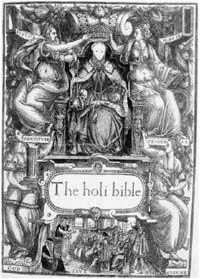
- Название:Shakespeare
- Автор:
- Жанр:
- Год:2005
- ISBN:978-0-307-49082-7
- Рейтинг книги:5 / 5. Голосов: 1
-
Избранное:Добавить в избранное
- Отзывы:
-
Ваша оценка:
Shakespeare: краткое содержание, описание и аннотация
Предлагаем к чтению аннотацию, описание, краткое содержание или предисловие (зависит от того, что написал сам автор книги «Shakespeare»). Если вы не нашли необходимую информацию о книге — напишите в комментариях, мы постараемся отыскать её.
Shakespeare — читать онлайн бесплатно полную книгу (весь текст) целиком
Ниже представлен текст книги, разбитый по страницам. Система сохранения места последней прочитанной страницы, позволяет с удобством читать онлайн бесплатно книгу «Shakespeare», без необходимости каждый раз заново искать на чём Вы остановились. Поставьте закладку, и сможете в любой момент перейти на страницу, на которой закончили чтение.
Интервал:
Закладка:
It is well enough known that Shakespeare was connected with the Essex “circle.” His past and present associations with Southampton, with Lord Strange, with the Countess of Pembroke, with Samuel Daniel, with Sir John Harington, and with others, make this clear. But the events of early 1601 might have placed him in real jeopardy. The Earl of Essex believed himself to be the victim of manifold court plots organised by Sir Robert Cecil, and decided to strike first lest he be struck. So, together with such followers and supporters as the Earl of Southampton, he determined to seize the court itself. He would then free the queen of her advisers, and eventually secure the succession of James I. He had ill-advisedly believed that the populace of London would rise up and take sides with him when he declared his intentions. One way of alerting the populace was to stage a play at the Globe on the day before the insurrection.
On that day, Saturday 7 February 1601, some of Essex’s supporters – among them Lord Monteagle, Sir Christopher Blount and Sir Charles Percy-dined at Gunter’s eating house by the Temple. Lord Monteagle was a staunch Roman Catholic, but he was a loyalist who would later be instrumental in uncovering the “gunpowder plot”; Sir Christopher Blount had formerly been the Earl of Leicester’s Master of Horse and was Essex’s stepfather; Sir Charles Percy was the scion of a famous Catholic family from the North of England. After dinner they took a wherry across the Thames and walked into the Globe Theatre before the start of that afternoon’s play. It was an especially commissioned performance. On the day before some of their number had visited the same theatre, “tellyng them [the players] that the play wold be of Harry the Fourth,” 2the monarch who had deposed Richard II. In a later account of Essex’s treason, written by Francis Bacon, the play is described as “the play of deposing King Richard the second”; 3in other words it contained the scenes of Richard’s forced abdication that had not appeared in the printed version of the drama. The intention of Essex’s supporters was clear enough. The power of the theatre could be used to justify their removal of Elizabeth. It could be used, too, to strengthen their resolve. Whatever the excuses and tergiversations of the Earl of Essex later, it was a clear case of “imagining” the sovereign’s death.
One of the players, Augustine Phillips, later deposed that he “and hys fellows were determyned to have played some other play, holdyng that play of Kyng Richard to be so old amp; so long out of vse as that they shold have small or no Company at yt.” 4This was simply an excuse, born out of fear. Love’s Labour’s Lost and The Comedy of Errors , plays written before Richard II , were both performed at much later dates. At which point it seems that one of Essex’s allies, Sir Gilly Meyrick, offered to pay 40 shillings for this uniquely commissioned production. The players acquiesced, and accepted the offer. In hindsight this was not a wise decision, since they could have been implicated in the charge of treason. They may have had no advance notice of Essex’s plans and could have claimed that they innocently took part in the production; yet in the highly charged atmosphere of the time, when rumour and counter-rumour were flying about the city, this was highly unlikely. They were afraid. They could hardly have done it simply for the additional payment of 40 shillings. It is much more likely that they were bullied and cajoled, perhaps even threatened, by these grandees. Note that the lords were reported “telling,” not asking, the Lord Chamberlain’s Men to perform that play. It is an indication of the ready professionalism of the players, however, that they were able to reproduce the play from memory after a long period in abeyance. Richard II had been written and played six years before and, although it had no doubt been revived in the interim, its reconstruction at such short notice is still a very remarkable achievement.
In the event Essex’s uprising failed disastrously. The people did not rise to his banner, as he had hoped, and the earl (together with Southampton and other followers) was besieged in his house along the Strand. He surrendered, was tried and eventually executed. Southampton would have followed him to the block, but for the pleas of his mother to the queen. Instead the young nobleman was indefinitely incarcerated in the Tower. Such was the fate of Elizabeth’s enemies and false friends.
Of course the production of the play had not gone unnoticed by the authorities. Augustine Phillips, who seems to have been equivalent to the business manager of the company, was ordered to appear before an examining committee of three chief justices. There he explained the circumstances, and the payment of 40 shillings. It should be remembered that, four years before, the actors and writers of The Isle of Dogs had been summarily imprisoned and perhaps even tortured for performing a “seditious” play. On this hypothetically more dangerous occasion, however, the Lord Chamberlain’s Men were relieved of any fine or penalty. They were effectively “let off” with perhaps a reprimand.
Many theatrical historians have puzzled over this lenity. But if the Lord Chamberlain’s Men had indeed been threatened and cajoled by the plotters, the members of the committee may well have decided to exercise clemency. Tudor law is often regarded as inconsistent and draconian, but there was still a measure of fair play and common sense in its decisions. The players also had a reliable patron in the Lord Chamberlain, a loyal and trusted servant of the queen to whom he was also closely related. If they had been charged with treachery would not the shadow of suspicion, however unjustified, have fallen upon him also? That was unthinkable. Others have suggested that the good report of Francis Bacon, a friend of the players, saved the company. It is also evident that Elizabeth herself regarded the Lord Chamberlain’s Men with particular favour – especially, perhaps primarily, because of their Shakespearian repertoire. So, by the grace of God and Her Majesty, Shakespeare and his fellows avoided the prison or even the gallows. In fact, a week after Phillips’s interrogation, the Lord Chamberlain’s Men were once more playing before the queen. On the day after that performance, Essex was beheaded.
CHAPTER 70
Cut I Am in Their Bosomes
The affairs of Stratford also claimed Shakespeare’s attention. For a moment his wife, Anne, re-enters the historical record in a minor role. The will of a neighbouring husbandman, Thomas Whittington of Shottery, left 40 shillings to the poor of Stratford “that is in the hand of Anne Shaxspere, wyf unto Mr. Wyllyam Shaxpere, and is due debt unto me.” 1It has been suggested that Anne Shakespeare had been forced to borrow money from Whittington, whom she had known since childhood, because her husband was not maintaining her in proper fashion. This is most unlikely. She was ensconced in New Place, one of the most valuable properties in the town, and it would have been a disgrace to the name and reputation of the whole Shakespeare family if she had not been given the means both for its upkeep and for her standing in the town. All the evidence suggests that Shakespeare, far from being a negligent or parsimonious husband, regularly sent relatively large sums of money to his family. What other way would there have been of maintaining appearances, one of the essential characteristics of a sixteenth-century gentleman? The will in fact means only that Anne Shakespeare owed Whittington 40 shillings in a technical sense; it is likely that he gave the sum to her for safe-keeping, confirming the impression of her as a reliable and trustworthy housekeeper.
Читать дальшеИнтервал:
Закладка:
Похожие книги на «Shakespeare»
Представляем Вашему вниманию похожие книги на «Shakespeare» списком для выбора. Мы отобрали схожую по названию и смыслу литературу в надежде предоставить читателям больше вариантов отыскать новые, интересные, ещё непрочитанные произведения.











Обсуждение, отзывы о книге «Shakespeare» и просто собственные мнения читателей. Оставьте ваши комментарии, напишите, что Вы думаете о произведении, его смысле или главных героях. Укажите что конкретно понравилось, а что нет, и почему Вы так считаете.