Dan Hampton - Viper Pilot
Здесь есть возможность читать онлайн «Dan Hampton - Viper Pilot» весь текст электронной книги совершенно бесплатно (целиком полную версию без сокращений). В некоторых случаях можно слушать аудио, скачать через торрент в формате fb2 и присутствует краткое содержание. Город: New York, Год выпуска: 2012, ISBN: 2012, Издательство: William Morrow, Жанр: Биографии и Мемуары, nonf_military, на английском языке. Описание произведения, (предисловие) а так же отзывы посетителей доступны на портале библиотеки ЛибКат.
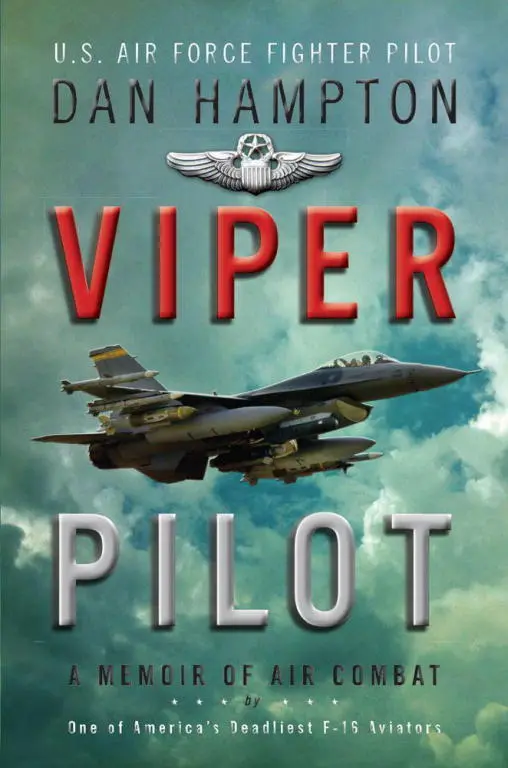
- Название:Viper Pilot
- Автор:
- Издательство:William Morrow
- Жанр:
- Год:2012
- Город:New York
- ISBN:978-0-06-213035-8
- Рейтинг книги:4 / 5. Голосов: 1
-
Избранное:Добавить в избранное
- Отзывы:
-
Ваша оценка:
Viper Pilot: краткое содержание, описание и аннотация
Предлагаем к чтению аннотацию, описание, краткое содержание или предисловие (зависит от того, что написал сам автор книги «Viper Pilot»). Если вы не нашли необходимую информацию о книге — напишите в комментариях, мы постараемся отыскать её.
is the electrifying memoir of one of the most decorated F-16 pilots in American history: U.S. Air Force Lieutenant Colonel Dan Hampton, who served for twenty years, flying missions in the Iraq War, the Kosovo conflict, and the first Gulf War.
Both a rare look into the elite world of fighter pilots and a thrilling first-person account of contemporary air combat,
soars—a true story of courage, skill, and commitment that will thrill U.S. Special Forces buffs, aviation and military history aficionados, and fans of the novels of Tom Clancy and Dale Brown.
Viper Pilot — читать онлайн бесплатно полную книгу (весь текст) целиком
Ниже представлен текст книги, разбитый по страницам. Система сохранения места последней прочитанной страницы, позволяет с удобством читать онлайн бесплатно книгу «Viper Pilot», без необходимости каждый раз заново искать на чём Вы остановились. Поставьте закладку, и сможете в любой момент перейти на страницу, на которой закончили чтение.
Интервал:
Закладка:
“TORCH Three… defending SA-3 from the south!”
That was the other F-4G in our four-ship. I couldn’t see him but I did see two more SAMs lift off. I was much closer now and could plainly see Mosul. The Euphrates River was almost turquoise in the early-morning light, and I could see there were cars moving across the four bridges. The city center was green with a big park of some kind. Gray suburbs stretched out in all directions except to the southwest. In that direction, on the west bank of the river, was the airfield. A tan bar of concrete paralleling the Euphrates, it was a huge military complex protected by MiGs, Triple-A, and SAMs. It was our target, and if we destroyed the hangars and runway today, then there’d be no air threat from Mosul as we fought south, toward Baghdad. The Weasel’s mission was to suppress or kill the SAM sites so the strikers could drop their bombs on the airfield.
Orca didn’t answer, but I saw his F-4 crank up and over to point at the airfield and the SAMs. This time, his HARM came off and dove straight at the winding trails of smoke.
He’d turned into my flight path to shoot, so I yanked the nose up and barrel-rolled over him to the other side. There were jets everywhere. Far below me, like swirling gray gnats, the striker F-16s were coming off the target, twin vapor trails streaming from their wingtips. Snapping the jet upright, I leaned forward and stared down at the base. Huge cones of dust and smoke sprouted as dozens of 2,000-pound Mark 84 bombs exploded, completely obscuring the airfield.
Suddenly, flashes caught my eye and I flinched. Ahead were countless gray and black puffy spots blossoming against the pale blue sky. Anti-aircraft fire . Triple-A. I groped for the mike switch.
“Triple-A, ten o’clock… a little high.” I managed to get it in and, fortunately, my flight lead recognized my voice. That type of call did no one much good, since I’d forgotten to give a position or my own call sign.
The F-4 ramped over and I followed. By simply changing altitude, we’d confuse the gunners. At least for the next salvo.
“LASER Three is re-attacking… thirty seconds,” I heard as I finally remembered to check my fuel. One of the strikers hadn’t dropped and was going in again.
“TORCH copies,” Orca immediately responded. “We’ll cover from the east.”
I glanced up and was amazed at the number of contrails crisscrossing the sky. Thin pairs that had to come from fighters, and the much thicker ones that could only be missiles.
“LASER Three is in!”
“Two Dogs… Slapshot SA-3… Mosul,” Orca barked.
This time, much more deliberately, I turned in, refined my aim, and hosed off my remaining HARM. Pulling up and rolling toward the F-4, I was surprised to see that he continued pointing at Mosul only six miles away.
“TORCH… Magnum… Magnum…”
I frowned under the mask. What the hell was he doing? Neither of us had weapons remaining and he kept jabbing at the SAM batteries.
“Magnum… Magnum SA-3… Mosul.”
But then I learned another combat lesson. The Iraqis didn’t know we were out of missiles, and we knew they listened to our radio traffic. Maybe his bogus radio calls would force a SAM down. Orca was covering the last two-ship of strikers as they re-attacked the airfield. He was making them look and shoot at us instead of the strikers—he was Weaseling. I floated a bit high and aft so I could keep him in sight and watch the ground. Five thousand feet below me, I saw the vapor from an F-16 wingtip as it pulled off-target.
“LASER’s off-target… north for the egress.”
“TORCH has you in sight. Come off zero-three-zero.”
As I watched Orca, he pulled the Phantom’s nose up and did a big barrel-roll over the airfield. Several little orange balls zipped past and exploded just like corn popping. But after the last ten minutes, it didn’t seem like much to worry about.
As we headed north in a slow climb, I realized that we were probably the last fighters heading for the border. The Weasels have another motto—First In, Last Out. And that’s exactly what we were doing. I turned and looked back as the funnel-shaped clouds spread out over the airfield. Wispy, gray SAM contrails still hung in the air.
On the common strike frequency, I heard a pair of F-15s up above us, thumping their chests over splashing some Iraqi fighters, and I wished I’d gotten to shoot a MiG. We zoomed up above 20,000 feet and headed north toward Turkey. It was an amazing sight. The mist had burned off, and the dark green peaks along the border jutted upward against the blue sky. To the west, the light brown of the Syrian plain stretched as far as I could see. To my right, past the Zagros Range, was the blue-green smudge of Iran. Way off toward the north loomed the enormous, white-crowned peak of Mount Ararat, beyond which lay the Soviet Union.
I was exhilarated. Dropping my mask, I wiped off my face and wished I’d remembered to bring a bottle of water. And food. Tomorrow, I told myself, and jotted that down on my lineup card that had become quickly cluttered with lessons. NEVER FLY IN A STRAIGHT LINE. CHANGE ALTITUDES RANDOMLY. ATTACK WITH THE SUN BEHIND YOU IF POSSIBLE.
These things hadn’t changed since World War I. I’d been taught all of them but nothing sears in life-preserving habit patterns like combat.
Suddenly a thin, pole-shaped object shot up exactly between the F-4 and myself. For a second, I was too surprised to react. But Orca instantly weaved away to the west and I saw a string of glowing flares drop away from his tail section.
“Shit…” Weaving the other way, I also thumbed out some flares. Rolling up on my left wing, I stared down and realized what had happened. The Iraqis had lugged some shoulder-launched missiles, MANPADS, onto the 12,000-foot peaks, and they were shooting at our contrails.
Orca knew it, too, because he shoved the nose over and descended below the layer of air that caused contrails. And then we were past the peaks and into Turkey. More lessons. Don’t ever fly in the contrail layer unless you want to be seen, and never relax in enemy territory.
Exhaling, I shook my head as we headed for the air-refueling tanker track over Lake Van. What a morning. But we were back in Turkey, relatively safe and—
“CONAN One… pop-up threat… Bogey… nose fifteen… low.”
CONAN was the flight of F-15s above us.
What the fuck?
“TORCH flight… bracket… bracket!” Orca snapped and instantly rolled hard away to the west. Reflexively, I cranked away from him to the east, and we were set in a classic pincer maneuver that was supposed to force an enemy fighter to pick a side. This would expose him to the jet he didn’t attack—and then he’d die.
“CONAN… this is CHAINSAW… say again?” The AWACS controller sounded incredulous.
But we were in Turkey. How in the hell did a MiG slip past and get behind us? The tankers, I realized, as I fumbled with my mask and tried to pull my head out of my ass. The MiG must be attacking the tankers! There was no time for a radar search, so I pushed in with my left thumb and instantly brought up the “Slewable Air Combat Maneuvering” mode. This was a quick-reaction mode, utilized to point the radar at threats less than ten miles away: it would automatically lock on whatever it found.
I glanced up, saw the Eagles making contrails and eyeballed where the threat must be. Slewing the pointing cross left and down in the HUD, I let go and waited as the two F-15s began their attack. They’d called it a “Bogey” instead of a “Bandit” which meant they couldn’t positively identify it as hostile. Identification could be done with a variety of electronic systems on both the F-16 and F-15, but there hadn’t been time. So the aircraft would remain “unknown” until it could be visually identified or committed a hostile act. Like shooting at one of us.
Читать дальшеИнтервал:
Закладка:
Похожие книги на «Viper Pilot»
Представляем Вашему вниманию похожие книги на «Viper Pilot» списком для выбора. Мы отобрали схожую по названию и смыслу литературу в надежде предоставить читателям больше вариантов отыскать новые, интересные, ещё непрочитанные произведения.






Обсуждение, отзывы о книге «Viper Pilot» и просто собственные мнения читателей. Оставьте ваши комментарии, напишите, что Вы думаете о произведении, его смысле или главных героях. Укажите что конкретно понравилось, а что нет, и почему Вы так считаете.