Dan Hampton - Viper Pilot
Здесь есть возможность читать онлайн «Dan Hampton - Viper Pilot» весь текст электронной книги совершенно бесплатно (целиком полную версию без сокращений). В некоторых случаях можно слушать аудио, скачать через торрент в формате fb2 и присутствует краткое содержание. Город: New York, Год выпуска: 2012, ISBN: 2012, Издательство: William Morrow, Жанр: Биографии и Мемуары, nonf_military, на английском языке. Описание произведения, (предисловие) а так же отзывы посетителей доступны на портале библиотеки ЛибКат.
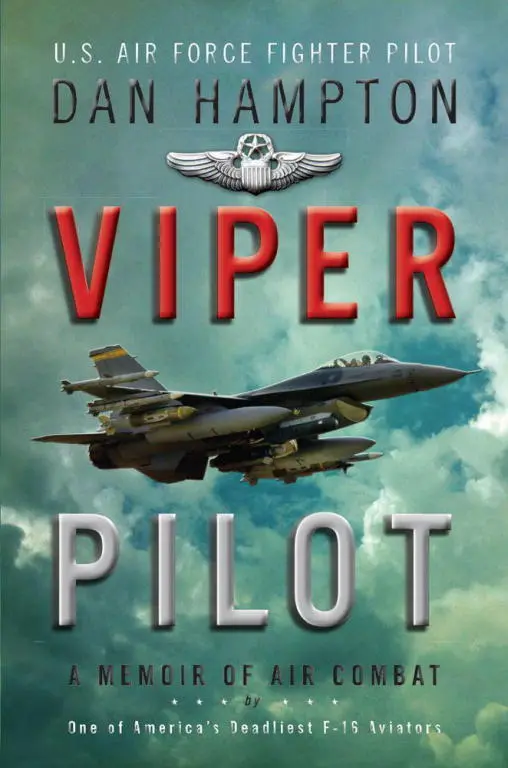
- Название:Viper Pilot
- Автор:
- Издательство:William Morrow
- Жанр:
- Год:2012
- Город:New York
- ISBN:978-0-06-213035-8
- Рейтинг книги:4 / 5. Голосов: 1
-
Избранное:Добавить в избранное
- Отзывы:
-
Ваша оценка:
Viper Pilot: краткое содержание, описание и аннотация
Предлагаем к чтению аннотацию, описание, краткое содержание или предисловие (зависит от того, что написал сам автор книги «Viper Pilot»). Если вы не нашли необходимую информацию о книге — напишите в комментариях, мы постараемся отыскать её.
is the electrifying memoir of one of the most decorated F-16 pilots in American history: U.S. Air Force Lieutenant Colonel Dan Hampton, who served for twenty years, flying missions in the Iraq War, the Kosovo conflict, and the first Gulf War.
Both a rare look into the elite world of fighter pilots and a thrilling first-person account of contemporary air combat,
soars—a true story of courage, skill, and commitment that will thrill U.S. Special Forces buffs, aviation and military history aficionados, and fans of the novels of Tom Clancy and Dale Brown.
Viper Pilot — читать онлайн бесплатно полную книгу (весь текст) целиком
Ниже представлен текст книги, разбитый по страницам. Система сохранения места последней прочитанной страницы, позволяет с удобством читать онлайн бесплатно книгу «Viper Pilot», без необходимости каждый раз заново искать на чём Вы остановились. Поставьте закладку, и сможете в любой момент перейти на страницу, на которой закончили чтение.
Интервал:
Закладка:
At least once during the trip, there would be a mass exodus to the Spanish Riviera—Costa Brava. Americans with wild, long shorts and Europeans wearing extra-small Speedos would mix on topless beaches, burn in the sun, and watch girls. I’d like to say the beaches were filled with young Penthouse Pet types, but it just wasn’t true. There’s really nothing like a saggy, half-naked, middle-aged German housewife to kill the picture. Still, nothing’s perfect.
We’d also have to spend at least two days up at Bardenas Range in the north of Spain. A qualified fighter pilot had to act as the Range Control Officer (RCO), a duty that inevitably fell to the lieutenants and younger captains. The RCO was there as the approval authority for aircraft to drop bombs and to strafe with their cannons. He was also on hand to deal with aircraft emergencies and to officially score the bombs that each pilot dropped. This was a big deal, since Mission Qualification was the life blood of a fighter squadron. That and Jeremiah Weed whiskey.
The Air Force had a detachment permanently assigned at the range to maintain targets, scoring equipment, and facilities. They all seemed to be Hispanic and loved being up there where they could speak the mother tongue. The senior sergeant was a guy named Vic. I never knew his last name, but we always said “stick with Vic.” Vic would shuttle us around, take us out to dinner and to see the sights. He also helped perform one of the more harebrained stunts in my short career. Running with the bulls in Pamplona.
Five hundred years ago, the merchants of Navarre sold their cattle at a market in Pamplona. They would move the beasts through the narrow streets to holding pens and await the sale. To speed things up, they’d “run” the animals through the streets. Eventually, some young, brainless Alpha-male types, undoubtedly fortified by Tinto, decided to see if they could outrun the bulls. Over time this became a rite of passage and a tradition. So, during the Feast of San Fermin, a weeklong festival emerged and the bulls were run every morning. Any excuse for a party, right?
Technically, we were prohibited from doing this, because several hundred people were hurt each year and a few were even killed. But there’s no quicker way to provoke a fighter pilot than to tell him something is prohibited. I remember the fireworks and the thousands of red bandannas and flags flying everywhere. Some of the locals were barefoot and wore baggy peasant outfits, all white, no doubt to see the blood better. I also recall sprinting with the crowd (all men and all young enough to be that stupid) through the narrow, uneven streets. This wasn’t so bad, I thought, then something bobbed past my head at eye level and I realized it was a horn. So I zigged over to the nearest wall and managed to scramble up most of the way. A few hands appeared to help me into the beautiful, and extremely thorny, rosebushes on the other side.
So why risk your eyes and balls, not to mention your career and life, to dash around in front of enraged bulls? Because it was there, of course. Besides, in college I’d read The Sun Also Rises, and if Ernest Hemingway had done it then I had to do it as well. So much for the positive effects of literature in higher education.
All in all, it was a terrific time. Fast jets, European travel, and the constant challenge of staying alive. Other life-altering events, like marriage, children, and war, were still in the future. I had my hands full but I also had the advantages of first-rate instructors and a young squadron commander who took an interest in my career. I upgraded to four-ship flight lead as a lieutenant and was approved to begin instructor-pilot training in the fall of 1990.
That all changed rather quickly in August, when a dictator I’d never heard of, named Saddam Hussein, invaded Kuwait. As I tried to locate Iraq on a map, vacations were canceled and all upgrades were halted. A few of us who spoke French were sent to France to talk with pilots who’d actually trained the Iraqis. We came back smelling like cheese but feeling relieved. I mean, Arabs taught by Frenchmen? Come on. Tactical analyses appeared from Nellis AFB, CIA country studies showed up from someplace in the Virginia countryside, and we all got busy as the future rapidly became the present.
The Wild Weasels were going back to war.
3
The Elephant
January 19, 1991
Mosul, Northern Iraq
“TORCH… FENCE IN.”
My hands darted around the cockpit, performing the FENCE, or pre-combat check of my weapons and equipment. I eyeballed the chaff and flare settings, turned up the volume on the radar-warning receiver, tightened my seat straps, and ran through all my loaded weapons. Staring at the big master-arm switch for a long second, I put my thumb on it. Glancing around to make sure it all was where it should be, I gently moved it to the ARM position—my various weapons switches were now “hot.” Mortally afraid of screwing up, I carefully avoided the pickle button that would release my bombs and kept my finger off the trigger.
Sighing a little, I stared out at the big F-4G a mile and a half to my left. Beyond him by another mile was another Phantom/F-16 pair. We were spread out in what was called a fluid-four formation. An ideal combat formation, this kept lots of space between aircraft for maneuvering and was extremely difficult for an enemy to see all of us. It was a beautiful, absolutely clear morning covered by a powder-blue sky with hundreds of miles of visibility. Behind us, the big KC-135 tankers were wheeling back in dignified left-hand turns over the snow-covered mountains of eastern Turkey. We were on our own.
Ahead lay the jagged peaks of the Zagros mountain range and, just beyond, through the Zahko Pass, was Indian Country—Iraq. A nation most of us hadn’t cared about or devoted the least thought to until the previous August. Saddam Hussein, in a monumental error in judgment, had invaded Kuwait and threatened the Ghawar oil fields in Saudi Arabia. I really couldn’t have cared less. I was going to war and, with the ignorance of the inexperienced, all I could see was a grand adventure.
And it was exciting. After four years of college and nearly three more of advanced flying training, I was finally on the cutting edge. Here, on the front end of the first combat strike package into Iraq from the northern front, exactly in the right place, at the right time, and with the right jet. Despite my cockiness, my breathing matched my heart rate as the mountains slid away under my wings and the great plain of northern Iraq opened up before me. Contrails appeared overhead as the escort F-15s zoomed up above 30,000 feet and headed south to deal with any MiGs.
“CHAINSAW, this is RAZOR One. Pushing… picture.”
RAZOR One was the Mission Commander. He was asking the orbiting AWACS what the situation, or picture, was south of us in Iraq. I’d heard communications like this all the time in training. It was familiar and comforting. What happened next was not.
“RAZOR… picture… three groups, Bull’s-eye One-Five-Zero for forty-five, angels medium… northbound. Bandits.”
Every tactical area had a common reference point on the ground called a Bull’s-eye. It could be geographically significant, like a mountaintop, or tactically significant, like an airfield. In any event, the idea was that all aircraft could give their compass bearing and distance from the point and everyone listening would have a decent idea of their position. Today the Bull’s-eye was the city of Mosul.
Obviously, the bad guys didn’t know this. We also generally used special radios, called HAVE QUICK radios, that the enemy couldn’t listen to. The HAVE QUICK frequencies changed every day and, once loaded properly, would jump around in an unbreakable coded sequence. Anyone listening would hear only broken bits of words, if anything. I froze for an instant as my brain processed that there were three distinct groups of unknown enemy fighters, called Bandits, southeast of Mosul and heading north.
Читать дальшеИнтервал:
Закладка:
Похожие книги на «Viper Pilot»
Представляем Вашему вниманию похожие книги на «Viper Pilot» списком для выбора. Мы отобрали схожую по названию и смыслу литературу в надежде предоставить читателям больше вариантов отыскать новые, интересные, ещё непрочитанные произведения.






Обсуждение, отзывы о книге «Viper Pilot» и просто собственные мнения читателей. Оставьте ваши комментарии, напишите, что Вы думаете о произведении, его смысле или главных героях. Укажите что конкретно понравилось, а что нет, и почему Вы так считаете.