Ed Macy - Apache
Здесь есть возможность читать онлайн «Ed Macy - Apache» — ознакомительный отрывок электронной книги совершенно бесплатно, а после прочтения отрывка купить полную версию. В некоторых случаях можно слушать аудио, скачать через торрент в формате fb2 и присутствует краткое содержание. Город: London, Год выпуска: 2008, ISBN: 2008, Издательство: HarperPress, Жанр: Биографии и Мемуары, nonf_military, на английском языке. Описание произведения, (предисловие) а так же отзывы посетителей доступны на портале библиотеки ЛибКат.
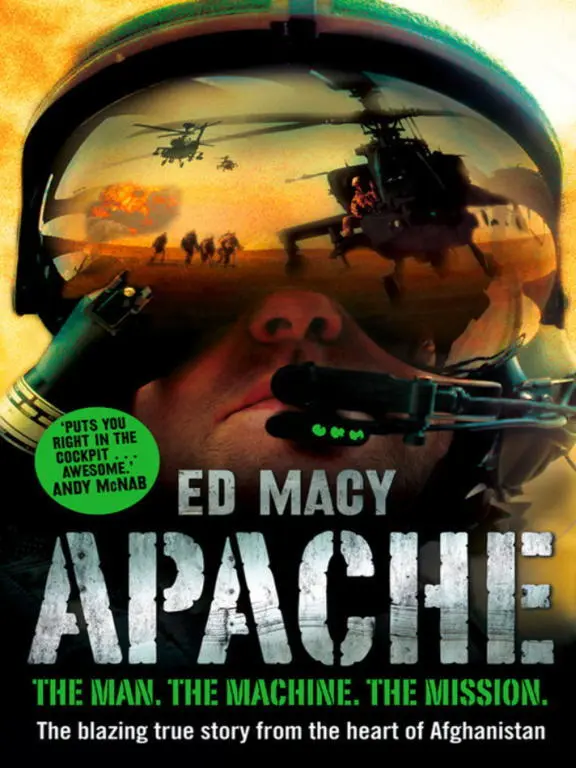
- Название:Apache
- Автор:
- Издательство:HarperPress
- Жанр:
- Год:2008
- Город:London
- ISBN:978-0007307470
- Рейтинг книги:5 / 5. Голосов: 1
-
Избранное:Добавить в избранное
- Отзывы:
-
Ваша оценка:
Apache: краткое содержание, описание и аннотация
Предлагаем к чтению аннотацию, описание, краткое содержание или предисловие (зависит от того, что написал сам автор книги «Apache»). Если вы не нашли необходимую информацию о книге — напишите в комментариях, мы постараемся отыскать её.
http://www.harperplus.com/apache
Apache — читать онлайн ознакомительный отрывок
Ниже представлен текст книги, разбитый по страницам. Система сохранения места последней прочитанной страницы, позволяет с удобством читать онлайн бесплатно книгу «Apache», без необходимости каждый раз заново искать на чём Вы остановились. Поставьте закладку, и сможете в любой момент перейти на страницу, на которой закончили чтение.
Интервал:
Закладка:
Now both hands had been untied – we could shoot pretty much at our own discretion as long as we were comfortable we were killing people that we knew had been up to no good. They didn’t even need to be armed any more.
The Boss whispered, ‘ That’s more like it.’
His ever more infamous trigger finger was obviously itching again. I nodded; I didn’t want Alice to catch us talking.
The new instructions would make life a lot easier for us all. It wasn’t quite like war fighting as yet, but the gloves were certainly off. But Alice had more for us. We learned why the generals had taken these steps.
‘This is not the enemy you were fighting in the summer. They are shrewder and meaner. They’ve learned good lessons from the pounding the Apaches have given them. As the days pass they are attempting fewer and fewer full-on assaults. They’re moving to more cunning asymmetric attacks.’
We looked blank.
‘Asymmetric. It’s the new buzz word in the int world. Means suicide bombers, roadside bombs, that sort of thing. Less manpower for greater effect.’
I remembered the suicide bombing just a couple of days before we’d arrived. I’d seen it on the news. It was the first successfully launched on us in Helmand, and it had killed a young commando, Marine Gary Wright. The bomber had rushed up to his Snatch Land Rover as it drove through Lashkar Gah. He was top cover. He wouldn’t have known anything about it.
‘For you guys in the air, it means the enemy have become a lot harder to locate. They use more cover from view and they’re pretending to be locals all the time.
‘The Taliban’s make-up is also changing – which has helped increase their competence, we think. It’s the poppy season now, so there are fewer Tier Three locals but more Tier Two jihadi foreigners. One estimate I saw out of Kandahar the other day put the Tier Twos at 60 per cent of the Taliban’s total manpower. These guys are smarter, mostly better trained and, as some of you have already seen, definitely more committed.’
The mortar team up at Gereshk must have been Tier Two.
‘Also, be aware that their desire to take out an attack helicopter is still very high. Regular intercepts confirm that. They really hate you. But it’s more than that; they know it would do a huge amount for their recruiting to show that the thing that does them most damage is defeatable.’
A thoughtful silence hung over the room. A total of eight US Apaches had gone down in Iraq from hostile action in the four years the Americans had been fighting there. The most recent had been hit the day we got on the plane at Brize Norton – a stark and timely reminder that we weren’t invincible. An AH64D had crashed north of Baghdad, killing both crew.
Helicopters were vulnerable in every theatre of war; they always have been. They were big old targets to aim at, and full of highly flammable materials. A British Lynx had been shot down over Basra by an Iranian-supplied SAM in May, killing all five people on board, including a talented young female RAF officer not unlike Alice. Taliban and al Qaeda fighters had managed to bring down American Chinooks, Black Hawks and even two US Apaches in Afghanistan in the five years since the post-9 / 11 invasion. None of us wanted to be the first Brit on the list.
‘Unfortunately, one thing hasn’t changed – there is still no shortage of them.’
Alice leaned over the bird table to make her final point.
‘Only speed and cunning will allow you to catch them with their pants down now. And before they catch you.’
Alice’s prognosis was sobering, but it didn’t dent the squadron’s upbeat mood during the early days of the tour. Despite our uncomfortably swift return, there was a buzz of anticipation. The new pilots were excited, and that rubbed off on all of us. None of the rookies caused more of a stir than Charlotte. She was the talk of Camp Bastion.
A young captain with long blonde hair, Charlotte had come straight out of Sandhurst to be streamlined onto the Apache programme. This was her first tour of duty. She was the first woman ever to fly a British Apache, and now the first to do so on operations. A few days into the tour, she became the first British woman to kill in an Apache. Getting to where she had done was no mean feat, and had taken a huge amount of grit and hard work.
A lot of the old hands didn’t think a woman would be up to fighting an Apache, and I was one of them. We didn’t think she’d be able to take the immense physical pressure in the cockpit. She proved us completely wrong. She was a great pilot and had no problems with pulling the trigger; so much so, the instructors qualified her as a front-seater.
Remarkably, she hadn’t sacrificed one ounce of femininity in the process. She was warm-hearted, high cheek boned and fitted her combats more appealingly than I’ve ever managed to. She was also engaged to a fast jet jock, and wore his huge rock on her finger – largely to keep the rats away.
You’d often see marines wistfully pointing out Charlotte in the cookhouse. A good-looking blonde, AND she flew the world’s meanest killing machine. For a spunky young commando, she was too good to be true.
All in all, our lone female flier was a great addition to the team. But I put most of the good squadron vibe down to the Boss’s management style. By the end of the first week, he had introduced two more initiatives that made morale soar.
Every evening brief, the crew chief technician read out each airframe’s serviceability and the number of flying hours it had left. ‘XZ172: serviceable, fifteen hours clear. XZ179: ten hours clear but will be pulled offline at 7am. XZ193: twelve hours clear, and it’s your spare for tonight. XZ196…’ and so on.
It made for dull listening. One of the techs came up with the idea of giving the aircraft names, as the RAF had in World War Two. The Boss put it to the floor. A Groundie suggested famous Porn Stars – a suitable tribute to the lifeblood of deployed armies. It was passed unanimously.
Out went letters and numbers; in came Heather Brook, Tabitha Cash, Lolo Ferrari, Jenna Jameson, Tera Patrick, Taylor Rain and Sylvia Saint. Utterly childish, but it gave us endless hours of banter with the techs as we climbed out of the aircraft on the flight line to announce: ‘I’ve just spent three hours inside Lolo Ferrari, and she goes like a belt-fed Wombat.’
Just to show the Army Air Corps wasn’t sexist, Apache XZ204 was renamed Ron Jeremy (the fastest dick in Hollywood). We didn’t want the female Groundies to feel left out. It opened up a hundred more elbow-nudging double entendres.
The second of the Boss’s morale boosters was the ordination of every pilot’s tactical callsign. We used the Ugly callsign to talk to each other over a secure military net when we were airborne. To summon each other around the camp, we had insecure personal walkie-talkies. Broadcasting our real names over them was a massive no no, as anyone with a cheap Motorola radio could be listening in.
On the first tour, we just used the acronyms of our official job titles: OC, EWO, QHI, etc. The Boss decided to have some fun. He called a meeting of all the pilots to come up with more amusing tactical callsigns.
It took place one night in the Tactical Planning Facility, a soundproof metal Portakabin round the back of the JHF tent where we went if we needed to discuss something securely. A five-foot-square screen was rigged up in it for viewing the gun tapes during the sortie debriefs. The only problem with the place was temperature control: like our thunderbox rims, its metal shell turned it into a sauna in the summer and a freezer in the winter. But in November it was great.
There were five or six comfy chairs in the TPF – not enough for sixteen bums. There was always a race to get them whenever a pilots’ briefing was called. If you were too slow, you had to sit on a hard chair or just perch. We all made a brew and sat round in a big circle.
Читать дальшеИнтервал:
Закладка:
Похожие книги на «Apache»
Представляем Вашему вниманию похожие книги на «Apache» списком для выбора. Мы отобрали схожую по названию и смыслу литературу в надежде предоставить читателям больше вариантов отыскать новые, интересные, ещё непрочитанные произведения.







Обсуждение, отзывы о книге «Apache» и просто собственные мнения читателей. Оставьте ваши комментарии, напишите, что Вы думаете о произведении, его смысле или главных героях. Укажите что конкретно понравилось, а что нет, и почему Вы так считаете.