Ed Macy - Apache
Здесь есть возможность читать онлайн «Ed Macy - Apache» — ознакомительный отрывок электронной книги совершенно бесплатно, а после прочтения отрывка купить полную версию. В некоторых случаях можно слушать аудио, скачать через торрент в формате fb2 и присутствует краткое содержание. Город: London, Год выпуска: 2008, ISBN: 2008, Издательство: HarperPress, Жанр: Биографии и Мемуары, nonf_military, на английском языке. Описание произведения, (предисловие) а так же отзывы посетителей доступны на портале библиотеки ЛибКат.
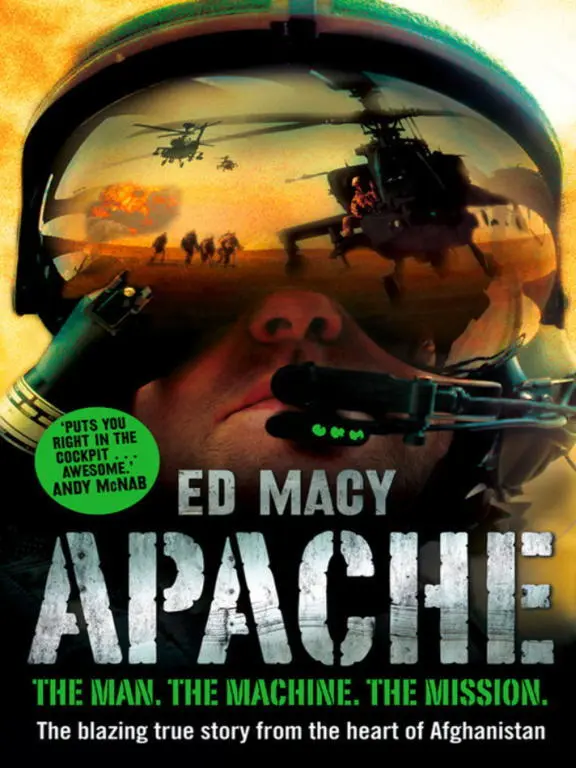
- Название:Apache
- Автор:
- Издательство:HarperPress
- Жанр:
- Год:2008
- Город:London
- ISBN:978-0007307470
- Рейтинг книги:5 / 5. Голосов: 1
-
Избранное:Добавить в избранное
- Отзывы:
-
Ваша оценка:
Apache: краткое содержание, описание и аннотация
Предлагаем к чтению аннотацию, описание, краткое содержание или предисловие (зависит от того, что написал сам автор книги «Apache»). Если вы не нашли необходимую информацию о книге — напишите в комментариях, мы постараемся отыскать её.
http://www.harperplus.com/apache
Apache — читать онлайн ознакомительный отрывок
Ниже представлен текст книги, разбитый по страницам. Система сохранения места последней прочитанной страницы, позволяет с удобством читать онлайн бесплатно книгу «Apache», без необходимости каждый раз заново искать на чём Вы остановились. Поставьте закладку, и сможете в любой момент перейти на страницу, на которой закончили чтение.
Интервал:
Закладка:
We’d often shoot a quick basket in the JHF. It was a handy way of resolving any residual disputes about the winner of Apache Triv and confirming that sortie’s Piss Boy. ‘Double or quits,’ Billy would offer if he’d lost. But there was no dispute that afternoon. Billy’s deviousness had triumphed again. Carl and I signed the aircraft back in with the crew chief and returned the start-up keys. Then the four of us trooped up to the JHF.
The Boss had forgotten his generous offer, so I ended up making the brews.
‘Hey Piss Boy, one coffee Whoopie Goldberg and Carl would like a tea Julie Andrews.’ Army slang: black nun and white nun.
We filed into the briefing room. Every engagement was debriefed thoroughly for fresh enemy intelligence and to learn lessons from our own combat skills. We played the relevant moment from the gun tapes from each Apache that opened fire.
The Boss, the Chief of Staff or the Operations Officer sat in on every debrief to confirm each kill was lawful. Every round we put down was recorded. We could never get away with a cover-up so we had to be super sure about what we were doing. It also provided closure on the sortie for the crew if it had been a bloody one.
Nobody else was normally allowed into the debriefs because we didn’t do Kill TV. Occasionally we’d invite the Groundies up to view some non-gory sequences as a morale booster. It really worked. ‘Yes!’ one of them would call out gleefully. ‘I loaded that Hellfire!’
Later on, I would watch the gun tapes on the computer to analyse shooting standards and the weapons’ performances. We reached the point the Boss and I began our rocket run-in on the copse. I was dreading what came next.
‘Just one second – pause it there…’
The Boss ducked out of the room. Twenty seconds later, he burst back in, followed by every single member of the squadron he could find in the JHF or the JOC – about twenty-three of them in total.
‘Right. The Weapons Officer would like to show you exactly how to fire a pair of Flechette rockets. Play the tape please.’
There was no point in trying to explain. None of them would have believed me. I tried diversion tactics. ‘What about the Boss? He went through 160 cannon rounds to get his target!’
It was too late. The room erupted with laughter. None of them listened to a word I said.
‘Play Mr Macy’s rockets again, play Mr Macy’s rockets again,’ they hollered.
Excruciating. I just had to man up and take it on the chin.

5. ALICE, TRIGGER, FOG AND ROCCO
The next morning, our intelligence officer gave the squadron pilots her warts and all situational brief. It lasted ninety minutes, and it brought us right up to date on Operation Herrick.
Everyone listened to intelligence briefs in absolute silence; we couldn’t afford not to. Especially when they were given by Alice. She was not a woman to cross. We all made sure we were in the JHF tent in good time before she started.
Alice was attached to us as an RAF reservist, and she was a big hit. Like Kev Blundell, she took no shit from anyone. Unlike Kev, she was tall and auburn-haired, and, if the occasion demanded, had the temperament to go with it. She was a consummate professional and knew her int inside out.
Alice was lovely; her father owned a plantation somewhere, and she was always chomping on bags of walnuts he’d sent out to her. She’d crack them with her bare hands. She was also immensely clever and highly educated, with at least three different degrees. Alice didn’t need to be in a war zone for a single second. She could have been back at home making a fortune in her civvy job, selling microwave technology to the military. Instead, she’d volunteered for the tour because she wanted to ‘do something interesting’.
Alice won me over the very first day we’d met in the JHF during the handover. She’d listened in respectful silence to the Boss’s long and slightly lugubrious speech – designed entirely to impress her – about the feats he’d achieved inside the Apache cockpit. The Boss’s finale was his Top Gun triumph. He waited for the inevitable oohs and aahhs.
Alice just smiled politely and said: ‘That’s all very good, sir. But I bet you can’t lick your own nipples. I can.’ She’d cracked another walnut and walked away.
Alice had a lot of news for us. As the Helmand campaign had gradually evolved, the enemy were evolving too. The Task Force’s footholds in the north were becoming more substantial. Troops were just beginning to move out, albeit gingerly, on exploratory patrols from the district centres and platoon houses in which they had been holed up all summer. But they were paying for it in blood. A total of twenty-four British servicemen had been killed since we’d left – fourteen of them in the Nimrod air crash near Kandahar. And two-thirds of the province – the far north and its entire southern half – had yet to be touched.
‘Everyone now accepts that it’s going to be a very, very long fight.’
The most substantial strategic change was the establishment of a new district centre in the town of Garmsir, taking the tally back up to five. Fifty-five kilometres from Helmand’s capital Lashkar Gah, Garmsir was the most southerly point of the province that British troops had penetrated. Everything below it was uncharted territory.
‘Literally uncharted,’ Alice said. ‘No maps have ever been drawn of the 120-mile sweep down to the Pakistan border. Not even the Afghan police go there. They used to, but they had a nasty habit of coming back without their heads.’
The Paras had pushed a few exploratory patrols down to Garmsir in September. Each time they were met by fierce opposition, and had to vacate the town after only a few days.
Garmsir was strategically important for both sides. It was the gateway into and out of the province for the Taliban as well as the opium trade. It was a geographical choke point where the Green Zone was at its thinnest. Everything that didn’t want to get picked off by Coalition air power in the desert had to pass through the place.
If we were ever to make progress in the south, we needed a permanent footprint in Garmsir. So the marines launched Operation Anthracite at the start of October 2006, to set up a DC in an old military barracks in the town. Alice revealed that the man given the job of expanding influence in the south was Lieutenant Colonel Rob Magowan, who commanded a 500-strong assortment of ISTAR units, known as the I X Battlegroup.
‘The what?’ someone asked.
‘Information eXploitation, a new unit; they gather and exploit Taliban int.’
But Garmsir wasn’t going well. The Taliban were enraged by the new arrivals, and were doing all they could to oust them. The DC’s occupying force, a company of 120 Royal Marines, had been pinned down there ever since they’d arrived. Under attack day and night, barely able to step outside the decaying base, they stood no chance of dominating the ground around them.
‘Like the worst days of Sangin,’ Alice said.
It was siege warfare, the marines prisoners in their own castle.
‘Now here’s the good news.’ Alice handed out a photocopied stack of lengthy crib sheets. ‘The specific instructions on when you can open fire have been changed. You’ll be pleased to see you’ve got a lot more leeway. Have a good read of this.’
I scanned Alice’s crib. It was welcome news indeed. The powers that be had finally dispensed with the myth that Helmand was a tree-hugging mission.
When we’d first arrived the instructions were as strict as they’d been in Northern Ireland: rounds had to be practically coming in on the Paras before we could engage. Once it had all kicked off at the district centres, we were allowed to attack first on a few occasions as long as it was to save life. But that still left one hand tied behind our back.
Читать дальшеИнтервал:
Закладка:
Похожие книги на «Apache»
Представляем Вашему вниманию похожие книги на «Apache» списком для выбора. Мы отобрали схожую по названию и смыслу литературу в надежде предоставить читателям больше вариантов отыскать новые, интересные, ещё непрочитанные произведения.







Обсуждение, отзывы о книге «Apache» и просто собственные мнения читателей. Оставьте ваши комментарии, напишите, что Вы думаете о произведении, его смысле или главных героях. Укажите что конкретно понравилось, а что нет, и почему Вы так считаете.