Ed Macy - Apache
Здесь есть возможность читать онлайн «Ed Macy - Apache» — ознакомительный отрывок электронной книги совершенно бесплатно, а после прочтения отрывка купить полную версию. В некоторых случаях можно слушать аудио, скачать через торрент в формате fb2 и присутствует краткое содержание. Город: London, Год выпуска: 2008, ISBN: 2008, Издательство: HarperPress, Жанр: Биографии и Мемуары, nonf_military, на английском языке. Описание произведения, (предисловие) а так же отзывы посетителей доступны на портале библиотеки ЛибКат.
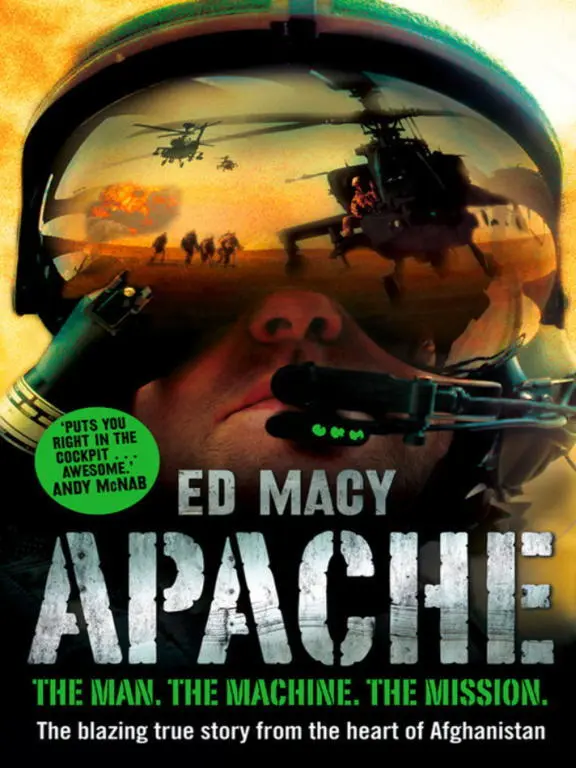
- Название:Apache
- Автор:
- Издательство:HarperPress
- Жанр:
- Год:2008
- Город:London
- ISBN:978-0007307470
- Рейтинг книги:5 / 5. Голосов: 1
-
Избранное:Добавить в избранное
- Отзывы:
-
Ваша оценка:
Apache: краткое содержание, описание и аннотация
Предлагаем к чтению аннотацию, описание, краткое содержание или предисловие (зависит от того, что написал сам автор книги «Apache»). Если вы не нашли необходимую информацию о книге — напишите в комментариях, мы постараемся отыскать её.
http://www.harperplus.com/apache
Apache — читать онлайн ознакомительный отрывок
Ниже представлен текст книги, разбитый по страницам. Система сохранения места последней прочитанной страницы, позволяет с удобством читать онлайн бесплатно книгу «Apache», без необходимости каждый раз заново искать на чём Вы остановились. Поставьте закладку, и сможете в любой момент перейти на страницу, на которой закончили чтение.
Интервал:
Закладка:
‘There’s got to be a few of them in there. Is that another heat source further back or just the mortar barrel? Better make sure.’
He gave it another burst, then a third and a fourth.
The whole of the copse’s floor glowed on the FLIR screen. The Boss still kept hammering away, only stopping when we’d reached its southern edge again. The soles of my feet were tingling.
He’d pumped seven bursts into the place, 140 rounds in total, leaving a great smoking pile of scorched earth, ripped foliage and charred branches. And enough lead to start a pencil factory. We continued to circle.
‘Do you think there’s anyone left alive in there?’
I laughed. ‘Not a hope in hell, Boss.’
So this was how the OC had won Top Gun in the States. The man was merciless.
‘Widow Eight Four, this is Ugly Five One. Target destroyed. Do you have any further targets for us?’
‘Negative. We’re pulling back into the desert.’
‘Copied. We’ll cover you into it.’
‘Ugly Five One, Ugly Five Zero. My suggestion, we go back to Camp Bastion. You need to rearm and refuel, and I need a new aircraft.’
The engagement had lasted twenty minutes, leaving us with only an hour’s combat gas left. And with a broken gun we wouldn’t be going anywhere near Kajaki or Now Zad. The rest of the famil could wait.
‘Copied, Billy. That is an affirmative. I’ve got a conference call with the CO (Commanding Officer) in Kandahar at 1800, so we’ll finish the famil tomorrow.’
Everyone’s spirits were sky high on the flight home. One sortie down, one–nil to us. We’d just been expecting a routine turn around the houses. The action was a bonus.
Killing the enemy didn’t make me punch the air or whoop with joy. At the same time, I never got beardy about it or started to ponder the meaning of life. We’d helped out the guys on the ground, and some Taliban had gone to meet their maker. Ah well. They shouldn’t have shot at us first. Next target please.
‘Boss, do you fancy doing some flying on the way back?’
‘Thanks, Mr M. Much appreciated.’
I wanted to give him the controls so I could text Billy. And I hoped that if he had something to do he might forget about my shocking performance with the rockets.
U SEE HOW MANY RNDS BOSS STUCK IN THAT PLACE
AWESOME… LIKES A BIT OF 30 MIL ACTION DOESNT HE…
HE’LL FIT IN WELL
IS THAT HIS 1ST KILL
NO EYED DEER
ASK HIM
‘Er, Boss, was that you popping your cherry then?’
‘Sorry?’
‘First successful engagement with a real enemy, sir?’
He was sheepish. ‘Yes. Yes, I suppose it was.’
‘Congratulations.’
YES… FIRST BLOOD
‘That mortar team needed their heads examining, Mr M. Quite unreal. It was almost as if they were asking for it.’
‘Probably so smacked out they wouldn’t have cared either way, Boss.’
It wasn’t the first time I’d witnessed a pointless last stand in Helmand. The Taliban weren’t like any other enemy the modern British Army had come across. Much of their senior leadership was still made up of the people who controlled Afghanistan between 1996 and 2001. Their ‘Emir’, the one-eyed Mullah Omar, was still believed to be top of the pile. He’d started the whole Taliban movement (Taliban meant ‘God’s Students’) in a small village near Kandahar as a reactionary counter to the corruption of the warlords. In those days Mullah Omar had preached simple but strict Islamic ideals. He knew little of the rest of the world, and cared less.
By 2006 the Taliban we were fighting was a very different beast. Its leadership had been infected and taken over by international Islamic extremists. Now it espoused global Islamic domination too.
It was led from Quetta, the hot-blooded Pakistani city sixty miles south-east of Kandahar province, by no more than a dozen ageing men. They sent their senior commanders, all hardbitten ideologues, over the border to do their bidding.
These field commanders were Tier One Taliban; the first of three very diverse groupings, each of which had motives as different as their backgrounds. It was rare to take any Tier One Taliban alive. Many never left home without their suicide belts. Mostly Afghan by blood, the commanders worked closely with the Baluchi drug lords across the Pakistan border, protecting their opium smuggling columns in exchange for money and arms. The Taliban leadership didn’t necessarily approve of the drugs barons, but they shared a common goal – to oust Western troops so they could carry on as before.
Tier Two were the foreign jihadis: central Asians, Arabs, and especially Pakistanis – young idealists, from their early teens to their mid-twenties, products of the madrasas, the strict religious schools of northern and western Pakistan. Many of these madrasas were set up during the 1980s and funded by wealthy Saudis, anxious to be seen to be doing their bit in the war against the godless Soviets. Since then they had taken on a life of their own. Their students came not just from militant hotspots such as Waziristan and Swat, but also from the Punjab, a rich agricultural province, as well as the big cities: Karachi, Lahore and Islamabad.
Others came from as far afield as Bosnia, Brooklyn and Bradford (though no British Taliban were actually caught in my time). For these radically indoctrinated young men, war was a religious obligation. It was an honour to fight and die for Allah. The chosen few, or the most brainwashed, were hand-picked for martyrdom and became suicide bombers. The madrasas exported their brand of fanaticism not just over the Afghan border, but to the Middle East, Europe and London.
Tier Two fighters seldom ran. ‘This is our moment,’ they announced over their radios before they went to their deaths. ‘This is the moment Allah has chosen for us. Allahu Akbar.’ ‘God is the greatest.’
Tier Three were at the other end of the food chain, and often had no belief in the cause at all. They were the local Afghan guns for hire, the ‘Ten Dollar Taliban’. They were not emotionally committed to fighting the Great Satan, unless a brother or their father was killed by the Coalition and they wanted to finish a blood feud. Ten dollars was good money in a land where few jobs existed. In the poppy growing season from November to May, they were labourers – busy planting, watering and then harvesting the poppy fields. When summer arrived, they fought for cash. It didn’t matter who they fought for, as long as they got paid. Life was cheap, but alternatives were in short supply.
Most of them adopted the Taliban’s trademark black clothing and turban, which made them tough for us to spot in shadow on our black and white Day TV cameras.
Only a few had access to anything heavier than RPGs and AK47s, but we still came up against everything from the mortars we’d seen that morning to Soviet-made DShK heavy machine guns and even surface-to-air missile launchers – so they were not an enemy to be underestimated.
They were physically fit, they knew the landscape, and they knew how to exploit it. Some of their more senior guys had been fighting in Helmand and Kandahar provinces all their lives. Soviet soldiers in the 1980s used to call them the dhuki – the ghosts. They’d arrive without warning, strike hard, and disappear into thin air.
Their tactics were as militarily adept as they were audacious. They were always up for a close-quarter battle; they were a world away from the ‘shoot and scoot’ insurgents of Iraq. Encirclement was their favourite tactic, even when they were outnumbered; they’d trap their enemy in a killing zone and then do their best to wipe them out. They wouldn’t withdraw unless it was absolutely obvious they were beaten – and sometimes not even then.
Читать дальшеИнтервал:
Закладка:
Похожие книги на «Apache»
Представляем Вашему вниманию похожие книги на «Apache» списком для выбора. Мы отобрали схожую по названию и смыслу литературу в надежде предоставить читателям больше вариантов отыскать новые, интересные, ещё непрочитанные произведения.






Обсуждение, отзывы о книге «Apache» и просто собственные мнения читателей. Оставьте ваши комментарии, напишите, что Вы думаете о произведении, его смысле или главных героях. Укажите что конкретно понравилось, а что нет, и почему Вы так считаете.