Stanley Johnson - Kompromat
Здесь есть возможность читать онлайн «Stanley Johnson - Kompromat» весь текст электронной книги совершенно бесплатно (целиком полную версию без сокращений). В некоторых случаях можно слушать аудио, скачать через торрент в формате fb2 и присутствует краткое содержание. Город: London, Год выпуска: 2017, ISBN: 2017, Издательство: Point Blank, Жанр: Триллер, Политический детектив, humor_satire, на английском языке. Описание произведения, (предисловие) а так же отзывы посетителей доступны на портале библиотеки ЛибКат.
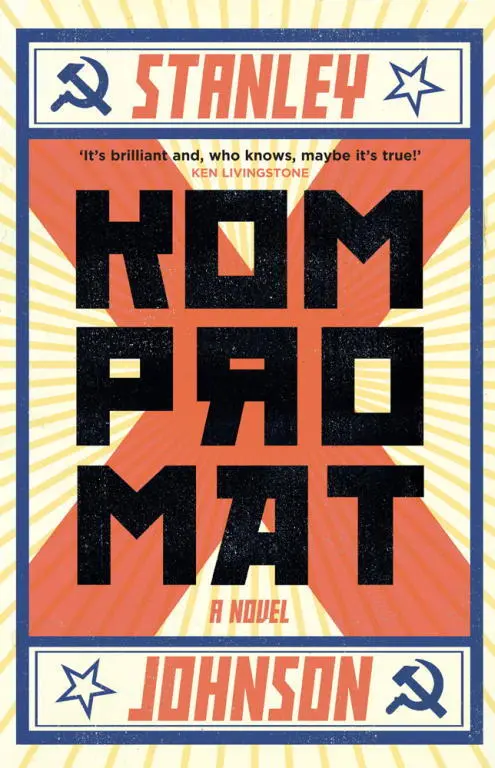
- Название:Kompromat
- Автор:
- Издательство:Point Blank
- Жанр:
- Год:2017
- Город:London
- ISBN:978-1-78607-246-7
- Рейтинг книги:5 / 5. Голосов: 1
-
Избранное:Добавить в избранное
- Отзывы:
-
Ваша оценка:
Kompromat: краткое содержание, описание и аннотация
Предлагаем к чтению аннотацию, описание, краткое содержание или предисловие (зависит от того, что написал сам автор книги «Kompromat»). Если вы не нашли необходимую информацию о книге — напишите в комментариях, мы постараемся отыскать её.
is a brilliant satirical thriller that tells the story of 2016’s seismic and unexpected political events on both sides of the Atlantic.
The UK referendum on Britain’s membership of the EU was a political showdown the British PM, Jeremy Hartley, thought he couldn’t lose. But the next morning both he and the whole of the rest of the country woke in a state of shock.
America meanwhile has its own unlikely Presidential candidate, the brash showman Ronald Craig, a man that nobody thought could possibly gain office. Throw into the mix the cunning Russian President Igor Popov, with his plans to destabilise the west, and you have a brilliant alternative account of the events that end with Britain’s new PM attempting to seek her own mandate to deal with the Brexit related crisis and America welcoming its own new leader.
Now in development for a major new TV series,
is a fast-paced thriller from a true political insider, and who knows, it just might all be true!
Kompromat — читать онлайн бесплатно полную книгу (весь текст) целиком
Ниже представлен текст книги, разбитый по страницам. Система сохранения места последней прочитанной страницы, позволяет с удобством читать онлайн бесплатно книгу «Kompromat», без необходимости каждый раз заново искать на чём Вы остановились. Поставьте закладку, и сможете в любой момент перейти на страницу, на которой закончили чтение.
Интервал:
Закладка:
He held the door open. ‘I shouldn’t be telling you this, but we think most, if not all, of those documents are genuine. Let the chips fall where they may,’ he concluded cryptically.
‘Do you mean…?’ Barnard began.
‘I don’t mean anything at this moment,’ Sir Oliver said. ‘We were asked to report on the authenticity or otherwise of the documents we examined. That we have done. It is for others to draw the appropriate conclusions. I’m a policeman, not a politician.’
After leaving New Scotland Yard, Barnard walked back into St James’s Park. Girls in summer dresses walked around the lake. Some were sunbathing in bikinis. He sat on a bench and mentally ticked off the names of the waterfowl: Mallard, Shelduck, Wigeon, Gadwall, Teal, Pintail, Shoveler…
A hundred yards away, Jerry Goodman, one of the ‘watchers’ Sir Oliver had put in place that very afternoon, spoke quietly into his radio. ‘Not much going on. He’s watching the birds in St James’s Park. No, I mean the real birds. The birds on the lake. Not the dolly birds. Plenty of those around today too. Over and Out.’
CHAPTER TWENTY-NINE
The Turkish president, Ahmet Ergun, was in a foul mood. He felt betrayed. There were three million Syrian refugees in his country. Turkey had fed them and watered them. Europe might complain about the ‘flood’ of migrants. That was garbage. Turkey, under his leadership, had made heroic efforts to stem the tide. But he expected a little something in return.
And what had he got? Nothing. Absolutely nothing. Turkey was still out in the cold. They’d been talking for years about Turkey joining the EU and they didn’t mean a word of it. Those guys in Brussels looked on the Turks as though they were some kind of barbarians, conveniently forgetting that the Ottomans had ruled half of Europe for over 500 years. Why did the French eat croissants for God’s sake?
Sitting in one of the many receptions rooms of his enormous new palace in Ankara, the nation’s capital, the Turkish president called for more coffee.
‘Please bring my wife too,’ he said.
When Nuray came and sat down beside him on the sofa, he said to her, ‘Today, I’m going to do it.’
Nuray Ergun nodded. ‘It is time.’
For decades now she had been her husband’s rock and support. She had even chosen to wear the headscarf, sending a message to the nation which had not gone unnoticed.
‘It is time,’ she repeated. ‘For too long we have grovelled to Europe. You should rip up the agreement with the EU about the refugees. Europe has not kept its side of the bargain. We applied to join the EU since 1987. They told us there are thirty-five chapters to negotiate and most of them haven’t even been opened. Be serious, Ergun.’
‘I am being serious,’ Ergun said. ‘I have given the instruction this morning.’
What Ergun did not tell his wife was that the precise timing of his decision, as well as important details relating to scope and method, had been thrashed out in detail on the occasion of President Ergun’s recent visit to Moscow. As Turkey sought to distance itself from the EU and to seek allies elsewhere, for example with a new agreement on Turkey-Russia collaboration, there had been one issue where Popov had insisted that urgent action by Turkey would be tremendously helpful.
‘Just open the taps, Mr President,’ Popov had urged. ‘And do it now. That’ll make them squeal.’
That afternoon, President Ahmet Ergun flew down from Ankara to S¸anliurfa airport in southern Turkey. From there he was escorted to Suruç, Turkey’s largest refugee camp. He arrived at around noon and almost at once mounted a makeshift stage to make one of the most important speeches of his career.
As the sun beat pitilessly down, bouncing off the bleached, almost white, soil, Ahmet Ergun looked out over at the rows of tents and at the crowds of refugees – men, women and children – who now gathered around the podium.
He began on a serious patriotic note. ‘Today, I want to say how proud I am of the effort Turkey has made to deal with an unprecedented crisis. We have over three million refugees in our country, more than any other nation in the world. Here in Suruç, we have the largest refugee camp in Turkey. Just over the border in Syria, the fighting is still raging. Refugees are still coming. Day by day, hour by hour, minute by minute.
‘As I have said, Turkey is proud to play its part. But we cannot bear this immense burden alone. Europe has not risen to the challenge. But now we have heard the German chancellor say “we can do it”. So I say, bravo. At last the world is waking up. Today I am saying to you here in Suruç, and in the many other camps in this country, that you are free to leave. We shall speed you on your way. We shall help you cross over to Lesvos, Kos and Chios. We shall escort you in safe convoys to the Bulgaria border or up the Black Sea Coast to Romania.
‘My sincerest wish is that you have happy memories of your stay in Turkey!’
With that, a hastily assembled band played some martial music. As the president stepped down from the stage, a fleet of buses rolled up to carry the refugees away to a hopefully brighter future, a scene which was replayed at the fifty other refugee camps scattered throughout Turkey.
In the car heading back to the airport, President Ergun commented to his escort for the day, General Aslan Bolat, ‘Well, that’s a start. Of course, the people in the camps are only the tip of the iceberg. There are at least two million refugees living in the cities as well, without actually being in the camps.’
General Bolat stared straight ahead. The Turkish Army would, he knew, soon confront a critical decision. Did they continue to back the president with his increasing autocratic tendencies or did they do what the Turkish army had historically done at times of crisis: intervene to restore the legacy of Turkey’s great founding father, Kemal Atatürk?
‘Well, what do you think, General?’ Ergun said.
‘We must trust in your guidance, Mr President,’ he said.
President Ergun grunted. ‘And in God’s too.’
If Suruç camp was some distance from Europe’s borders, other refugee camps were much closer. The camp in Edirne for example, was virtually within spitting distance of the Bulgarian border. Less than an hour after President Ergun had finished his speech in Suruç, the guards at the border post on the Turkish side of the Maritsa River flung the gates open to let a horde of refugees stream across the bridge, overwhelming the guards on the Hungarian side. Refugees who couldn’t gain access to the bridge began to ford the river. Chaos reigned.
Possibly the most dramatic scenes, as recorded on the world’s television, were filmed on the Aegean coastline, where by some quirk of history Greek islands such as Lesvos, Cos and Chios were to be found almost within a stone’s throw of the Turkish mainland. Not a day passed without lives lost. Rickety boats sank. Even with life jackets, exhausted refugees were drowned. And the promised land, when they reached it, was not the Nirvana they hoped for. Selkirk Global News outlets went out of their way to show pictures of sodden refugees being verbally abused by exhausted locals or pushed back into the boats.
Harriet Marshall, watching television at home after a long day campaigning, could barely contain her enthusiasm. She shouted to her partner, ‘Christine, come and look at this. You won’t believe it!’
She turned up the volume as the TV showed a pitched battle between a crowd of migrants and a stern phalanx of policemen, advancing ruthlessly, Perspex shields held in front of them. Rocks were thrown, followed by a sudden burst of gunfire.
‘Brilliant!’ Harriet clapped her hands. ‘Totally brilliant. And that was the BBC. Fox News ran a much longer piece. So did Sky. Just what we needed. That should shift the polls.’
Читать дальшеИнтервал:
Закладка:
Похожие книги на «Kompromat»
Представляем Вашему вниманию похожие книги на «Kompromat» списком для выбора. Мы отобрали схожую по названию и смыслу литературу в надежде предоставить читателям больше вариантов отыскать новые, интересные, ещё непрочитанные произведения.


Обсуждение, отзывы о книге «Kompromat» и просто собственные мнения читателей. Оставьте ваши комментарии, напишите, что Вы думаете о произведении, его смысле или главных героях. Укажите что конкретно понравилось, а что нет, и почему Вы так считаете.