Stanley Johnson - Kompromat
Здесь есть возможность читать онлайн «Stanley Johnson - Kompromat» весь текст электронной книги совершенно бесплатно (целиком полную версию без сокращений). В некоторых случаях можно слушать аудио, скачать через торрент в формате fb2 и присутствует краткое содержание. Город: London, Год выпуска: 2017, ISBN: 2017, Издательство: Point Blank, Жанр: Триллер, Политический детектив, humor_satire, на английском языке. Описание произведения, (предисловие) а так же отзывы посетителей доступны на портале библиотеки ЛибКат.
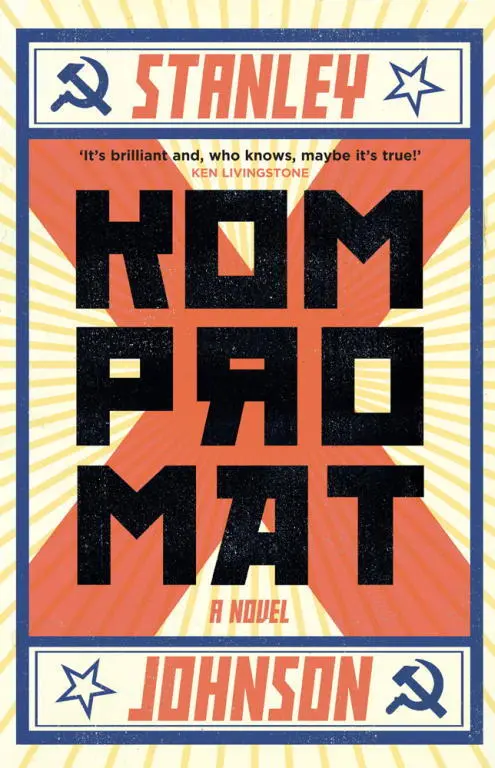
- Название:Kompromat
- Автор:
- Издательство:Point Blank
- Жанр:
- Год:2017
- Город:London
- ISBN:978-1-78607-246-7
- Рейтинг книги:5 / 5. Голосов: 1
-
Избранное:Добавить в избранное
- Отзывы:
-
Ваша оценка:
Kompromat: краткое содержание, описание и аннотация
Предлагаем к чтению аннотацию, описание, краткое содержание или предисловие (зависит от того, что написал сам автор книги «Kompromat»). Если вы не нашли необходимую информацию о книге — напишите в комментариях, мы постараемся отыскать её.
is a brilliant satirical thriller that tells the story of 2016’s seismic and unexpected political events on both sides of the Atlantic.
The UK referendum on Britain’s membership of the EU was a political showdown the British PM, Jeremy Hartley, thought he couldn’t lose. But the next morning both he and the whole of the rest of the country woke in a state of shock.
America meanwhile has its own unlikely Presidential candidate, the brash showman Ronald Craig, a man that nobody thought could possibly gain office. Throw into the mix the cunning Russian President Igor Popov, with his plans to destabilise the west, and you have a brilliant alternative account of the events that end with Britain’s new PM attempting to seek her own mandate to deal with the Brexit related crisis and America welcoming its own new leader.
Now in development for a major new TV series,
is a fast-paced thriller from a true political insider, and who knows, it just might all be true!
Kompromat — читать онлайн бесплатно полную книгу (весь текст) целиком
Ниже представлен текст книги, разбитый по страницам. Система сохранения места последней прочитанной страницы, позволяет с удобством читать онлайн бесплатно книгу «Kompromat», без необходимости каждый раз заново искать на чём Вы остановились. Поставьте закладку, и сможете в любой момент перейти на страницу, на которой закончили чтение.
Интервал:
Закладка:
She paused and took a sip of water from the glass in front of her.
‘I am sorry to say, Chairman, that my government finds the Commission’s proposal totally unacceptable. This great European Union of ours is founded on four basic freedoms: the freedom of movement of goods, people, services and capital over borders. My government is not prepared to see those freedoms weakened or diminished in any way.
‘So I much regret that I cannot give any comfort today to our British colleagues by agreeing that there is a European solution to their problem. We have no need of a European solution, because there is no European problem. Or certainly no problem that basic humanity and common sense cannot resolve. We should be proud of the opportunities the current crisis offers to us to show our compassion. We should not fight against this. So in the name of my country, I say “no”. Germany votes against this text.’
Hartley gathered his papers together, and headed for the door. If he was lucky, he thought, he might be able to make a quick dash to the airport before the press hammered him.
The driver had the door open, as Nancy Ginsberg caught up, BBC camera crew in tow.
Nancy was live on air and she made the most of it. ‘How did that go, Prime Minister?’ she called. ‘Kicked in the teeth by Brussels again?’
Hartley stared grimly ahead. There were times when it was best to keep your mouth shut. This was one of them.
Harriet Marshall let out a great whoop of joy as she watched the news from Brussels. The morning had played out even better than she had hoped. The danger that the EU would make a ‘too good to refuse’ offer had been conclusively avoided. Just as important, Britain had been totally humiliated that morning in Brussels by Chancellor Brun’s icy remarks as she trashed the olive branch that had been proffered. That would be worth a point or two in the polls.
We’re on our way, thought Harriet. Boy, are we on our way! That evening the bookies, for the first time ever, had the Leave campaign nudging into the lead.
Thomas Hartkopf was also watching the news that lunchtime. He mopped his brow. Wow, it had been a close-run thing! Too many links in the chain. London must have sent a message to Moscow, who had passed it on the Berlin, but he himself had only received that message that very morning, when the chancellor had already left Berlin for Brussels. He couldn’t speak to her directly, so he had to go through Ursula Hauptman, the chancellor’s long-time trusted assistant.
‘Please tell the chancellor,’ he had told her, ‘that she should not, absolutely not, approve the Commission’s proposal for a Europe-wide emergency brake on migration. That is the formal position of the German Ministry of the Interior and we are constitutionally responsible for such matters.’
‘The chancellor will be very pleased to hear that,’ Ursula said. ‘That accords with her deeply held beliefs. I’ll patch the message though to her at once. She should be reaching Brussels about now.’
Later that day, Dr Otto Friedrich summoned Thomas Hartkopf in a terrific rage. ‘I’ve just been told that the Ministry of the Interior blocked the Commission’s proposal. Who gave those instructions? I certainly didn’t. We should have agreed to the Commission’s proposal. It is precisely what Europe needs at this time.’
Hartkopf fessed up. ‘I did. You were not available and I was the acting officer in charge. It was my responsibility to take a view. I spoke to Ursula Hauptman. She was very supportive.’
Friedrich calmed down a little. Ursula Hauptman had been so long at the chancellor’s side that she was sometimes called the ‘alternative president’.
Hartkopf added a further point. ‘Besides, I am sure you will agree that by her actions this morning, the chancellor is digging her own political grave a little bit deeper every day.’
It didn’t take long for Dr Otto Friedrich to see what Thomas Hartkopf was driving at.
CHAPTER TWENTY-EIGHT
It had been a long day. Fyodor Stephanov reckoned that he had written twelve blogs that evening, which was two more than his quota. It was hard work. You had to use your brain, as well as your imagination.
Natasha, his girlfriend, was visiting friends in Moscow and wouldn’t be back until the weekend. Stephanov was looking forward to having a quiet beer and watching a spot of television before he turned in.
His three-hour stint finished at midnight. It was less than a half a mile from Savushkina Street to his apartment on the eighth floor of a Soviet-style apartment block. Usually it took him about ten or fifteen minutes to cover the distance, allowing time for a cigarette along the way.
Two men, who obviously knew his schedule, were waiting for him in the lobby of the building. He recognized them at once. They were both Chinese. He had dealt with them on several occasions, back in the days when he was hawking Kompromat on the black market. They’d even had a Chinese meal together one night. Ling was older than Kong but both were tough-looking customers.
‘What are you doing here?’ he tossed the stub of his cigarette into a bin.
‘We’ve come to talk to you.’
‘What about?’
‘Let’s go up to your apartment,’ Ling said.
They sat round the kitchen table in his flat. Stephanov had some cans of Baltica in the fridge and he passed them round.
‘So what’s the problem?’ he asked.
‘The problem is that material you sold us,’ Ling told him. ‘You said they filmed that English guy with the two ladies. We’ve had word back that the man on the bed with the girls wasn’t the English guy at all. It was someone else. They want to know who it was. They want the footage, the original footage.’
Stephanov swore under his breath. That bloody film! He wished he had never got involved in the first place.
Well, he couldn’t give them the film. Lyudmila Markova and her team had bagged everything up and taken it away with them.
‘I can’t give you the footage. I don’t have it. FSB Moscow took it. You’ll have to ask them!’
His visitors didn’t appreciate the joke. As part of the Chinese Ministry of State Security’s extensive net of agents in Russia, they were under great pressure to deliver the goods. When Beijing said ‘jump’, you jumped.
Ling took a long pull at his beer. Normally they would have resorted to violence, but with Stephanov it was different. He might have been selling Kompromat material on the black market, but he was still FSB.
‘What can you give us?’ Ling said. ‘Our clients are anxious.’
Stephanov stood up. ‘I’ll be right back.’
This was the moment, in cinematic terms, when he would have popped out of the room for a moment only to come back with a loaded pistol to turn the table on the intruders.
But Stephanov didn’t have his weapon that evening. He had gone straight from the FSB office to Savushkina Street without it. When you’re sitting in front of the computer, you didn’t need a suspicious bulge in your back pocket.
‘I’ll come with you,’ Kong said. He stood close to Stephanov in the bedroom, while Stephanov rummaged through a chest of drawers.
‘Got it!’ Stephanov exclaimed as he found what he was looking for.
Back in the kitchen, he spread the US-flag boxer shorts on the table. ‘You can have them. For free. Just don’t come back.’
Ling fingered the soft, silky material. ‘This is good. Very good. These are boxer shorts the man was wearing? You sure of that?’
‘I’d stake my life on it,’ Stephanov replied. He examined the inscription on the waistband. ‘See what it says: “Bloomingdales’ finest”!’
‘How much you think these US-Flag boxer shorts are worth?’ Ling asked.
Читать дальшеИнтервал:
Закладка:
Похожие книги на «Kompromat»
Представляем Вашему вниманию похожие книги на «Kompromat» списком для выбора. Мы отобрали схожую по названию и смыслу литературу в надежде предоставить читателям больше вариантов отыскать новые, интересные, ещё непрочитанные произведения.



Обсуждение, отзывы о книге «Kompromat» и просто собственные мнения читателей. Оставьте ваши комментарии, напишите, что Вы думаете о произведении, его смысле или главных героях. Укажите что конкретно понравилось, а что нет, и почему Вы так считаете.