Stanley Johnson - Kompromat
Здесь есть возможность читать онлайн «Stanley Johnson - Kompromat» весь текст электронной книги совершенно бесплатно (целиком полную версию без сокращений). В некоторых случаях можно слушать аудио, скачать через торрент в формате fb2 и присутствует краткое содержание. Город: London, Год выпуска: 2017, ISBN: 2017, Издательство: Point Blank, Жанр: Триллер, Политический детектив, humor_satire, на английском языке. Описание произведения, (предисловие) а так же отзывы посетителей доступны на портале библиотеки ЛибКат.
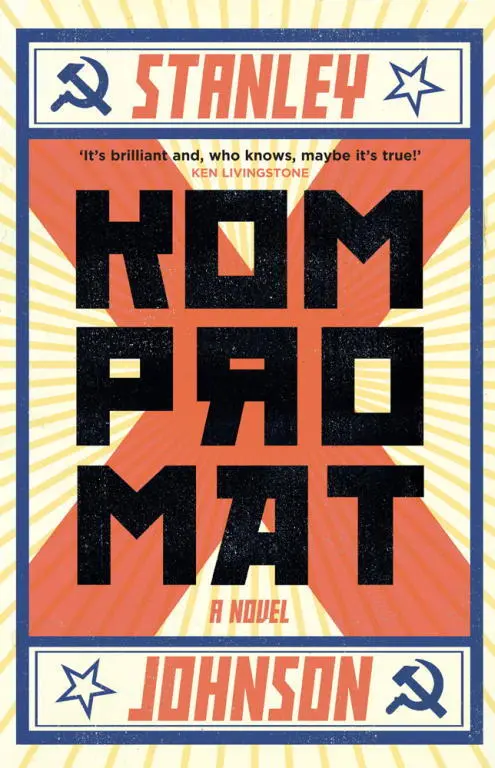
- Название:Kompromat
- Автор:
- Издательство:Point Blank
- Жанр:
- Год:2017
- Город:London
- ISBN:978-1-78607-246-7
- Рейтинг книги:5 / 5. Голосов: 1
-
Избранное:Добавить в избранное
- Отзывы:
-
Ваша оценка:
Kompromat: краткое содержание, описание и аннотация
Предлагаем к чтению аннотацию, описание, краткое содержание или предисловие (зависит от того, что написал сам автор книги «Kompromat»). Если вы не нашли необходимую информацию о книге — напишите в комментариях, мы постараемся отыскать её.
is a brilliant satirical thriller that tells the story of 2016’s seismic and unexpected political events on both sides of the Atlantic.
The UK referendum on Britain’s membership of the EU was a political showdown the British PM, Jeremy Hartley, thought he couldn’t lose. But the next morning both he and the whole of the rest of the country woke in a state of shock.
America meanwhile has its own unlikely Presidential candidate, the brash showman Ronald Craig, a man that nobody thought could possibly gain office. Throw into the mix the cunning Russian President Igor Popov, with his plans to destabilise the west, and you have a brilliant alternative account of the events that end with Britain’s new PM attempting to seek her own mandate to deal with the Brexit related crisis and America welcoming its own new leader.
Now in development for a major new TV series,
is a fast-paced thriller from a true political insider, and who knows, it just might all be true!
Kompromat — читать онлайн бесплатно полную книгу (весь текст) целиком
Ниже представлен текст книги, разбитый по страницам. Система сохранения места последней прочитанной страницы, позволяет с удобством читать онлайн бесплатно книгу «Kompromat», без необходимости каждый раз заново искать на чём Вы остановились. Поставьте закладку, и сможете в любой момент перейти на страницу, на которой закончили чтение.
Интервал:
Закладка:
‘That is why I have asked the president of the Commission to make one last effort to find a solution to the British problem, a solution which should ensure that the outcome of the Referendum can be seen as a confirmation, not a rejection, of our common European destiny.’
‘Hear, hear!’
Jeremy Hartley banged the table to indicate his approval. The other heads of state or government joined in the applause.
Arne Jacobsen smiled. He was not on the whole an eloquent man. But he had put a bit of effort into that speech and he was pleased by the reaction.
After that, as was usual, the European Commission led off the discussion.
Michael O’Rourke began by acknowledging the efforts of all those present in the room to avert the looming train wreck.
‘Frankly,’ he confessed, ‘if we had known a few months ago what we know today, we would have made this one last effort, as Mr Jacobsen called it, a good deal sooner. And I would say to the British delegation through you, Mr Chairman, that we should have realized right from the start that the way to deal with this problem of excessive migration was not through some special arrangements with the United Kingdom, but on the contrary through a strong and durable European solution. I would like to say now how grateful the Commission is to all the Member States, and of course to the Council secretariat, for the efforts made to move this matter forward to a successful conclusion.’
Michael O’Rourke looked up from his notes to address the chairman at the far end of the table. ‘Would it help, Mr Chairman, if I read out the text of our proposal slowly? I am not sure the document under discussion is yet available in all the official languages, so it may be helpful also to be able to listen to the interpreters.’
‘Go ahead, Mr President,’ Arne Jacobsen instructed.
Michael O’ Rourke was a large man with a booming voice. Like so many of his countrymen, he had a way with words.
He could even make the dull, procedural prose which he had in front of him that morning sound more than halfway interesting.
‘This is the text the Commission is proposing,’ he began:
‘The Council hereby agrees that:
Where any country has experienced an inflow of workers or other migrants of exceptional magnitude over an extended period of time; and where:
the size of the inflow affects essential aspects of its social security system; or
leads to serious difficulties in its employment market; or
is putting ‘excessive pressure’ on public services or the environment,
that country may unilaterally derogate from the provisions of Chapter Four, Title I, of the Treaty on the Functioning of the Common Market, by imposing restrictions on the inflow of workers and other migrants, with a view to mitigating or eliminating the economic, social and environmental problems thereby caused…’
Michael O’Rourke paused, looked up from his papers and gazed about the room.
‘That’s it, Mr Chairman,’ he said.
Jeremy Hartley had, of course, heard the text the previous day. He’d had a chance to study it in detail. He admired its simplicity and the economy of words, so unlike most EU documents. He could live with it. More than that, he was ready to welcome it with open arms.
Best say so straightaway, he thought. That was always the best tactic. Set the tone of the debate. Make his view clear.
‘I am very grateful to you, Mr President, as Chair of the Council,’ he said to Arne Jacobsen: ‘And of course to the Commission,’ here he gestured to Michael O’Rourke, ‘for all the hard work the community institutions and the Member States have put in, so that we can today find a solution to what up till now has been an intractable problem.
‘What is interesting to me,’ he continued, ‘is that what seemed in the first instance to be a purely British problem turns out in the end to be a European problem and therefore one that is capable of a European solution.
‘I can confirm today that the United Kingdom government welcomes the text that the Commission has put forward, and sincerely hopes that it may be adopted unanimously by the Council this morning.’
The applause which followed Hartley’s brief intervention was more than polite. It was heartfelt.
It really was a different ball game now, they all thought, compared to what it had been just a few months ago. Even countries like Poland and Romania, whose workers travelled in tens of thousands each year in search of jobs in the more affluent parts of the European Union, could see the value of agreed language, which in the end permitted them to take their own decisions about what was right for their country. And if this text really did help to stop the imminent disintegration of the EU, it was surely worth swallowing any objections they might have.
One by one, the heads of State and government took the floor to express their views. Some of them made long speeches; some of them made short speeches, but none of them, not one, took exception to the text the Commission had circulated.
The prime minister of Hungary, Lazlo Ferenczy, was positively ecstatic, which was not surprising given that his country was busy erecting huge fences, topped with razor-sharp wire, along the length of its Eastern border.
‘It is high time we took this step,’ he urged. ‘My country supports the Commission’s proposal whole-heartedly.’
The president of France, Jacques Petit, was more nuanced. ‘France will not object to the text,’ he said. ‘The circumstances are indeed very special. But we would suggest the addition of one line at the end, namely that Member States which decide to introduce unilateral measures to control migration should nevertheless report such measures to the Commission.’
Arne Jacobsen decided to give the French president all the help he could. It was in any case, as far as he could see, a fairly harmless proposal. No one was suggesting that the Commission should actually forbid or try to subvert these unilateral measures.
‘If I hear no objection, I propose we accept the amendment as proposed by the president of France.’ He banged his gavel on the table before anyone had a chance to ask for the floor. ‘So agreed.’
The last speaker had just finished when there was a sudden commotion at the far end of the room.
‘Ah! I see the German chancellor has arrived,’ Arne Jacobsen said. ‘Shall we break for five minutes to give Mrs Brun the chance to catch up?’
The five-minute break stretched to ten; ten minutes stretched to fifteen. What on earth was happening, Hartley wondered? He was worried. It looked as though there had been a cock-up somewhere along the line.
‘I thought the Commission had squared this text in advance with the Germans,’ he commented acidly to Sir Luke Threadgold.
‘I did too,’ Threadgold replied. ‘The German ambassador definitely gave it his okay.’
‘Well, his okay doesn’t count unless Brun’s on board too,’ Hartley snapped. He could see that members of the German delegation were clustered round the chancellor in a corner of the room. The German ambassador, Herr Otto von Wiensdorf, a huge white-haired man who was the doyen d’âge among delegates, seemed to be almost shouting at her.
‘This is the only solution, Chancellor,’ he urged. ‘We must agree to it, not block it. And it is in Germany’s interest also. We too need this emergency brake. We cannot tolerate the present situation. Europe itself is at risk!’
When Arne Jacobsen called the resumed meeting to order, he gave the German chancellor the floor straightway,
‘I would like to apologize, chairman, for arriving late at the meeting this morning,’ Helga Brun began. ‘I have to admit that I only saw the interesting text circulated by the Commission as I was leaving Berlin to come to Brussels. I had to take the time necessary to consult colleagues and officials.’
Читать дальшеИнтервал:
Закладка:
Похожие книги на «Kompromat»
Представляем Вашему вниманию похожие книги на «Kompromat» списком для выбора. Мы отобрали схожую по названию и смыслу литературу в надежде предоставить читателям больше вариантов отыскать новые, интересные, ещё непрочитанные произведения.


Обсуждение, отзывы о книге «Kompromat» и просто собственные мнения читателей. Оставьте ваши комментарии, напишите, что Вы думаете о произведении, его смысле или главных героях. Укажите что конкретно понравилось, а что нет, и почему Вы так считаете.