Kate Mosse - Labyrinth
Здесь есть возможность читать онлайн «Kate Mosse - Labyrinth» весь текст электронной книги совершенно бесплатно (целиком полную версию без сокращений). В некоторых случаях можно слушать аудио, скачать через торрент в формате fb2 и присутствует краткое содержание. Жанр: Триллер, на английском языке. Описание произведения, (предисловие) а так же отзывы посетителей доступны на портале библиотеки ЛибКат.
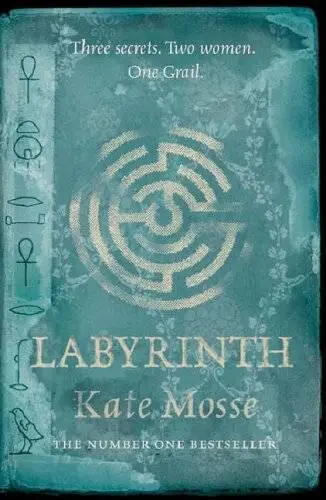
- Название:Labyrinth
- Автор:
- Жанр:
- Год:неизвестен
- ISBN:нет данных
- Рейтинг книги:3 / 5. Голосов: 1
-
Избранное:Добавить в избранное
- Отзывы:
-
Ваша оценка:
Labyrinth: краткое содержание, описание и аннотация
Предлагаем к чтению аннотацию, описание, краткое содержание или предисловие (зависит от того, что написал сам автор книги «Labyrinth»). Если вы не нашли необходимую информацию о книге — напишите в комментариях, мы постараемся отыскать её.
Labyrinth — читать онлайн бесплатно полную книгу (весь текст) целиком
Ниже представлен текст книги, разбитый по страницам. Система сохранения места последней прочитанной страницы, позволяет с удобством читать онлайн бесплатно книгу «Labyrinth», без необходимости каждый раз заново искать на чём Вы остановились. Поставьте закладку, и сможете в любой момент перейти на страницу, на которой закончили чтение.
Интервал:
Закладка:
Alice tried to speak, but her mouth was too dry.
“Did she…” she stopped, unable to go on.
“The human spirit can withstand much, but once broken, it crumbles like dust. That is what the Inquisitors did. They broke our spirit, as surely as the torturers split skin and bone, until we no longer knew who we were.”
“Tell me,” she said quickly.
“Sajhe was too late,” he said in a level voice. “But Guilhem was not. He had heard that a healer, a mountain woman, had been brought from the mountains for interrogation and, somehow, he guessed it was Alais, even though her name did not appear on the register. He bribed the guards to let him through – bribed or threatened, I know not. He found Alais. She and Rixende were being held separately from everyone else, which gave him the chance he needed to smuggle her away from Sant-Etienne and out of Tolosa before the Inquisitors realised she had gone.”
“But…”
“Alais always believed that it was Oriane who had ordered her to be imprisoned. Certainly, they did not interrogate her.”
Alice felt tears in her eyes. “Did Guilhem bring her back to the village?” she said quickly, wiping her face with the back of her hand. “She did come home again?
Baillard nodded. Eventually. She returned in agost , shortly before the Day of the Assumption, bringing Rixende with her.“ The words came out in a rush.
“Guilhem did not travel with them?”
“He did not,” he said. “Nor did they meet again until…” He paused. Alice sensed, rather than heard, him draw in his breath. “Her daughter six months later. Alais called her Bertrande, in memory of her father Bertrand Pelletier.”
Audrie’s words seem to hang between them.
Another piece of the jigsaw.
“Guilhem and Alais,” she whispered to herself. In her mind’s eye she could see the Family Tree spread out on Grace’s bedroom floor in Salleles d’Aude. The name ALAIS PELLETIER-DU MAS (1193-) picked out in red ink. When she had looked before she hadn’t been able to read the name next to it, only Sajhe’s name, written in green ink on the line below and to the side.
“Alais and Guilhem,” she said again.
A direct line of descent running from them to me.
Alice was desperate to know what had happened in those three months that Guilhem and Alais were together. Why had they parted again? She wanted to know why the labyrinth symbol appeared beside Alais’ name and Sajhe’s name.
And my own.
She looked up, excitement building inside her. She was on the verge of letting loose a stream of questions when the look on Audric’s face stopped her. Instinctively, she knew he had dwelt long enough on Guilhem.
“What happened after that?” she asked quietly. “Did Alais and her daughter stay in Los Seres with Sajhe and Harif?”
From the fleeting smile that appeared briefly on Audric’s face, Alice knew he was grateful for the change of subject.
“She was a beautiful child,” he said. “Good natured, fair, always laughing, singing. Everybody adored her, Harif in particular. Bertrande sat with him for hours listening to his stories about the Holy Land and about her grandfather, Bertrand Pelletier. As she grew older, she did errands for him. When she was six, he even started to teach her to play chess.”
Audric stopped. His face grew sombre again. “However, all the time the black hand of the Inquisition was spreading its reach. Having defeated the plains, the Crusaders finally turned their attention to the unconquered strongholds of the Pyrenees and Sabarthes. Trencavel’s son, Raymond, returned from exile in 1240 with a contingent of chevaliers and was joined by most of the nobility of the Corbieres. He had no trouble regaining most of the towns between Limoux and the Montagne Noire. The whole country was mobilised: Saissac, Azille, Laure, the chateaux of Queribus, Peyrepertuse, Aguilar. But after nearly a month of fighting, he failed to retake Carcassona. In October, he pulled back to Montreal. No one came to his aid. In the end, he was forced to withdraw to Aragon.”
Audric paused. “The terror began immediately. Montreal was razed to the ground, Montolieu too. Limoux and Alet surrendered. It was clear to Alais, to us all, that the people would pay the price for the failure of the rebellion.”
Baillard suddenly stopped and looked up. “Have you been to Montsegur, Madomaisela Alice?” She shook her head. “It is an extraordinary place. A sacred place perhaps. Even now, the spirits linger. It is hewn out of three sides of the mountain. God’s temple in the sky.”
“The safe mountain,” she said without thinking, then blushed to realise she was quoting Baillard’s own words back at him.
“Many years earlier, before the beginning of the Crusade, the leaders of the Cathar church had asked the seigneur of Montsegur, Raymond de Pereille, to rebuild the crumbling castellum and strengthen its fortifications. By 1243, Pierre-Roger de Mirepoix, in whose household Sajhe had trained, was in command of the garrison. Fearing for Bertrande and Harif, Alais felt they could no longer stay in Los Seres, so Sajhe offered his service and they joined the exodus to Montsegur.”
Audric nodded. “But they became visible when they travelled. Perhaps they should have separated. Alais’ name was now on an Inquisitional list.”
Was Alais a Cathar?“ she asked suddenly, realising that, even now, she was not sure.
He paused. “The Cathars believed that the world we can see, hear, smell, taste and touch was created by the Devil. They believed the Devil had tricked pure spirits into fleeing God’s kingdom and imprisoned them in tunics of flesh here on Earth. They believed if they lived a good enough life and ”made a good end“ their souls would be released from bondage and return to God in the glory of Heaven. If not, within four days they would be reincarnated on Earth to start the cycle anew.”
Alice remembered the words in Grace’s bible.
“That which is born of the flesh is flesh; and that which is born of the Spirit is spirit.”
Audric nodded. What you must understand is that the Bons Homes were loved by the people they served. They didn’t charge for officiating at marriages, naming children or burying the dead. They extracted no taxes, demanded no tithes. There’s a story of a parfait coming across a farmer in the corner of his field: “What are you doing?” he asked the “Giving thanks to God for bringing forth this fine crop,” the farmer replied. The parfait smiled and helped the man to his feet: This isn’t God’s work, but your own. For it was your hand that dug the soil in the spring, who tended it“.” He raised his eyes to Alice. “You understand?”
“I think so,” she said tentatively. They believed individuals had control of their own lives.“
“Within the constraints and limitations of the times and place in which you were born, yes.”
“But did Alais subscribe to this way of thinking?” she persisted.
“Alais was like them. She helped people, put the needs of others before her own. She did what she thought was right, regardless of what tradition or custom dictated.” He smiled. “Like them she believed there would be no last judgement. She believed that the evil she saw around her could not be of God’s making, but, in the end, no. She was not. Alais was a woman who believed in the world she could touch and see.”
“What about Sajhe?”
Audric did not answer directly. “Although the term Cathar is in common usage now, in Alais’ time believers called themselves Bons Homes . The Inquisitional Latin texts refer to them as albigenses or heretici .
“So where does the term Cathar come from?”
Читать дальшеИнтервал:
Закладка:
Похожие книги на «Labyrinth»
Представляем Вашему вниманию похожие книги на «Labyrinth» списком для выбора. Мы отобрали схожую по названию и смыслу литературу в надежде предоставить читателям больше вариантов отыскать новые, интересные, ещё непрочитанные произведения.






Обсуждение, отзывы о книге «Labyrinth» и просто собственные мнения читателей. Оставьте ваши комментарии, напишите, что Вы думаете о произведении, его смысле или главных героях. Укажите что конкретно понравилось, а что нет, и почему Вы так считаете.