William Lashner - Past Due
Здесь есть возможность читать онлайн «William Lashner - Past Due» весь текст электронной книги совершенно бесплатно (целиком полную версию без сокращений). В некоторых случаях можно слушать аудио, скачать через торрент в формате fb2 и присутствует краткое содержание. Жанр: Триллер, на английском языке. Описание произведения, (предисловие) а так же отзывы посетителей доступны на портале библиотеки ЛибКат.
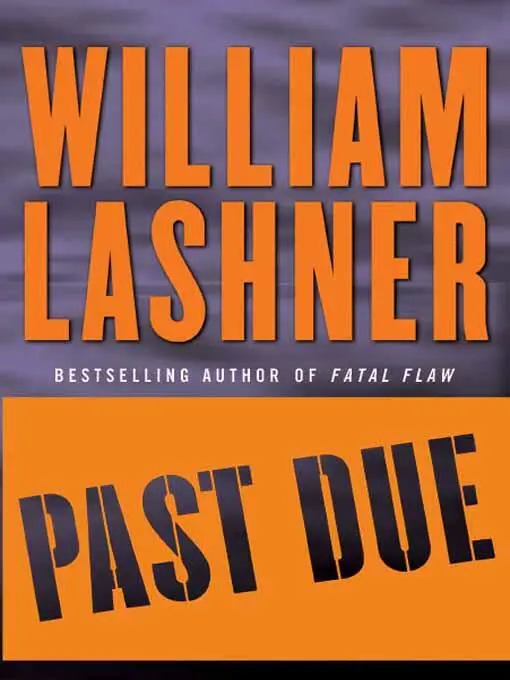
- Название:Past Due
- Автор:
- Жанр:
- Год:неизвестен
- ISBN:нет данных
- Рейтинг книги:5 / 5. Голосов: 1
-
Избранное:Добавить в избранное
- Отзывы:
-
Ваша оценка:
Past Due: краткое содержание, описание и аннотация
Предлагаем к чтению аннотацию, описание, краткое содержание или предисловие (зависит от того, что написал сам автор книги «Past Due»). Если вы не нашли необходимую информацию о книге — напишите в комментариях, мы постараемся отыскать её.
Past Due — читать онлайн бесплатно полную книгу (весь текст) целиком
Ниже представлен текст книги, разбитый по страницам. Система сохранения места последней прочитанной страницы, позволяет с удобством читать онлайн бесплатно книгу «Past Due», без необходимости каждый раз заново искать на чём Вы остановились. Поставьте закладку, и сможете в любой момент перейти на страницу, на которой закончили чтение.
Интервал:
Закладка:
“Just a woman.”
“Nice looking?”
“She was.” Pause. “So?”
“It appears,” said Slocum slowly, “a bench warrant was issued early this year in Lackawanna County against a Vincent Carillo, a resident of the City of Philadelphia.”
“Ah,” I said. “That explains everything. A perfectly honest mistake, because my name is neither Vincent nor Carillo and so, of course, I was cuffed in public and taken into custody and made to sit in this stinking cell for three stinking hours.”
“There’s no reason to raise your voice like that.”
“Get me the hell out of here.”
“They’re finishing the paperwork. A few more minutes.”
We stood there for a moment on either side of the bars, quiet, as if nothing more needed to be said. I gave in first. “So why did they put me in here if the name on the warrant wasn’t mine?”
“There seems to have been an entry error on the computer,” he said.
“Just so happens to have been an entry error with my name on it.”
“Just so happens.”
“No idea how?”
“None.”
“Well, I have some.”
“I told you not to mess with him.”
“Son of a bitch.”
“Did you keep away from him like you promised?”
“Yes I did.”
“And his wife?”
“I tried.”
“Tried?”
“She came to me.”
“Uh huh.”
“Is that a crime?”
He looked at me for a moment through the bars. “Evidently.”
“He’s up to his neck in something.”
“Your horseshit is what he’s up to his neck in.”
“There’s a clerk here who is involved somehow too. I think he beat me up and threatened me right after you called me into your office.”
“You didn’t tell me about being beaten up.”
“Do you want to hear about all my problems? Do you want to hear about my father, my love life, the way Comcast unfairly cut off my cable?”
“No cable?”
“Don’t get me started.”
“You said you think he beat you up?”
“It was in my vestibule. I was facedown on the floor. I didn’t catch a face, but I recognized the voice. His name’s O’Brien. Geoffrey O’Brien. You might want to see if there is any connection between him and our friend.”
“I might want to,” said Slocum, “and then I might not want to get anywhere near your problems.” He tilted his head and looked behind me. There were four other men in the cell, a varied assortment ranging from well dressed to not, all in deeper trouble then they ever expected when they stepped through the Traffic Court metal detectors. “You drum up any business?”
“I was improperly placed into custody and my good name was slandered in public by some crackpot judge maliciously executing a mistakenly entered bench warrant that was not so mistakenly entered. I don’t need to drum up any business,” I said. “I’ll be too busy representing myself the next few months to take on any new clients.”
Just then a cop came to the cell with a clipboard and the thick manila envelope into which I had deposited my keys, my belt, my wallet and watch. He unlocked the barred door, slid it open, called out my name as if I were in a crowd twenty feet away.
“Yes,” I said.
“Mr. Carl, you’re free to go.”
As I stepped through the door, one of the men behind me said, “I’ll call you when I can, Mr. Carl. My mom will get that retainer to you like you told me. Maybe you can pop me out quick as you popped out you self.”
“Me too,” said another one.
I turned toward them. “That will be fine, gentlemen. You all have my number, right?”
They each waved a small business card.
“Good luck, then. I look forward to hearing from you.”
Slocum shook his head as he walked with me down the hall away from the cell.
“My prison posse,” I said.
Slocum just kept shaking his head.
“What?” I said.
Chapter 43
I STOOD ATthe door of the small Mount Airy house and straightened my tie, licked my teeth, shined my wingtips on the back of my calves. I felt like I should have brought along a bouquet of red roses and a box of chocolates.
Sylvia Steinberg.
She was Tommy Greeley’s girlfriend before his murder, she was Tommy Greeley’s lover for who knows how long. If it wasn’t Chelsea in the photographs then it had to be her. The long taut body, the smooth skin, the dark hair.
Sylvia Steinberg.
I had thought it would be a difficult feat of detection to find her after all these years, probably living in a different city, probably living under a different name, probably living the suburban dream and wanting nothing to do with her misspent past when she was the girlfriend of a cocaine kingpin. But sometimes fact-finding is ludicrously easy, all it takes is an attempt. Sylvia Steinberg was listed under her own name in the Philadelphia telephone directory, with a Mount Airy address. Mount Airy, where all the hippies who had congregated on South Street in the sixties had settled into their middle age, wearing their Birkenstocks, sitting on their porches, chewing their granola, passing back and forth their recipes for tofu turkey.
“Who?” had said Sylvia Steinberg on the phone. “You want to talk about Tommy? Why? I suppose. You know where I live? That’s right. Tomorrow at two. Come about then, why don’t you?”
And about then I had come, down to a quiet leafy street, a small green house with a great sycamore in front, a neat lawn, a dainty porch, a door behind which stood a month’s worth of erotic fantasies. I took a breath, calmed myself, knocked. Waited for the door to open, smiled when it did, identified myself, stepped inside as the door closed behind me.
When I left that little house in Mount Airy and started driving back to Center City, I was horrified and excited too. On the plus side, I finally knew who the woman was in the photographs, finally had a face with which to grace the perfect body. On the other side, I didn’t like who it turned out to be, not at all, and yet my hormones were splashing, yes they were, and I could feel the arousal in my gut.
“I loved Tommy Greeley, I suppose,” had said Sylvia Steinberg. “At least I thought I did.”
We were sitting across from each other at her kitchen table when she said this. A coffeemaker burbled on the countertop, a small plate of Oreos was set between us. And she was talking about Tommy.
“What happened between you two?” I said.
“Do you know the Yeats line? ‘Things fall apart, the center cannot hold. ’Well, the center couldn’t hold and so it fell apart.”
“I don’t understand.”
“You can only hide from the truth so long.”
“You’re talking about the drugs?”
“I should think that was part of it too. I didn’t know about his business when we first got involved and I never approved when I learned the truth. In fact, I refused to do drugs myself. A few hits and all the fears I was trying not to deal with would just flood over me. But still, I thought we could just get married, move to the suburbs, have kids, everything would be settled. As if I could separate the life I imagined from his rotten business, even if it was the business that would buy the house, the cars, the private schools. Can you spell schizophrenia, Victor? Two separate worlds, which collapsed into each other when that FBI agent started nosing around like a rabbit, sniffing here, sniffing there. But by then, we were already crashing.” She laughed. “Tommy never knew what he was getting into when he made his little suggestion.”
The coffeemaker quieted, Sylvia pushed herself off the table, ambled over to the counter.
She had been a very pretty woman in her youth, you could tell by her lovely face, her dark hair, her smooth soft skin. As she was talking to me, I was examining her closely, trying to see in her the woman of the photographs. It was hard, but I could envision it, yes I could, so long as I imagined that thin lithe body had been swallowed whole by another. If Sylvia was that woman, she weighed about a hundred pounds more than she had twenty years before. I couldn’t help but do the math. Twenty years, one hundred pounds, five pounds per year at 3,500 hundred calories per pound. That would be a mere 50 excess calories a day: three ounces of Coca-Cola, four ounces of beer, or a single Oreo.
Читать дальшеИнтервал:
Закладка:
Похожие книги на «Past Due»
Представляем Вашему вниманию похожие книги на «Past Due» списком для выбора. Мы отобрали схожую по названию и смыслу литературу в надежде предоставить читателям больше вариантов отыскать новые, интересные, ещё непрочитанные произведения.





Обсуждение, отзывы о книге «Past Due» и просто собственные мнения читателей. Оставьте ваши комментарии, напишите, что Вы думаете о произведении, его смысле или главных героях. Укажите что конкретно понравилось, а что нет, и почему Вы так считаете.