William Lashner - Past Due
Здесь есть возможность читать онлайн «William Lashner - Past Due» весь текст электронной книги совершенно бесплатно (целиком полную версию без сокращений). В некоторых случаях можно слушать аудио, скачать через торрент в формате fb2 и присутствует краткое содержание. Жанр: Триллер, на английском языке. Описание произведения, (предисловие) а так же отзывы посетителей доступны на портале библиотеки ЛибКат.
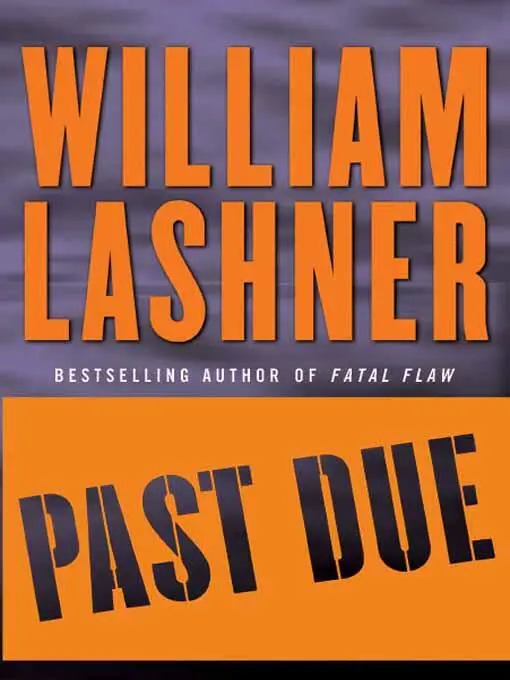
- Название:Past Due
- Автор:
- Жанр:
- Год:неизвестен
- ISBN:нет данных
- Рейтинг книги:5 / 5. Голосов: 1
-
Избранное:Добавить в избранное
- Отзывы:
-
Ваша оценка:
Past Due: краткое содержание, описание и аннотация
Предлагаем к чтению аннотацию, описание, краткое содержание или предисловие (зависит от того, что написал сам автор книги «Past Due»). Если вы не нашли необходимую информацию о книге — напишите в комментариях, мы постараемся отыскать её.
Past Due — читать онлайн бесплатно полную книгу (весь текст) целиком
Ниже представлен текст книги, разбитый по страницам. Система сохранения места последней прочитанной страницы, позволяет с удобством читать онлайн бесплатно книгу «Past Due», без необходимости каждый раз заново искать на чём Вы остановились. Поставьте закладку, и сможете в любой момент перейти на страницу, на которой закончили чтение.
Интервал:
Закладка:
I leaned forward. “Who?”
“The man? I think his name was Donnie. Could that be it? I’m not sure.”
“No. Who was Tommy infatuated with?”
She pulled the baby from her breast, laid the infant on her lap as she placed her right breast back in her shirt and pulled out the left. By then I wasn’t so interested in the sight, by then I had seen what I needed to see, her right areola without a blemish or mark of any kind, to know that Sylvia Steinberg was not the woman in Tommy Greeley’s photographs. So who was? It seemed she was ready to give me the answer.
When the baby was happily sucking at the left breast, the baby’s jaw now moving more for comfort than hunger, Sylvia said, “I don’t know. By then we weren’t confiding in each other.”
“So how did you know there was someone?”
“We were still pretending to be together – it was easier not to talk about the things we were going through with each other, easier to playact, you see – but I could tell. He was distant, distracted, he took a lot of showers, and then he picked up a new hobby which was so unlike him.”
“A new hobby?” I said.
“Tommy was never one for introspection, so his new little pastime was very surprising.”
“What was his new hobby?” I said.
And then she told me, and that’s when I knew.
Lincoln Drive emptied onto Kelley Drive, which swept along with the Schuylkill River until it raced past the great brown art museum, sitting high and imperious, and spilled into the Benjamin Franklin Parkway. The afternoon was getting late, rush hour was on, but I was driving against the main flow of traffic, slipping into the city, so the drive wasn’t an ordeal. Just a little stop and go, just enough time for me to put it all together. And I was, yes indeed, putting it all together. The luminous Chelsea. The furious Lonnie. The mysterious love interest that had given Tommy Greeley his new hobby. Somewhere in that matrix lay the root cause of Tommy Greeley’s murder twenty years before, and most likely the killer of Joey Parma. Wasn’t it exactly Joey’s luck to somehow fall into the middle of that crew? And at the epicenter of it all, I could tell now with utter certainty, was the woman in the photographs, my photographs, that woman.
I found a place to park with time on the meter. How lucky was that? Half an hour, I wouldn’t need much more, a couple quarters doubled it, and then I was on my way. I knew where she was, she had said a smart cracker like me could find it, and I was and I did. Skink had given me the address, an old rehabbed factory building, Skink had given me the security code to the front door, a pair of binoculars was all it took, he said, to snag that. No need to use the intercom, 53351 and I was in. Up the threadbare stairs, one flight, two flights, there was only one door on the third floor, large, metal, rusted around the edges and at the seams, the entrance to an old sweatshop of some sort. I gave it a bang.
“What was his new hobby,” I had asked. I thought it would be photography, I had the damn photographs, it had to be photography, but that wasn’t what Sylvia was referring to.
“What was his new hobby?”
“He started keeping a journal,” she said. “A diary. Wouldn’t let me peek, it was all very serious, very secret, but I could see him working all through the night, scribbling away, scribbling, scribbling.
‘What are you doing all that for?’ I asked him once. And what he said I thought was so terribly pretentious, so unlike him, that I knew it had come from someone else.”
“What did he say?”
“Only this. He said, ‘I’m turning my life into art.’ ”
I knocked again.
Footsteps. The door creaked open wide and there it was, smiling at me, the face I had been wondering about from the first time I had spied her naked body on those photographs.
“Come in, please. I’ve been expecting you for some time now.”
Oh, I bet she had.
Chapter 44
ABOVE HER WRITINGdesk, framed and written out in fine calligraphy, was a peculiar quotation that I remember for its apt strangeness. There was much to see in the huge studio loft of Alura Straczynski, fine paintings on the walls, photographs, colorful scarves tacked to the plaster as if billowing in the wind. There was a couch and a chair and a huge four-poster bed that sat in the center as if an altar to some great pagan entity. The ceiling was open and rough, with a web of pipes and wires over the beams and large gas heaters yawning down. The floor was apparently the same wide and scarred old wood that had been there when the building had been raised a century before. A scent of musk and flowers and exotic incense permeated the space, a scent that was both warm and intensely feminine. And there were the books, journals in all shapes and sizes, arranged neatly in a great mahogany bookcase standing up by the desk. They sat on their shelves like the collected ledgers of a venerable corporation, so many of them that it almost seemed the purpose of that space was to create and to house and to protect them. But it was the quotation that struck me most forcibly, a quotation from a man with whom I often could identify, another urban Jew suffering an intense bout of dislocation, Franz Kafka:
You do not need to leave your room. Remain sitting at your table and listen. Do not even listen, simply wait. Do not even wait, be quite still and solitary. The world will freely offer itself to you to be unmasked, it has no choice, it will roll in ecstasy at your feet.
And now, here I was.
Alura Straczynski, lover of Tommy Greeley and subject of his most ardent photographs, stood pensively by the door as I examined her loft. She wore a lose peasant shirt unbuttoned at the top, a long gauzy skirt, her hands were clasped one in the other, her arms held before her like a V. There was something of a dancer’s grace in the way she held herself back, tensed with anticipation. I couldn’t help but examine her closely, more closely than I ever had before, trying to see in her something of the woman in the photographs. Her thin arms, the long legs I could glimpse beneath her diaphanous skirt.
She caught me staring and smiled and there was something about the smile I didn’t like.
I turned away and examined again the large open space. There was a small kitchenette in one corner, a door leading to a bathroom in another, and by the window stood the tall writing desk with the framed quotation above it. No chair or stool squatted before it, just the desk, its upper surface about chest high and tilted slightly back, a heavy journal open atop it, a fountain pen and a pair of glasses resting atop the journal.
I noticed a framed photograph on the wall near the desk that looked familiar. I stepped toward it. A young Alura Straczynski, taken from the neck up, her shoulders bare, her head held at a dramatic angle. Where had I seen this photograph before? Yes, in the Mayan slate frame in Jackson Straczynski’s office. But there was something else that tolled familiar in the shot. The texture of her skin, the blank backdrop, the angle of the capture, the way the camera seemed to caress her features. I hadn’t noticed it when I had spotted it before but now it seemed obvious.
“Tommy Greeley took this,” I said.
“Why do you think so?”
“I’ve seen other examples of his work.”
“Have you indeed?” That damn smile again, as if she knew exactly what I had pinned to my bedroom wall.
“What is this?” I said, looking around.
“This is my studio.”
“And what do you do here?”
“Whatever I choose,” she said. “This is my sacred place. Sometimes I dance naked. Sometimes I paint.”
“Naked?” I said, staring once again at her. Her smile seemed strangely knowing.
Читать дальшеИнтервал:
Закладка:
Похожие книги на «Past Due»
Представляем Вашему вниманию похожие книги на «Past Due» списком для выбора. Мы отобрали схожую по названию и смыслу литературу в надежде предоставить читателям больше вариантов отыскать новые, интересные, ещё непрочитанные произведения.



Обсуждение, отзывы о книге «Past Due» и просто собственные мнения читателей. Оставьте ваши комментарии, напишите, что Вы думаете о произведении, его смысле или главных героях. Укажите что конкретно понравилось, а что нет, и почему Вы так считаете.