William Lashner - Past Due
Здесь есть возможность читать онлайн «William Lashner - Past Due» весь текст электронной книги совершенно бесплатно (целиком полную версию без сокращений). В некоторых случаях можно слушать аудио, скачать через торрент в формате fb2 и присутствует краткое содержание. Жанр: Триллер, на английском языке. Описание произведения, (предисловие) а так же отзывы посетителей доступны на портале библиотеки ЛибКат.
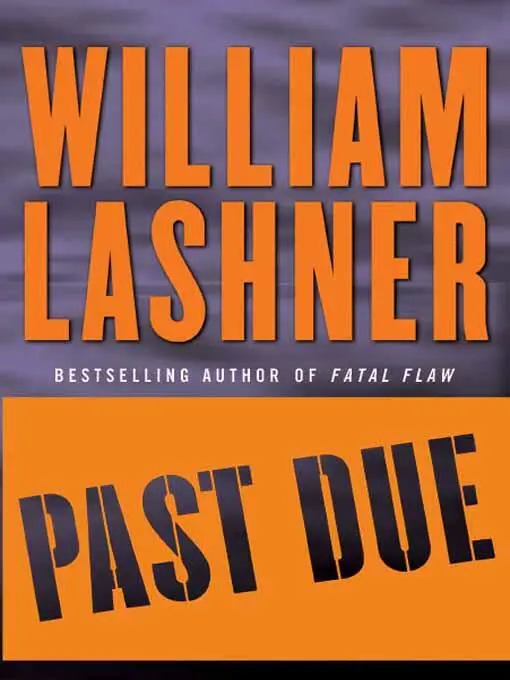
- Название:Past Due
- Автор:
- Жанр:
- Год:неизвестен
- ISBN:нет данных
- Рейтинг книги:5 / 5. Голосов: 1
-
Избранное:Добавить в избранное
- Отзывы:
-
Ваша оценка:
Past Due: краткое содержание, описание и аннотация
Предлагаем к чтению аннотацию, описание, краткое содержание или предисловие (зависит от того, что написал сам автор книги «Past Due»). Если вы не нашли необходимую информацию о книге — напишите в комментариях, мы постараемся отыскать её.
Past Due — читать онлайн бесплатно полную книгу (весь текст) целиком
Ниже представлен текст книги, разбитый по страницам. Система сохранения места последней прочитанной страницы, позволяет с удобством читать онлайн бесплатно книгу «Past Due», без необходимости каждый раз заново искать на чём Вы остановились. Поставьте закладку, и сможете в любой момент перейти на страницу, на которой закончили чтение.
Интервал:
Закладка:
We’ll be forever together, like we said, Jesse, like we promised. Together forever, you and me, like you told me was all you ever wanted, like you made me promise.
And then she kisses him, while they stand over the old man’s corpse, she promises my father everything he ever wanted just moments before, and she kisses him, and my father, God forgive him, kisses her back.
“Kissed,” he said in the softest of whispers as I leaned so close the plastic of his mask brushed against my ear. “Kissed her back.”
It would have been nicely symmetric if the poison of the story had its way with him right then, sent him into respiratory failure, clanging the alarms, bringing the army of doctors and nurses and technicians rushing to that room to battle for my father’s life as I stood by and watched with a horrified silence. But it didn’t right then, not right then. My father whispered, “Kissed her back,” and then his eyes closed and he drifted off to some finer place. And his respiratory rate eased, and his heartbeat slowed, and somehow the level of the oxygen in his blood started to rise. Eighty-eight percent. Eighty-nine percent. Ninety percent. I left my father in the hospital that night with a slight sense of hope that maybe the worst had been revealed and so the worst was behind him.
But it was a feint, hope with my father was always a feint, and the alarms were sounded not long after I stepped out the hospital’s front door.
Chapter 41
TRAFFIC COURT. ’NUFFsaid.
“All rise.”
About time.
We’d been waiting an hour for the judge to show his face, all of us assigned to Courtroom 16 in the large brick building on Spring Garden Street. We had stood in a line that stretched well out the door, we had raised our arms through the metal detectors, we had checked our cell phones at the information booth, we had clutched our summonses and found our courtrooms and taken our places on the hard black benches. We were there against our wills, we had better things to do, like root canal and the Jenny Jones Show, but there had been no choice for us, we were required by law to atone and atone we would, for against the traffic laws of the City of Philadelphia we all had sinned. We had driven with suspended licenses, we had driven without insurance, we had driven the wrong way down one-way streets, we had failed to yield, we had parked where we had no business parking, we had driven drunk, God forgive us, for MADD never would. We had run through red lights, we had run through stop signs, we had sped, yes we had, and it had felt good, shifting our gears as the tachometer flared and our hearts sang and our rate of speed flew above the legal limits. But believe us, Judge, the cops were out to get us, the radar guns were off, we didn’t do it, and we won’t do it again. We were good drivers, all of us, despite what our records said, and we were willing to pay the fines, but please, judge, please don’t give us the points, not the points, please.
“All rise.”
We rose as one.
The judge was a creased old man with a sun-lined face and yellow hair combed back over his skull. An unlit cigarette dangled from his lips. If you saw him on the street you’d feel sorry for him and offer to buy him coffee and an egg sandwich, but here, standing now behind the bench in his black robe, even unzipped as it was, you saw not the face of a homeless vagrant but instead the weathered face of justice. He sat. We sat. His name was Judge Geary, we all knew that because of the plaque on the edge of the bench that read JUDGE GEARY. He took a deep breath through the unlit cigarette, cocked his head like Dean Martin before a song, and said in his croak of a voice, “Let’s go.”
The gray-haired clerk took the first file off his pile, called out a name in a voice sharp and loud, walked the file to the judge, and Traffic Court began.
It didn’t take much crushing insight to figure out how Traffic Court worked in Philadelphia. The first names called were all of defendants represented by counsel. The judge would read the offense and shake his head with dismay. The lawyer would say a few rote words in defense. The judge would reduce the fine, order no points be given, admonish counsel to explain to the client what he had done wrong so he wouldn’t do it again. It seemed, in those first few cases, that the judge was in a fine mood at this session and lenience would hold sway. We, all of us, sitting on our benches with our summonses in our laps and our licenses on the line, we, all of us, felt the stirrings of relief. And then the first case was called without representation of a lawyer and things suddenly turned.
“What were you doing going the wrong way down Locust Street?” said the judge.
“I was on my way to the doctor,” said the defendant.
“Answer the question,” barked the clerk.
“I didn’t know-”
“Pay the fine, full points, court costs. Next.”
“But Judge-”
“Next.”
“Move along,” said the clerk before he called the next name.
“You know you can’t drive without insurance, don’t you?” said the judge to the next defendant.
“I couldn’t get it. No one would give it and I had to get to work. I got a kid-”
“But you can’t drive without insurance. Here you are running stop signs without insurance. What would have happened to the pedestrian you might have hit?”
“I didn’t hit no-”
“Answer the question.”
“I slowed down at the stop sign, I did. The cop was-”
“Give me your license, Ms. Jenkins. Give it right up. You’ll get it back in six months.”
“But Judge, I got to-”
“Take the bus. Pay the two hundred, three points, license suspended, and not to be returned without proof of insurance. Next.”
“But Judge-”
“Move along,” said the clerk.
And on it went. And on.
It was a killing field in there, all manner of defenses shot down by old Judge Geary in the rigid pursuit of fines and points and the gleeful seizure of licenses. Except for those represented by counsel. Because, for some reason, the mere fact of having counsel by your side severely ameliorated the harshness of justice, and not just any counsel, but lawyers who make their living in Traffic Court, lawyers whose practice depends on the kindness of judges, elected judges, judges who must raise money every five years as they run for reelection.
Sniff sniff. What’s that I smell? Crab fries?
Well, all right, that was the way the game was played. And no, in all my life I had never donated a cent to the campaigns of those noble public servants running for a position on Traffic Court. But still, I was wondering why the clerk hadn’t yet called my name. Before court began I had identified myself as a lawyer, and he had pulled aside my file. In every courtroom in the land where the public stands before a judge, lawyers go first. It wasn’t courtesy, it was custom, and yet here I was, still waiting.
I drew the clerk’s attention. He was an older man, with big shoes, a tight smile, and a face full of secrets. His silver hair was shiny with grease and pulled straight back like the grill of a sleek old Caddie. He wore his navy blazer with the medallion of the Philadelphia Traffic Court at his breast and a thick ring on his pinkie.
I raised a finger, looked at my watch.
He nodded and called another name not my own.
There wasn’t much more I could do. I sat slumped on the lawyers’ bench in the well, watching the ruthless enforcement of the traffic laws in case after case after case, wondering if ever I would be called, when the back doors of the courtroom swung open and two uniformed cops, with guns on their hips, stepped into the courtroom.
I sat up straight, passed my gaze over those still waiting for their hearings. Uh oh, I thought, someone is not getting off with merely a fine and points. Someone is in serious trouble. And then the clerk, in a clear, hard voice, called out, “Victor Carl.”
Читать дальшеИнтервал:
Закладка:
Похожие книги на «Past Due»
Представляем Вашему вниманию похожие книги на «Past Due» списком для выбора. Мы отобрали схожую по названию и смыслу литературу в надежде предоставить читателям больше вариантов отыскать новые, интересные, ещё непрочитанные произведения.


Обсуждение, отзывы о книге «Past Due» и просто собственные мнения читателей. Оставьте ваши комментарии, напишите, что Вы думаете о произведении, его смысле или главных героях. Укажите что конкретно понравилось, а что нет, и почему Вы так считаете.