Mark Billingham - Buried
Здесь есть возможность читать онлайн «Mark Billingham - Buried» весь текст электронной книги совершенно бесплатно (целиком полную версию без сокращений). В некоторых случаях можно слушать аудио, скачать через торрент в формате fb2 и присутствует краткое содержание. Жанр: Триллер, на английском языке. Описание произведения, (предисловие) а так же отзывы посетителей доступны на портале библиотеки ЛибКат.
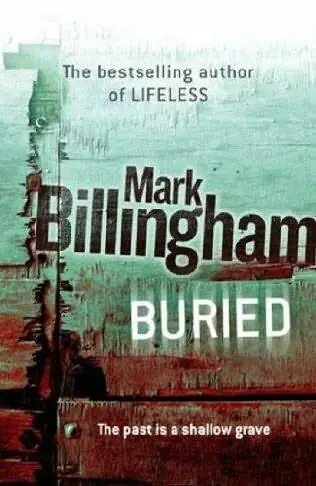
- Название:Buried
- Автор:
- Жанр:
- Год:неизвестен
- ISBN:нет данных
- Рейтинг книги:5 / 5. Голосов: 1
-
Избранное:Добавить в избранное
- Отзывы:
-
Ваша оценка:
Buried: краткое содержание, описание и аннотация
Предлагаем к чтению аннотацию, описание, краткое содержание или предисловие (зависит от того, что написал сам автор книги «Buried»). Если вы не нашли необходимую информацию о книге — напишите в комментариях, мы постараемся отыскать её.
Buried — читать онлайн бесплатно полную книгу (весь текст) целиком
Ниже представлен текст книги, разбитый по страницам. Система сохранения места последней прочитанной страницы, позволяет с удобством читать онлайн бесплатно книгу «Buried», без необходимости каждый раз заново искать на чём Вы остановились. Поставьте закладку, и сможете в любой момент перейти на страницу, на которой закончили чтение.
Интервал:
Закладка:
Driven to stab. To steal children.
It was the way things went though, wasn’t it? Swings and roundabouts, whatever you wanted to call it. Anything that felt good was ultimately going to hurt you. Cigarettes and chocolate. Sex and sugary deceit.
The door opened and someone came into the toilets, so he turned on the tap, splashed water into his face to hide the tears.
He needed to get back to his office anyway. There was plenty to get on with.
As he pressed the paper towel to his face, he thought about the pithy slogan that dieters used, that he’d seen on a fridge magnet at his sister’s place. The phrase so beloved of those keen to change themselves, to make their lives better. A simple reminder that to give into temptation was to pay for the rest of your life. He smiled at his colleague in the mirror, then turned away towards the door.
A minute on the lips…
TEN
Peter Lardner worked as a probation officer for the Borough of Westminster, based in an office at Middlesex Guildhall Crown Court. The Guildhall was located on the north side of Parliament Square, which meant that Thorne and Porter met up again after lunch close to where they’d parted company five or six hours before. Porter moaned about having to come all the way south again, but at least the weather had improved since they’d last walked across the square. Thorne’s leather jacket had dried out, and Porter tossed what looked like an expensive waterproof coat across her arm. Thorne thought it was the type favoured by that strange breed who trudged across hills of a weekend, pockets stuffed full of Kendal mint cake.
‘Are you a walker?’
‘Only as far as the car,’ Porter said.
For all its gargoyles and ornate Gothic stylings, the Guildhall was less than a century old, but it was an imposing building nevertheless, with a position as historic as any in the city. It had once been the site of the Sanctuary Tower, from where, ironically, the seven-year-old Duke of York had been dragged, en route to being murdered with his elder brother by the future Richard III. Four centuries later, Tothill Fields Prison had stood on the same spot, housing inmates as young as five years old in conditions only slightly less horrific than those a mile or two up the river in Newgate. And the building was still playing its part in constitutional history. Later in the year it was due to close, before reopening in 2008 as the Supreme Court, new home to a dozen fully independent law lords, and the single highest court in the country.
As Thorne and Porter climbed the stone stairs towards the Probation Service offices, Thorne decided that the Princes in the Tower killings would almost certainly be handled nowadays by Roper and his Sexy enquiries team. And that, although those sitting nervously outside several courtrooms were much older than five, he doubted that a single one of them was there because they’d stolen a loaf of bread…
Though most of the seven courtrooms were as austere and darkly elegant as the fabric of the building itself, many of the offices attached to them were more basic. The room Thorne and Porter found themselves sitting in was dingy and utilitarian; and, if Callum Roper’s appearance had been as immaculate as his shiny new home, Peter Lardner reflected his own, dowdier surroundings equally well.
He looked as miserable as the shittiest kind of sin.
‘I know what Grant Freestone would say.’ Lardner pushed his hands out in front of him. Slid his arms across the top of his desk, as if he wanted nothing so much as to lay his head down on top of them and go to sleep. He answered Thorne’s question in a low voice, all but free from expression, speaking to a point on the coarse, grey carpet somewhere between his desk and the chairs in front of it. ‘He’d deny it. Same as he’d probably deny killing the woman he pushed through that coffee table. He denied taking those kids as well, even after they found them tied up with gardening twine in his garage.’
‘Had a problem facing up to stuff, did he, Mr Freestone?’ Porter asked.
‘He thought the world was out to get him.’
‘It might well have been,’ Thorne said. He knew a decent-sized corner of the world where they plastered pictures of alleged paedophiles on the front pages of their newspapers. Where the police might be waiting at Boots when you went to pick up photos of your child in a paddling pool. Where a paediatrician could have her house burned down, because some idiot got their words confused. If that world was going to get anyone, it would be a man like Grant Freestone.
‘He certainly got a few good kickings inside,’ Lardner said. ‘He got used to the taste of tea with piss in it.’
‘He must have been to our canteen,’ Porter said.
Lardner nodded, acknowledging the joke, but not quite able to laugh at it. Later, Thorne and Porter would both admit to having had him down as someone who didn’t find too many things funny, but they both conceded that if they had to spend as much time as Lardner did talking to criminals, they wouldn’t have much to chortle about, either. Just trying to catch the buggers was enough of a pain in the arse.
Thorne put the man somewhere in his late forties. Though the hair showed few signs of grey, it was thinning on top, and the eyes were pale and bright behind metal-framed glasses. He wore what was, strictly speaking, a suit and tie, but the various items of clothing looked tired and pissed off with each other. He reminded Thorne of a teacher he’d liked at school, a man who would stop halfway through a geography lesson, tell them it was all a waste of time and read them stories instead. Sherlock Holmes and The Thirty-nine Steps…
‘What do you think, though?’ Thorne asked. ‘You probably knew him better than anyone on that panel, and, obviously, we don’t know anybody who’s seen him since he did a runner. Do you reckon he’s capable of taking a kid for an altogether different reason?’
‘Do I see him as a kidnapper?’
They had not told Lardner anything beyond the basic fact of the kidnap and the suspicion about a long-held grudge. He knew nothing about the double murder at the flat in Bow. As Thorne asked the question, he was mentally putting a more complete version of it to himself, and the answer was unequivocal.
Do you see Grant Freestone as a man who somehow convinced two other people to do the kidnapping, then killed them and took over the job himself?
Not in a million years…
‘I’m not convinced,’ Lardner said. He straightened up, suddenly a little more energised than he had been. ‘He wasn’t what you’d call “organised”. In the sense of getting your shit together, turning up on time and whatever. Or in the way they use that word to describe certain types of criminal.’
‘Killers, usually,’ Porter said.
‘Right. Which, as far as Freestone goes, is something else I’m not completely convinced of. You’ve got to be organised, wouldn’t you say, to carry out a kidnapping? It’s not just something you do on impulse, is it? You don’t just grab a kid off the street on a whim, even if you are pissed off with his father.’
‘What about those kids in his garage?’ Thorne said.
Porter tucked a strand of hair behind her ear. ‘He seemed to manage that OK.’
‘That was an urge he couldn’t control,’ Lardner said. ‘That wasn’t planned. Which is precisely why they caught him.’
Thorne and Porter shared a look; they both knew that was probably untrue. It was often those who did what they did instinctively – the rapists, the killers – who were the hardest to stop. Those who thought could make life too complicated for themselves eventually, end up thinking themselves right into Broadmoor or Belmarsh.
Читать дальшеИнтервал:
Закладка:
Похожие книги на «Buried»
Представляем Вашему вниманию похожие книги на «Buried» списком для выбора. Мы отобрали схожую по названию и смыслу литературу в надежде предоставить читателям больше вариантов отыскать новые, интересные, ещё непрочитанные произведения.




Обсуждение, отзывы о книге «Buried» и просто собственные мнения читателей. Оставьте ваши комментарии, напишите, что Вы думаете о произведении, его смысле или главных героях. Укажите что конкретно понравилось, а что нет, и почему Вы так считаете.