Jason Elliot - The Network
Здесь есть возможность читать онлайн «Jason Elliot - The Network» весь текст электронной книги совершенно бесплатно (целиком полную версию без сокращений). В некоторых случаях можно слушать аудио, скачать через торрент в формате fb2 и присутствует краткое содержание. Жанр: Триллер, на английском языке. Описание произведения, (предисловие) а так же отзывы посетителей доступны на портале библиотеки ЛибКат.
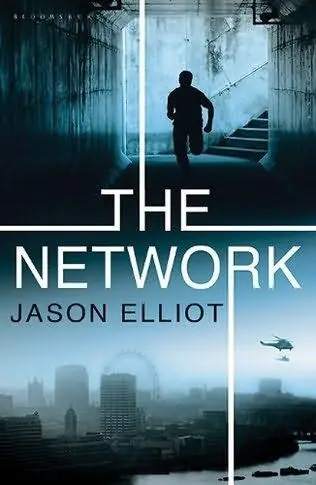
- Название:The Network
- Автор:
- Жанр:
- Год:неизвестен
- ISBN:нет данных
- Рейтинг книги:4 / 5. Голосов: 1
-
Избранное:Добавить в избранное
- Отзывы:
-
Ваша оценка:
The Network: краткое содержание, описание и аннотация
Предлагаем к чтению аннотацию, описание, краткое содержание или предисловие (зависит от того, что написал сам автор книги «The Network»). Если вы не нашли необходимую информацию о книге — напишите в комментариях, мы постараемся отыскать её.
The Network — читать онлайн бесплатно полную книгу (весь текст) целиком
Ниже представлен текст книги, разбитый по страницам. Система сохранения места последней прочитанной страницы, позволяет с удобством читать онлайн бесплатно книгу «The Network», без необходимости каждый раз заново искать на чём Вы остановились. Поставьте закладку, и сможете в любой момент перейти на страницу, на которой закончили чтение.
Интервал:
Закладка:
It’s the Afghan version of a B road, virtually impassable by Western standards but not at all bad by Afghan ones, and it’s more like being in a boat than a car because of the constant pitching and rolling. Sometimes the rocky surface of the road changes to packed earth and suddenly the crunch of stone under us is silenced as if by a ceasefire. But it’s only ever for a few miles before we are fighting the dust and stone again.
In the early afternoon we stop to buy some apples from a farmer who’s put up a stall by the side of the road. As I’m talking to the farmer, our men take their pattus, lay them over the ground near the road, and perform their afternoon prayers.
We move west through a landscape of great beauty, winding through a succession of long broad valleys where the surrounding slopes glide gently down towards the emerald-coloured patchwork of the valley floors. Beyond Jalrez, the slopes begin to steepen and grow less gentle, and the grassy bloom turns to darker stone, which rises steadily on both sides of the road.
Several hours later I hear Aref’s voice on the two-way.
‘We’re coming to Gardandiwal,’ he says. ‘I think we should stay here tonight. We won’t reach Bamiyan today.’
Gardandiwal sits at the crossroads of four mountain ranges and has the feeling of a primitive gold miners’ outpost from the nineteenth century. We install ourselves at a tiny mehman-khana beneath the clusters of mud-walled homes that sprawl up the hillside. At sunset we sit on the wooden veranda and the owner brings us kebabs and rice. The river that runs through the place is called the Helmand, says the owner of the place. It rises in the mountains to the north-east and flows all the way through the centre of the country, surrendering itself eventually to the deserts beyond Kandahar.
We move on shortly after dawn. The road begins to rise and the mountains to tighten around us. There’s no ongoing fighting in the area but the next day several pickup trucks with heavily armed men pass us in the opposite direction. They look battle-weary and well travelled, and their clothes and turbans and weapons are thick with dust. I wonder where they’ve come from and where they’ll end up. It seems likely they’re moving back to Kabul from the recent fighting in and around Yakawlang, avoiding the northern route via the Shomali plain, where Massoud’s forces are harassing their fellow fighters.
We are less than a hundred miles from the capital but we seem already to have moved back centuries. As we near the Hajigak Pass there’s a construction team hewing a new section of road from the mountainside, and there’s a long wait as we allow trucks coming the other away to squeeze past. There is no machinery. Just 500 men with pickaxes and spades, working at a furious pace, carving out and levelling the black rock. Watching them work, I have the feeling once again that we’re going back in time.
You can’t get this feeling from a map. The speed at which the influence of Kabul drops away is like a stone falling into a well.
‘Look,’ I say to H, pointing to the men hacking at the rock. ‘Afghan infrastructure.’
‘I can see why the Soviets failed here,’ he says. ‘If you invade a country you have to control the infrastructure. There isn’t one.’
H is right. Afghans depend on so little for their survival that there isn’t much for an invading army to control. The mechanisms by which a modern government influences its people simply don’t exist. Power, and its pursuit, is a fragmented and intensely local affair, and central government has never meant much to Afghans. The capital has never had significant influence in the countryside, except to take taxes or conscripts. Rural Afghanistan is made up of communities that depend on a close-knit structure of local rights designed to protect fragile resources. And since Afghans live from their land, their lives are bound up with the practical realities of survival, not abstract political or social goals. Fifty miles from the capital might as well be a different country. Five, even.
We pause at the top of the Hajigak Pass to admire the spectacular view. The men pray beside the cars. The engines smell hot. The peaks to the east and west of us soar to 15,000 feet, and the road behind and beyond us swoops down to loop between the intersecting spurs of the valleys. Then, from just below our line of sight, a man wearing a giant brown turban appears as if from out of the ground, flanked by a pair of grinning friends. The fact that he’s lost his right leg to a mine and must have ascended the pass on his crutches gives the sight a surreal quality. He stares at us with a mute grin, which reveals a wide gap where a tooth has been knocked out, and I marvel at his physical hardiness before giving him a few afghanis for his troubles, wondering how far he’ll have to go before he reaches home.
A long and winding descent leads us towards the Bamiyan valley. The surrounding geology seems to pass through every colour of the spectrum as we creep down, deepening to a purplish shade of red as we near the valley floor and turn west towards the site of the famous Buddhas. I catch glimpses of stairways and walls and ruined galleries in the cliffs above us and am reminded that Bamiyan was once a Buddhist state that resisted its Muslim overlords until well after their arrival in the seventh century. Its natural setting has always enchanted visitors. I don’t know if it’s because of the time of day, but the light seems particularly magical, and now that we’ve been released from the grasp of the mountains the valley seems a place of delicacy and charm, where slender poplars line the riverbanks and their pale leaves shimmer in the soft flame of the afternoon sun.
‘This place is stunning,’ says H. ‘I thought Afghanistan was all rocks and desert, but this is something else.’
Closer to the town, in the folds of reddish stone above us, we can make out the crumbling towers and ramparts of another long-abandoned fortified settlement. It’s Shahr-e Gholghola, the City of Lamentation, laid to waste, so the story goes, by Chengiz Khan himself in 1222.
But the town itself brings a different feeling. It’s strange to look at, because the last time I was here there was a thriving bazaar where there are now ruins. A whole section of the town has simply been annihilated. Its obvious there’s been heavy fighting and the majority of the local Hazara families have fled. They are still the underdogs of Afghan society. Their virtually autonomous kingdom was smashed by the nineteenth-century king Abdur Rahman, and the Pashtun tribes have treated them like slaves ever since. Their recent battles with the Taliban have been particularly fierce.
The radio crackles into life, and I hear Aref’s voice.
‘Taliban checkpoint ahead,’ he says. Then Momen grabs the radio from him.
‘Make sure your beard is long enough.’ He chuckles.
‘So long as it’s only my beard they want to measure,’ I say, because there are lots of jokes like this about the Taliban. Cackles of laughter erupt from both men.
‘Drive up slowly and stop,’ I say.
It’s time to introduce ourselves to the local Taliban commander. A black flag flutters from a small command post on a bluff above us, towards which Aref and Sher Del walk. They are met by two armed Talibs. They are not unfriendly, but have the tense look of people who know they don’t belong. A few others descend from the post and circle the cars but don’t quite dare to search them.
H and I get out, distribute some cigarettes to break the ice and ask if we can walk up to the Buddhas. The fighter standing next to me shrugs as if to ask why we’d want to bother but walks up with us. He leads us through a warren of steps and tunnels until we emerge above the hollow niches from which the giant statues have gazed for 1,500 years. From the top we can see a fantastic range of snow-covered peaks to the south. Closer to we can make out a red jeep racing towards our position, trailing a plume of dust.
Читать дальшеИнтервал:
Закладка:
Похожие книги на «The Network»
Представляем Вашему вниманию похожие книги на «The Network» списком для выбора. Мы отобрали схожую по названию и смыслу литературу в надежде предоставить читателям больше вариантов отыскать новые, интересные, ещё непрочитанные произведения.







Обсуждение, отзывы о книге «The Network» и просто собственные мнения читателей. Оставьте ваши комментарии, напишите, что Вы думаете о произведении, его смысле или главных героях. Укажите что конкретно понравилось, а что нет, и почему Вы так считаете.