Jason Elliot - The Network
Здесь есть возможность читать онлайн «Jason Elliot - The Network» весь текст электронной книги совершенно бесплатно (целиком полную версию без сокращений). В некоторых случаях можно слушать аудио, скачать через торрент в формате fb2 и присутствует краткое содержание. Жанр: Триллер, на английском языке. Описание произведения, (предисловие) а так же отзывы посетителей доступны на портале библиотеки ЛибКат.
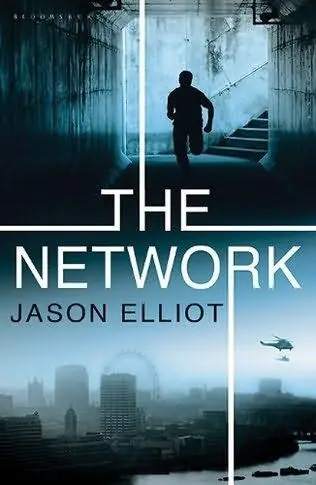
- Название:The Network
- Автор:
- Жанр:
- Год:неизвестен
- ISBN:нет данных
- Рейтинг книги:4 / 5. Голосов: 1
-
Избранное:Добавить в избранное
- Отзывы:
-
Ваша оценка:
The Network: краткое содержание, описание и аннотация
Предлагаем к чтению аннотацию, описание, краткое содержание или предисловие (зависит от того, что написал сам автор книги «The Network»). Если вы не нашли необходимую информацию о книге — напишите в комментариях, мы постараемся отыскать её.
The Network — читать онлайн бесплатно полную книгу (весь текст) целиком
Ниже представлен текст книги, разбитый по страницам. Система сохранения места последней прочитанной страницы, позволяет с удобством читать онлайн бесплатно книгу «The Network», без необходимости каждый раз заново искать на чём Вы остановились. Поставьте закладку, и сможете в любой момент перейти на страницу, на которой закончили чтение.
Интервал:
Закладка:
We skirt north of Panjab the next morning and begin the slow and winding route towards the south-west that will take us out of Bamiyan province and into Oruzgan. It takes us five days. The landscape seems ever more wild and beautiful and untouched by the world beyond. An entire day is spent losing and refinding the correct route, driving into valleys where the track ends at the foot of a mountain or dissolves into a rock-strewn wilderness. Aref surprises me by remembering that he has some old maps in the pickup, and produces them the next morning. They’re 1:200K Soviet military maps from the 1980s, and they’re far better than the ones we’ve got. It takes a little longer to transliterate the place names, which are printed in Cyrillic script, into English and then into Persian, but they’re extraordinarily detailed.
The problem is that the locals we ask have no idea of the names of villages only a few miles distant and give us contradictory directions because they’ve never driven there and travel on paths where we can’t. To the villagers we are like aliens from a distant planet, and whenever we stop we are endlessly questioned as to where we come from by men who are barely aware that there’s even a war going on.
In one village we are sung to by a melancholy blind man who predicts that our journey will end in fire. In another we meet a man with a dancing bear, and are shown the grave of a teenage boy whose body is said to have remained intact and undecayed more than three years after his death. At another we give a lift to an old man with a club foot and a fat-tailed sheep from one end of the valley to another. By the time we are a day’s drive away from the fort, it’s our own mission that seems unreal, and the strangeness of our surroundings that has become real.
When we reach Sarnay, beyond a spectacular final pass that crests between two 13,000-foot peaks, it’s as if we’ve broken free of the grasp of the mountains. There are still some high peaks beyond us, but nothing over 10,000 feet, and the route we’re planning to follow stays on the valley floor from now on. But in the mehman-khana where we settle for the evening there’s news from an unexpected quarter.
There’s a wiry jovial old man staying in the place, who’s walked with his donkey from a village about ten miles away called Daymalek. He sits among us as the owner of the place lights several oil lanterns and puts them on the floor near us, and tells the story of how he used to smuggle weapons on his donkey past a Soviet checkpoint in the days of the jihad.
‘He’s a big smuggler,’ Aref jokes with him, ‘famous across Afghanistan.’
The old man wheezes with delight.
‘What are you smuggling these days, Hajji?’ asks Sher Del teasingly. ‘Come on, we won’t tell.’
‘Donkeys!’ exclaims the old man, and a ripple of laughter spreads through the room. ‘Right under the noses of those cursed Arabs!’ He chuckles.
But at this we all fall silent, and the old man looks at our faces wondering what it is he’s said.
‘Hajji,’ says Aref, ‘there are no Arabs around here.’
‘Wallah,’ he says. ‘By God there are. Where the roads meet between Sharow and Dasht, not half a day’s walk from here. A cultureless people,’ he adds dismissively. ‘I’ve heard Arabic, and I know what it sounds like. They’re Arabs alright. They dress wrong too.’
And suddenly we all know it’s time to revise our plan because this means there’s an al-Qaeda checkpoint further down the valley.
In the morning when we’re alone, we gather over the maps. There’s no other way out of the valley except through the checkpoint, but we’re all agreed that if there really are al-Qaeda there, they won’t take kindly to the presence of foreigners.
We all move cautiously down the valley later in the morning, but when we’re beyond the village called Dasht, H and I climb a ridge that will give us enough height to OP the checkpoint. We keep our ascent hidden and stay below the skyline, settling after a half-hour climb between some boulders from which there’s a clear view of the valley floor.
H takes out the Kite sight and positions it carefully so that it’s shielded from the sun. He puts it to his eye and adjusts the focusing ring on the eyepiece.
‘Definitely a checkpoint,’ says H. ‘PK on the roof. Generator out the back. And it looks like they’ve got comms. Have a look at that antenna. We don’t want to get involved with them.’ He hands me the Kite. ‘What do you make of those blokes outside the building where the jeep’s parked?’
I put the sight to my eye and the world shoots forward, shimmering in the heat haze. They’re half a mile away but I can clearly make out a man leaning against the wall with one foot propped behind him. His hand rises and falls as he puts a cigarette to his mouth. Another man is talking to him, then turns and enters the building. As he turns I can see he’s wearing bulky webbing across his chest. They both have AKs over their shoulders. What distinguishes them from the others around them is that instead of the traditional shalwar kameez, they’re wearing desert combat trousers and nothing on their heads, which is almost unthinkable for an Afghan. And though it’s harder to define, they don’t move like Afghans either. I share these observations with H.
‘Time for a meeting,’ he says. He covers the end of the Kite before packing it away, then sinks down and away from the skyline.
The others are waiting for us below, where we agree on a plan. H and I, accompanied by Momen, will move on foot to the neighbouring valley to the north, cross the Kadj river, and rejoin the others at a village called Garendj. We’ll take the Kite and one of the radios, and wear the Brownings against our bodies. I’ll carry Mr Raouf’s AK-SU so that in the event of a search the others won’t be incriminated. And before we move we’ll watch the others from the ridge above as they negotiate the checkpoint, and wait until they’ve passed safely through.
‘Your equipment will be ruined if you have to cross the river,’ protests Sher Del.
‘Tell him not to worry about that,’ says H. ‘And don’t use the radio,’ he says to Aref. ‘Keep it switched on in your pocket and press transmit three times if there’s an emergency.’
Aref nods.
‘What will we do if there is an emergency?’ I ask H.
‘We’ll emerge,’ he says, throwing me one of his dark looks, so I leave it at that. Then we gather the things we need from the G and pack them into his Bergen.
Like everything else, it takes longer than anticipated. From the ridge we watch as the vehicles reach the checkpoint and are waved to a halt by one of the Taliban guards. Another Talib comes out of the nearby building, and reads what we assume is the permission given to us back in Bamiyan. Aref gets out of the pickup, and is joined by Sher Del, who’s driving the G. The Talibs circle the vehicles like hyenas around their prey.
It’s an exasperating sight. Another Talib is observing the proceedings from the roof of the building. Then they all disappear inside for fifteen minutes, until Aref returns to the pickup to retrieve some documents. One of the foreign fighters we’ve seen earlier is with him, and seems to be asking a lot of questions.
Momen, who is so surprised by the power of the Kite sight he can’t take his eyes off it, agrees that the men we’ve seen aren’t Afghans. We take turns watching the checkpoint for about half an hour, sharing our observations. Occasionally one of our team comes out, smokes a cigarette conspicuously as a signal to us that things haven’t got too bad, then heads back inside to join what is obviously a protracted discussion.
‘Maybe,’ says Momen, with characteristic mischief, ‘those Taliban are lonely, and they want to make new friends.’
Читать дальшеИнтервал:
Закладка:
Похожие книги на «The Network»
Представляем Вашему вниманию похожие книги на «The Network» списком для выбора. Мы отобрали схожую по названию и смыслу литературу в надежде предоставить читателям больше вариантов отыскать новые, интересные, ещё непрочитанные произведения.








Обсуждение, отзывы о книге «The Network» и просто собственные мнения читателей. Оставьте ваши комментарии, напишите, что Вы думаете о произведении, его смысле или главных героях. Укажите что конкретно понравилось, а что нет, и почему Вы так считаете.