Arnaldur Indriðason - Operation Napoleon
Здесь есть возможность читать онлайн «Arnaldur Indriðason - Operation Napoleon» весь текст электронной книги совершенно бесплатно (целиком полную версию без сокращений). В некоторых случаях можно слушать аудио, скачать через торрент в формате fb2 и присутствует краткое содержание. Жанр: Триллер, на английском языке. Описание произведения, (предисловие) а так же отзывы посетителей доступны на портале библиотеки ЛибКат.
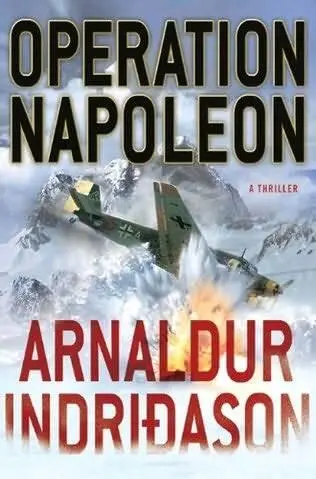
- Название:Operation Napoleon
- Автор:
- Жанр:
- Год:неизвестен
- ISBN:нет данных
- Рейтинг книги:4 / 5. Голосов: 1
-
Избранное:Добавить в избранное
- Отзывы:
-
Ваша оценка:
Operation Napoleon: краткое содержание, описание и аннотация
Предлагаем к чтению аннотацию, описание, краткое содержание или предисловие (зависит от того, что написал сам автор книги «Operation Napoleon»). Если вы не нашли необходимую информацию о книге — напишите в комментариях, мы постараемся отыскать её.
Operation Napoleon — читать онлайн бесплатно полную книгу (весь текст) целиком
Ниже представлен текст книги, разбитый по страницам. Система сохранения места последней прочитанной страницы, позволяет с удобством читать онлайн бесплатно книгу «Operation Napoleon», без необходимости каждый раз заново искать на чём Вы остановились. Поставьте закладку, и сможете в любой момент перейти на страницу, на которой закончили чтение.
Интервал:
Закладка:
‘Load the body bags into the plane,’ he ordered and started to walk away. He was halfway out of the tent when Kristín shouted at his back:
‘I know about Napoleon!’
Ratoff stopped dead, then turned round.
‘I said I know all about Napoleon,’ Kristín repeated.
‘You have no idea what you are talking about,’ Ratoff said, entering the tent again.
‘I know about the Napoleon documents,’ Kristín continued, in a blind rage. ‘Or Operation Napoleon, as it was known.’
‘Tell me, Kristín. What exactly do you know about it? Or is it just a word you have heard? I’m afraid that’s not much of a card to play,’ Ratoff sneered.
‘Everything. What the Germans were up to,’ Kristín said, feeling her way blindly. ‘I know what your precious plane is hiding. A secret in a briefcase. No bomb, no gold, no virus. Just papers.’
‘Well, well. Let’s imagine you do. Who else knows about Napoleon?’ Ratoff asked, standing right in front of her again. His soulless eyes searched hers. He repeated his question and Kristín realised that she had touched a nerve but had no idea how to press her advantage. Her mind was blank. Under his gaze she felt paper-thin, transparent, exposed.
‘Who have you told about Napoleon?’ Ratoff asked, and Kristín saw a sudden flash of steel in his hand.
Chapter 32

KEFLAVÍK AIRPORT,
SUNDAY 31 JANUARY, 0015 GMT
Vytautas Carr stood in the doorway of hangar 11 at Keflavík Airport, gazing out into the night, his mind preoccupied, his nerves frayed. Although he could not see the C-17 in the darkness, he knew it was being prepared for take-off. The two halves of the plane would be airlifted from the glacier imminently, and if all went according to plan, they would have left Icelandic soil within three hours. Then it would be over.
The Icelandic authorities were becoming increasingly agitated. More importantly, they were confident that they had legitimate grounds for protest and any hint of subservience in their relations with US officials had long been cast aside. The US embassy in Reykjavík had been questioned by the media in connection with the pub shooting and also what the press described as the military operations on Vatnajökull. As if that were not enough, the Reykjavík police had learnt of troop movements on the glacier; someone in the force knew Ratoff’s name and had been asking questions both of the embassy and also of the army authorities in Keflavík. A Coast Guard helicopter had been dispatched to pick up two men who were reported to have had an accident on the glacier. The Coast Guard were, moreover, aware that the Defense Force had failed to respond to a mayday from the men’s teammates. Meanwhile Reykjavík air traffic-control had been tracking the movements of the Pave Hawk helicopters. It would not be long before this information leaked out and people began to connect it with the fabricated volcanic eruption alert that had been broadcast earlier on the radio; they would draw their own conclusions. By then it would no longer be possible to suppress the affair.
He had long reflected on the possible consequences if the purpose of the operation were exposed; not just the international outrage but also the consequences for him personally. It was his responsibility to ensure that the story of the plane never got out; he was in charge of the mission that had already cost two lives; it was he who had illegally deployed US special forces troops in the territory of a friendly nation and instigated a web of lies, fabrications and manipulation. The buck would stop with him. A few days ago he had been happily planning his retirement; now he was filled with trepidation about the future.
The first priority was to secure the plane wreckage and what it contained. What happened after that did not really matter. The remaining soldiers would return to the base and the admiral would invent some halfway convincing untruth to account for the presence of his men on the glacier. They would bombard the Icelanders with misinformation until any news about the army came to be regarded as suspect. The process had already begun. They could expect public anger, condemnation and hostility, but it would all be for show, since Iceland still could not decide whether it wanted the American army in its territory or not. Carr was not losing any sleep over the public reaction. Economic considerations would prevail in the end. In a week or two nobody would give a damn about US military manoeuvres on Vatnajökull.
The only real danger of exposure came from that woman, Kristín, but who would give her the time of day once the plane had left the country? Who would believe her crazed talk about a German World War II plane that had been buried in Vatnajökull for half a century, concealing something dangerous, incomprehensible, preposterous? Carr felt certain that she was ignorant of the real secret. How could she know? They had tracked her movements minutely and knew who she had spoken to before she went to the glacier; no, there was nothing to indicate that she knew or understood the reality. No lasting damage had been done. Carr kept telling himself this, willing it to be true.
His thoughts strayed to the director of the operation and he wondered if he had put his faith in the wrong man when he chose Ratoff. Ratoff could be trusted to get things done but he exacted a high price in human lives in the process. Back in the early seventies, Carr had personally recruited him as a military intelligence agent; he had proved his worth but no one who worked with Ratoff felt any warmth towards him. He was a man people would rather not know, would rather turn a blind eye to. Eventually he became a type of invisible operative within the service, the subject of unconfirmed rumours that most preferred to ignore.
Carr’s knowledge about his background before he joined the organisation was better than most, but still sketchy. He had signed up to the marines in 1968 and served in Vietnam for two consecutive tours of duty. By the time he came from Vietnam to meet Carr he already had the scar. Ratoff had a simple explanation: an unfortunate accident; his rifle had caught between the door and door-frame in his barracks, firing a bullet into his face. The doctors had described it as a miracle that he did not hit an artery, his brain or spine, escaping with nothing more serious than damaged vocal cords. Carr, however, had sent a man to check up on his story who questioned the men in Ratoff’s platoon and heard various different accounts: Ratoff was a sadist who could always be trusted to go further than anyone else in trying to extract information from the enemy, even when there was no information to be had; he had maimed and killed to his heart’s content and it was said, though never confirmed, that he collected body parts from his victims as trophies. He would not have been the only marine to sport a necklace of human ears but Carr’s stomach turned at the thought. What was common to their stories was that Ratoff got his wound when a young Vietnamese woman managed to seize his gun and force him down on his knees in front of her, shooting him in the face. She had shot herself dead immediately afterwards.
However distasteful his reported conduct, Ratoff had proved valuable to army intelligence in South America in the early seventies. He served in El Salvador and Nicaragua, then Chile and Guatemala, involving himself with the troops that the government sent in to support dictators. When the US government later cut back on its support for right-wing dictatorships following vociferous protests at home, Ratoff was relocated to the Middle East. There he continued with his old habits, gathering information by means that Carr preferred to remain ignorant of. He was stationed in Lebanon, serving for a period with Mossad. By this time Ratoff did not officially exist. His intelligence records had been taken out of ordinary circulation and Carr had become one of only a handful of senior officials who knew of his existence. That was another qualification to lead this operation. No one would miss him.
Читать дальшеИнтервал:
Закладка:
Похожие книги на «Operation Napoleon»
Представляем Вашему вниманию похожие книги на «Operation Napoleon» списком для выбора. Мы отобрали схожую по названию и смыслу литературу в надежде предоставить читателям больше вариантов отыскать новые, интересные, ещё непрочитанные произведения.





Обсуждение, отзывы о книге «Operation Napoleon» и просто собственные мнения читателей. Оставьте ваши комментарии, напишите, что Вы думаете о произведении, его смысле или главных героях. Укажите что конкретно понравилось, а что нет, и почему Вы так считаете.