Ranulph Fiennes - Killer Elite
Здесь есть возможность читать онлайн «Ranulph Fiennes - Killer Elite» весь текст электронной книги совершенно бесплатно (целиком полную версию без сокращений). В некоторых случаях можно слушать аудио, скачать через торрент в формате fb2 и присутствует краткое содержание. Жанр: Триллер, на английском языке. Описание произведения, (предисловие) а так же отзывы посетителей доступны на портале библиотеки ЛибКат.
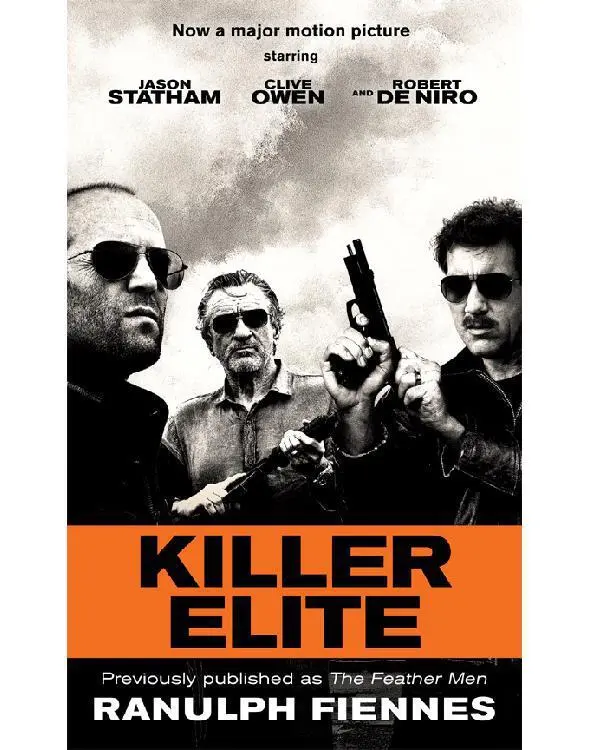
- Название:Killer Elite
- Автор:
- Жанр:
- Год:неизвестен
- ISBN:нет данных
- Рейтинг книги:3 / 5. Голосов: 1
-
Избранное:Добавить в избранное
- Отзывы:
-
Ваша оценка:
Killer Elite: краткое содержание, описание и аннотация
Предлагаем к чтению аннотацию, описание, краткое содержание или предисловие (зависит от того, что написал сам автор книги «Killer Elite»). Если вы не нашли необходимую информацию о книге — напишите в комментариях, мы постараемся отыскать её.
Killer Elite — читать онлайн бесплатно полную книгу (весь текст) целиком
Ниже представлен текст книги, разбитый по страницам. Система сохранения места последней прочитанной страницы, позволяет с удобством читать онлайн бесплатно книгу «Killer Elite», без необходимости каждый раз заново искать на чём Вы остановились. Поставьте закладку, и сможете в любой момент перейти на страницу, на которой закончили чтение.
Интервал:
Закладка:
I could see my men’s point of view. Just one wounded man would put us in a potentially disastrous position. As twenty-six fit and able soldiers, my platoon normally relied on speed, night travel and silence to survive. We would set out ambushes and then withdraw without delay back to the safety of the desert. Our greatest fear was to be cut off on the jebel. We had no stretchers, no mules, no helicopter assistance and, in the area Greening had indicated, no other Army backup to help us.
But orders were orders, so we drove south to the well of O’bet at dusk and climbed to the escarpment. After some miles we entered the foliated region of the jebel and behind us I saw flares fired into the air.
My sergeant whispered: “We are cut off. We must return by a different route.”
But we marched on through the night with our heavy loads of ammunition and water. No compass could have guided us along the confusing route of camel paths that meandered up and down deep wadis where no Sultanate troops had previously been fool enough to wander.
Within the thick screen of thorn bush and creeper that crammed the defiles, there was no room to maneuver off the narrow paths. Mosquitoes attacked in whining clouds and a sticky heat emanated from the foliage. After ten hours we came to a place of skull-like stones that littered the fields of knee-high grass. We stumbled and fell. I began to fear that dawn would find us short of Qum.
Dark amorphous shapes blobbed the upper slopes of the surrounding hills: wild fig trees and cattle kraals of thorn. Twice we passed the acrid tang of burning dung. To the southeast a patch of spreading gray crept into the blue-black sky.
The guide raised his hand. The village, he indicated, was directly below us. I moved with speed to place the sections before first light. Four or five men to a group, each with a machine gun, each hidden in clumps of thorn above and around the unseen houses. At last, with my own four-man section, we burrowed into a hollow-centered thicket with a floor of stones.
We slept for an hour with one man on watch. On waking I saw hummingbirds hovering and darting in the chintz ceiling of our hide. Through a break in the thorns I looked south at the scattered huts below and the rolling green land all about us. Beyond the rim of the mountains the Plain of Salalah was edged by the distant blue of the Indian Ocean.
Four men in dark brown uniforms moved from hut to hut below us. Through binoculars we counted some sixty or seventy armed men to the immediate south of the village, a mile or so away. They were preparing some sort of fortification.
Since waking I had felt sick with stomach pains; nothing new, for they had come frequently in the desert. Perhaps the water or the goat meat caused the trouble. Normally I could rush to some bush or rock and squat behind it for relief and to wait for the pains to pass. Then the sickness would abate, leaving me weak and sweating. But now there was nowhere to go but outside the thorn walls. To emerge even momentarily would put us all in great danger.
For an hour we had been forced to beckon passing villagers into our thicket at gunpoint for fear that, having spotted us, they might alert the adoo. The tiny hide was overcrowded. I built a parapet of rocks around my backside, between me and the others, and lowered my trousers just as my insides seemed to give way to an agonizing flood. At once the flies swarmed into the thicket. I used rocks instead of paper and collapsed the little “cubicle” onto the results of my personal crisis. Not a moment too soon.
As I wiped the sweat from my eyes I sensed movement outside the hide. Quietly I slid my rifle toward me and released the safety catch.
A narrow goat trail ran between our thicket and the top of a steep, grassy slope. Two tall men were approaching fast along it. I noticed their dark clothes and the glint of guns in their hands; also the polished red badge on the cap of the second man. It was not the tiny Mao button badge worn by many of the adoo but the hexagonal red star of a political commissar.
These were our men. I was sure of it. There was no time to think. They were fifteen yards away; soon they would see us. The first man stopped abruptly, seeming to sniff the air. His face was scarred, his hair close shaven. I watched fascinated as the Kalashnikov, its ugly round magazine cradled in his elbow, swung around as the man turned to face us. A Kalashnikov is an unpleasant weapon; a touch of its trigger will squeeze off a long burst of hollow-nosed 7.62 bullets that tear bone apart and pass through a man’s guts as they would through papier mache.
Inch by inch I lifted my rifle. The sun was in the east behind the man, outlining him. Only his shadow falling on the thicket shielded my eyes, stinging with sweat, from the direct glare. He peered straight at me now. I remember thinking, He has seen us. He is weighing his chances.
My voice seemed to come of its own volition. “Drop your weapons or we will kill you.”
The big man moved with incredible speed, twisting at the knee and bringing the Kalashnikov to bear in a single, fluid movement. I squeezed the trigger automatically. The guerrilla was slammed backward as though caught in the chest by a sledgehammer. His limbs spread like a puppet and he cartwheeled out of sight down the grassy slope.
Behind him the other man paused for a moment, unsure what to do. I became aware of his face beneath the jungle cap.
He looked sad and faintly surprised. His rifle, a Mark IV. 303, was already pointed at my stomach when a flurry of shots rang out. Two of my section fired simultaneously.
The man’s face crumpled into a bloody pulp, the nose and eyes smashed back into the brain. Bullets tore through his ribs and a pretty flowering thorn bush caught his body at the top of the grassy slope.
My signaler crawled on his belly from the thicket. There might be other adoo behind these two. Expertly he searched the corpse, bringing back rifle, ammunition and a large satchel stuffed with documents.
I glanced south: the bush was glinting with movement, dark forms scurrying toward us through the scrub. There was little time for making decisions; the other sections would be awaiting orders.
I flicked the national radio switch, no longer bothering to whisper.
“All stations! Five! Withdraw now… over.”
Fatigue forgotten, the men needed no encouragement and broke from their hides to fan out in a long, straggling line. Speed was their only hope and they moved with the wings of fear. Shots sounded from behind but no intercepting group materialized in front of us and the adoo never quite caught up with our retreat.
Back in Thamrait the soldiers slept like dead men but I found sleep elusive. I had often shot at people hundreds of yards away, vague shapes behind rocks who were busy firing back; but never before had I seen a man’s soul in his eyes, sensed his vitality as a fellow human and then watched his body ripped apart at the pressure of my finger.
I tried to force away the image of his destruction but his scarred face stayed watching me from my subconscious. A part of me that was still young and uncynical had died with him and his comrade, the commissar, spread-eagled on a thorn bush.
The memory passed as quickly as it came. The man behind the flashlight spoke again. “The need for justice is not eliminated by the passage of time. You will go now back to your car and drive to the point where you dispose of the bags every week on Monday evening. You will get out and unload the bags. No more, no less. Do nothing stupid, for we will have you covered at all times.”
One of the man’s colleagues hissed for silence, whispering, “I saw movement by the roadside.”
Two men went out to check. I could see little, my vision impaired by the flashlight.
Читать дальшеИнтервал:
Закладка:
Похожие книги на «Killer Elite»
Представляем Вашему вниманию похожие книги на «Killer Elite» списком для выбора. Мы отобрали схожую по названию и смыслу литературу в надежде предоставить читателям больше вариантов отыскать новые, интересные, ещё непрочитанные произведения.












Обсуждение, отзывы о книге «Killer Elite» и просто собственные мнения читателей. Оставьте ваши комментарии, напишите, что Вы думаете о произведении, его смысле или главных героях. Укажите что конкретно понравилось, а что нет, и почему Вы так считаете.