Ranulph Fiennes - Killer Elite
Здесь есть возможность читать онлайн «Ranulph Fiennes - Killer Elite» весь текст электронной книги совершенно бесплатно (целиком полную версию без сокращений). В некоторых случаях можно слушать аудио, скачать через торрент в формате fb2 и присутствует краткое содержание. Жанр: Триллер, на английском языке. Описание произведения, (предисловие) а так же отзывы посетителей доступны на портале библиотеки ЛибКат.
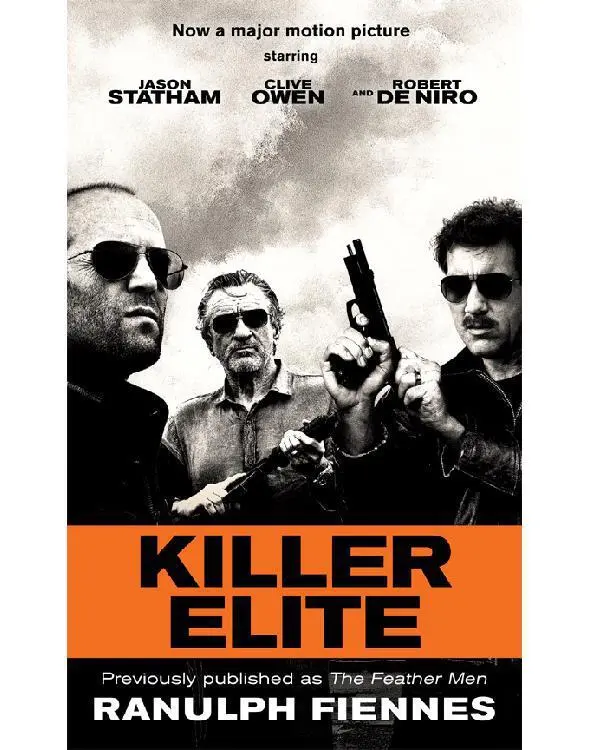
- Название:Killer Elite
- Автор:
- Жанр:
- Год:неизвестен
- ISBN:нет данных
- Рейтинг книги:3 / 5. Голосов: 1
-
Избранное:Добавить в избранное
- Отзывы:
-
Ваша оценка:
Killer Elite: краткое содержание, описание и аннотация
Предлагаем к чтению аннотацию, описание, краткое содержание или предисловие (зависит от того, что написал сам автор книги «Killer Elite»). Если вы не нашли необходимую информацию о книге — напишите в комментариях, мы постараемся отыскать её.
Killer Elite — читать онлайн бесплатно полную книгу (весь текст) целиком
Ниже представлен текст книги, разбитый по страницам. Система сохранения места последней прочитанной страницы, позволяет с удобством читать онлайн бесплатно книгу «Killer Elite», без необходимости каждый раз заново искать на чём Вы остановились. Поставьте закладку, и сможете в любой момент перейти на страницу, на которой закончили чтение.
Интервал:
Закладка:
“If they are free, I thought Mason and Hallett could each lead a team since both have been involved in this since the beginning. Mason probably even knows, or knows of, the target. All those types who served in Oman met up at one time or another.”
Macpherson nodded.
“Anything new on Bletchley?” Spike asked.
“I was going to tell you. Jane phoned just before I went north last week. She says Bletchley sounds pretty offhand when she calls, so she doesn’t press him with too many questions. One thing she did mention was a complaint he made about his fingers. She says he is finding it increasingly difficult to type and he may hire a secretary.”
“Couldn’t Jane suggest herself for the job?”
“My thoughts precisely. I put it to her but you know how reserved the dear lady is. I left it that there would be great benefits to all concerned if she were to become his assistant. She understands.”
“What if he goes ahead with the book?”
“Since there are no libel grounds to prevent him, we will just have to grin and bear it. Most of the Locals will be safe, but Mason, Hallett and others, whose signed reports were passed to Bletchley by Jane as part of those files, might be in trouble. God knows what he intends to say.”
“So will we,” Spike said, “if Jane gets the job.”
PART 5
48
On Monday, October 22, I returned late from the most northerly of our tree plantations. It was a fine evening and, with the tractor lights to help, I completed the staking of the rabbit tubes. From the boundary gate, and for some twelve miles to the west, the high wilderness of Exmoor stretched unbroken along the coastline of North Devon. I loved the place, and although we had only been there six years we had planted 16,000, mostly deciduous, trees. My wife bred Aberdeen Angus cattle and St. John waterdogs and my job as European representative of the well-known, nonagenarian oil magnate, Dr. Armand Hammer, had helped us to turn the long-neglected land into a small working farm.
I was worried, for Dr. Hammer was not well and I could see the specter of unemployment looming ahead. To avert the likelihood of no income in the near future, I had begun, in my spare time, to write a novel about Iran. It was close to completion. Another three months perhaps and I would approach a literary agent.
The tractor descended the steep cleeve and the lights of our house flickered through the trees. All electrical power was supplied by a twenty-two-year-old generator. All water for the house and for the cattle arrived by gravity along a hose pipe from a distant spring. There were no deliveries of milk or papers. In short, a pleasantly cut-off atmosphere.
I put the tractor in its garage. As I looked east over the Brendon Hills, the entire countryside was dark. Not a single light was to be seen for seven miles, for the Exmoor folk sensibly build their homes down in the valleys.
We lived at 1,400 feet above sea level, and the winds that evening blew fresh over Hurdledown and Badge-worthy. My wife heard me removing my boots.
“What about the rubbish?” she shouted from the kitchen.
“What about supper?” I responded.
“It’ll wait,” she assured me.
Every Monday evening, when in Exmoor, I take the week’s accumulated rubbish in black bags to the stipulated roadside collection point a mile away. It is just about the only thing I ever do on a regular basis because my work in London, and lectures all over the place, run to no set schedule. The bags are best left out as late as possible before their early morning collection by the council truck. The foxes attack the bags and strew the contents all over the place if given more than a few hours’ notice of their presence.
At 8 p.m. I hitched the trailer, full of rubbish bags, to my wife’s ancient Montego estate and drove up the long, narrow lane known as the Drift Road. A trio of long-horned Highland cattle blocked the lane and ignored my hooting. I eventually edged them onto the verge. Then, on rounding the last bend before the lane reaches the moor road, I found a car parked in the middle of the lane. With the support of the local Master of Foxhounds, Captain Ronnie Wallace, I had agreed with the Exmoor Park Department to erect a large sign saying “Bridle Path Only” to keep cars out, so I was annoyed, to put it mildly.
Lovers, I presumed, hard at it in the back.
But the car, a black Volvo estate, was empty. I had no flashlight but I noticed an unusual modification to its front bumper, rather like an improvised steel snow-clearing blade.
I returned to the Montego intending to hoot loudly, since I presumed the occupants were nearby in the grass. Something, a noise or a brief flash of light, attracted my attention to the old barn on the far side of the hedge. My wife had rented this barn for some years for storing hay and had recently complained of missing bales. At?2.75 each this was serious, so I forgot the missing Volvo lovers and, fetching a tire iron from the Montego, climbed the five-bar gate and quietly entered the barn.
As I moved between the two tiers of bales, a flashlight was switched on immediately ahead, blinding me. A voice from behind the light ordered, “Drop it.”
As far as I could tell, four flashlights were being directed at me, and I was herded to the empty side of the barn.
“Sit down.”
I sat on a bale, totally bewildered. Perhaps these were hunt saboteurs. Such people had recently been active in the area. Since neither of us had hunted for years this explanation did not seem very likely. Maybe they wanted to steal the Montego. They were welcome. It was battered and scarred.
My eyes began to accustom themselves to the flashlight. I saw one of the men set up a video camera on a tripod and another threw onto my lap a copy of a book I had written many years before entitled Where Soldiers Fear to Tread.
The hay smelled very good, very sweet. I was sweating and realized that I felt afraid.
One of the men began to address me, his accent not dissimilar to that of my American godmother from Connecticut.
“In that book, Captain Fiennes, you admit to shooting and killing a Dhofari named Salim bin Amr, on the morning of October 18, 1969. Is this true?”
I could not see the face of the speaker behind the flashlight. The man must have been crazy.
“If I wrote that in this book, then of course it is true,” I replied.
“So you admit to the murder of that person?” His voice was level and humorless. Not the voice of a nutter or a crank. My confusion was turning to apprehension.
“Of course not.” I could hear the edge of fear in my voice and feel it in the pit of my stomach. “I have never murdered anyone. Never. You are talking about military actions, not murder, and at least twenty years ago. This is absurd. What do you want?”
Unbidden, and in the space of mere seconds, my memory played back the long-ago events in Dhofar, twenty-one years ago almost to the day.
We sat in the center of the wide wadi Habarut, halfway between the two whitewashed forts and exactly astride the unmarked border between Dhofar and South Yemen. My companion was the garrison commander of the communist forces, who was threatening retaliation for an incident provoked by a Dhofari tribesman. I offered him two hundred Rothmans cigarettes. He settled for four hundred.
My signaler called. A Priority Message from my boss, Colonel Peter Thwaites: Go at once to Thamrait. We drove east through the heat-shimmer of the gravel steppes and reached the base by noon.
Tom Greening, the sultan’s Intelligence officer, was there with new orders. I was to go that night on to the jebel and, some fourteen miles into adoo-held territory, at the village of Qum, capture two communist leaders and bring them back to him alive. He introduced me to a Mahra tribesman, a decidedly shifty-looking character who, he said, would be our guide. My men were appalled. This jebali was an adoo spy. We would be led into a trap. We would be cut off and killed to a man in the military heartland of the adoo.
Читать дальшеИнтервал:
Закладка:
Похожие книги на «Killer Elite»
Представляем Вашему вниманию похожие книги на «Killer Elite» списком для выбора. Мы отобрали схожую по названию и смыслу литературу в надежде предоставить читателям больше вариантов отыскать новые, интересные, ещё непрочитанные произведения.












Обсуждение, отзывы о книге «Killer Elite» и просто собственные мнения читателей. Оставьте ваши комментарии, напишите, что Вы думаете о произведении, его смысле или главных героях. Укажите что конкретно понравилось, а что нет, и почему Вы так считаете.