Ranulph Fiennes - Killer Elite
Здесь есть возможность читать онлайн «Ranulph Fiennes - Killer Elite» весь текст электронной книги совершенно бесплатно (целиком полную версию без сокращений). В некоторых случаях можно слушать аудио, скачать через торрент в формате fb2 и присутствует краткое содержание. Жанр: Триллер, на английском языке. Описание произведения, (предисловие) а так же отзывы посетителей доступны на портале библиотеки ЛибКат.
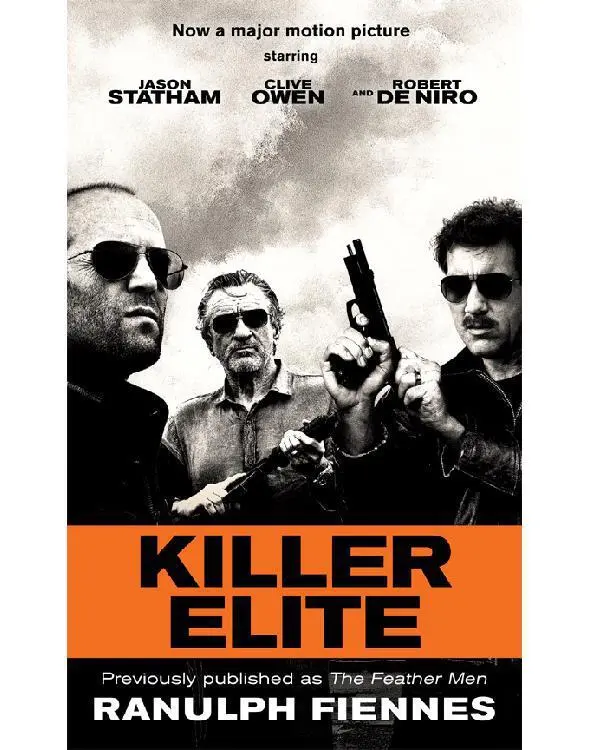
- Название:Killer Elite
- Автор:
- Жанр:
- Год:неизвестен
- ISBN:нет данных
- Рейтинг книги:3 / 5. Голосов: 1
-
Избранное:Добавить в избранное
- Отзывы:
-
Ваша оценка:
Killer Elite: краткое содержание, описание и аннотация
Предлагаем к чтению аннотацию, описание, краткое содержание или предисловие (зависит от того, что написал сам автор книги «Killer Elite»). Если вы не нашли необходимую информацию о книге — напишите в комментариях, мы постараемся отыскать её.
Killer Elite — читать онлайн бесплатно полную книгу (весь текст) целиком
Ниже представлен текст книги, разбитый по страницам. Система сохранения места последней прочитанной страницы, позволяет с удобством читать онлайн бесплатно книгу «Killer Elite», без необходимости каждый раз заново искать на чём Вы остановились. Поставьте закладку, и сможете в любой момент перейти на страницу, на которой закончили чтение.
Интервал:
Закладка:
His first few months with the troop were a far tougher test than even the SAS selection course. He was on sufferance from day to day and he knew it. Not a few aspiring young officers, elated by success at selection and proudly sporting their newly awarded winged-dagger badge, have found themselves unacceptable to their designated troopers. In such cases the officers always moved on, not the troopers.
Unlike in infantry regiments, where each officer has a personal batman-orderly to attend to his needs, the SAS officer will often find himself cooking for his radio operator while the latter is busy with codes and ciphers on arrival at a “basha” (improvised tent) site for the night. One way of speeding the process of acceptance into a troop is, of course, for the officer to prove himself in battle. This was Mike’s first four-month tour in Oman, and so far the adoo had opened fire on his men only once.
On June 8, 8 Troop were helicoptered down from the jebel to the coastal town of Mirbat. This village of fishermen’s shacks huddled in isolation on a stormy promontory under the shadow of a three-thousand-foot escarpment. Two small mud fortresses protected the jebel side of Mirbat, and the broiling monsoon breakers prevented any attack from the south. A tangle of barbed wire ringed the forts and the town from west to east, starting and ending in the sea.
Mike and his eight men took over a lone mud hut known as the Bat-house between and slightly to the south of the two forts. The village itself squatted in poverty and squalor between the Bat-house and the sea.
The sultan’s wali, or village headman, lived in the fort to the northwest of the Bat-house with a garrison of thirty ancient askars (militia). The second fort, seven hundred yards to the northeast of the Bat-house and mere yards from the perimeter wire, housed two dozen Dhofar Gendarmerie troops. These fifty-five men, armed with outdated bolt-action rifles, formed the wali ’s entire defense force. The small SAS presence was intended to provide only civil aid and military training. Their own defense consisted of two roof-mounted machine guns and a mortar pit close by the Bat-house.
A few mortars and rockets were occasionally fired at Mirbat by night, but by the time 8 Troop were due to hand over to a new SAS team, Mike had still undergone no baptism of fire. A roster of guard duties was rigidly followed but the months of inactivity tended to reduce a man’s alertness.
The Eagle’s Nest, the summit of Jebel Samhan, towered 6,000 feet above Mirbat. At dusk on July 18, seventy men picked their precarious way down its mist-swathed face, all heavily laden with weapons and ammunition.
Ali, second son of Sheikh Amr bin Issa, led the sixth and last subunit of the Wahidaat a Wasata wa Sharqeeya. The previous week his men had completed the nerve-racking task of locating and removing the many PMN plastic antipersonnel mines the PFLO had previously sown on the vertiginous trails.
Every man was proud to be a part of this historic attack. Omani and Ingleezi blood was to gush and the shock troops of the PFLO would be heroes for years to come.
Ali was himself from Arzat country to the west and knew little of this arid region north of Mirbat. For three days he and his men had worked out of the cavernous hollows of the upper Samhan. The jebel here is limestone on a bed of chalky dolomite. Erosion had worn away the softer strata into innumerable crags and winding tunnels.
Ali’s heart was proud as he led his men down the precipitous and slippery route. In places there were fixed ropes, further evidence of the intricate preparations involved with the operation.
The previous morning Ali had heard the news on Radio Aden of a major reverse. The perfidious President Sadat had ordered the Soviet supporters of Islam out of Egyptian territory. So be it: tomorrow the PFLO would show the world what Arabs could do without a single Soviet adviser.
Ali did not stop to consider the arsenal that his men and other converging PFLO units were carrying that night. The grenade and rocket launchers, the heavy mortars, the motley array of machine guns of various calibers, the recoilless antitank weapons and their personal AKM and AK47 rifles-all were of Soviet origin.
The PFLO leaders had laid their plans with care. The attack coincided with maximum mist cover from the khareef, making it all but impossible for government airplanes to support the Mirbat garrison.
A diversion the previous day had drawn out the Mirbat firqat, the fifty or so ex-PFLO turncoats normally based in the village. These men were now several hours’ march away to the north, an important factor since, unlike the askars and Dhofar Gendarmes in the two Mirbat forts, they were all armed with fully automatic rifles.
The “Ingleezi” element would be a pushover since they were less numerous than the fingers of a single man.
Long before midnight Ali’s men crossed the ravine of the wadi Ghazira. Ali remembered a visit to this wadi when he was a child. His foster father had brought him and his brother Tama’an down from Qum to see the great flood. They had quivered with fear, long before they reached the wadi, at the distant reverberating roar of the storm water descending from the escarpment. He would never forget that noise, the very sound of God. No man alive who had heard and seen those floods could ever swallow the Marxist claptrap about Allah being merely an invention of British imperialists. They had clung to their father’s waist, their mouths agape at the boiling maelstrom that filled the forty-foot-high gorge, changing its shape forever, destroying everything in its path and driving its plunder of dark detritus far out into the Indian Ocean. Looking back at the mountainside, they had gasped at the glistening sheets of falling water, Niagaras spumed by the wind and plunging down from the jebel to the drainage wadis as though it was once again the beginning of time.
Ali was called back. One of his men, crossing the wadi, had been bitten by a snake, a large cobra. He bade the man, a black freed slave from Darbat, to remain still. They would return for him after the attack was over. Meanwhile he apportioned the man’s spare ammunition among the others. Each man carried well over a hundred pounds of lethal hardware. Ali trod with extra care now. In these days of mines, one was inclined to forget the snakes. Yet a venomous cocktail of vipers infested the scrub of these coastal wadis, including the rare Thomasi, with its sharply etched black rings, the Boulenger or Spotted Rhodorhachis, which climbs near-vertical rock as fast as a windblown leaf, the minute, almost invisible, thread snake, and sixty or so other equally unfriendly species.
After crossing the wadi they took up positions in an outcrop of boulders and Ali counted over two hundred men pass him by in the semidarkness. Some carried long tubes or other awkward loads, parts of the heavy longrange weapons.
Two hours before dawn the attack lines were ready. Two hundred fifty of the PFLO’s finest fighters, trained in Moscow and Odessa, took up position overlooking the silent village and its puny forts. A killer squad left the main body and silently climbed toward the only government watch-post north of the perimeter wire.
The Dhofar Gendarmes who manned the post were caught by surprise. Four were held fast while their throats were slit but others escaped into the night, and one, before he flung down his rifle the better to flee, loosed off a magazine to warn the wali’s men.
With speed the adoo forces spread out across the whole length of the perimeter wire and eight hundred yards to its north. Ali found himself immediately opposite the Dhofar Gendarmerie fort, the first main target of the attack along with the twenty-five-pound field gun dug into an adjacent sandbagged pit.
Читать дальшеИнтервал:
Закладка:
Похожие книги на «Killer Elite»
Представляем Вашему вниманию похожие книги на «Killer Elite» списком для выбора. Мы отобрали схожую по названию и смыслу литературу в надежде предоставить читателям больше вариантов отыскать новые, интересные, ещё непрочитанные произведения.












Обсуждение, отзывы о книге «Killer Elite» и просто собственные мнения читателей. Оставьте ваши комментарии, напишите, что Вы думаете о произведении, его смысле или главных героях. Укажите что конкретно понравилось, а что нет, и почему Вы так считаете.