Ranulph Fiennes - Killer Elite
Здесь есть возможность читать онлайн «Ranulph Fiennes - Killer Elite» весь текст электронной книги совершенно бесплатно (целиком полную версию без сокращений). В некоторых случаях можно слушать аудио, скачать через торрент в формате fb2 и присутствует краткое содержание. Жанр: Триллер, на английском языке. Описание произведения, (предисловие) а так же отзывы посетителей доступны на портале библиотеки ЛибКат.
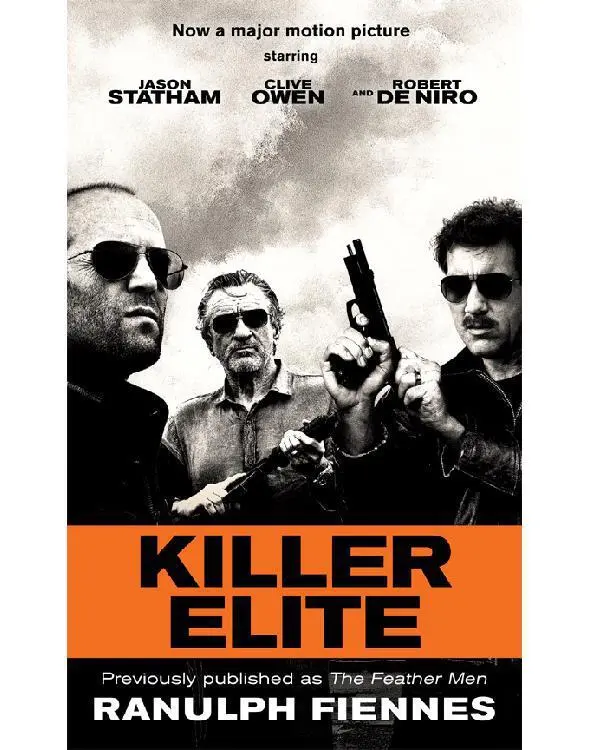
- Название:Killer Elite
- Автор:
- Жанр:
- Год:неизвестен
- ISBN:нет данных
- Рейтинг книги:3 / 5. Голосов: 1
-
Избранное:Добавить в избранное
- Отзывы:
-
Ваша оценка:
Killer Elite: краткое содержание, описание и аннотация
Предлагаем к чтению аннотацию, описание, краткое содержание или предисловие (зависит от того, что написал сам автор книги «Killer Elite»). Если вы не нашли необходимую информацию о книге — напишите в комментариях, мы постараемся отыскать её.
Killer Elite — читать онлайн бесплатно полную книгу (весь текст) целиком
Ниже представлен текст книги, разбитый по страницам. Система сохранения места последней прочитанной страницы, позволяет с удобством читать онлайн бесплатно книгу «Killer Elite», без необходимости каждый раз заново искать на чём Вы остановились. Поставьте закладку, и сможете в любой момент перейти на страницу, на которой закончили чтение.
Интервал:
Закладка:
The East German border guards were perfunctory in their check, and the British NCOs at Checkpoint Alpha passed Mason through without a second glance. He then settled down to some serious autobahn driving via Hanover, Dortmund, and the Belgian border at Aachen, passing through that unmanned border post at 135 mph.
He reached Zeebrugge at 10:15 p.m. and caught the 11 p.m. ferry. On board he purchased twelve rolls of Kodak Tri-X film and four rolls of Ilford FP4 film, both 35mm, at the duty-free shop and slept for two hours.
After clearing Dover Customs at 4:30 a.m., he set off along the A2 and M2 to London, then, via the M4, to Heathrow, where, at 7 a.m., he drew up behind Patrick’s VW camper on the access road to the long-term car park.
Inside the curtained and locked rear of the van the two men drank black coffee from Patrick’s vacuum flask and Mason lit up a cigar and placed the. 22 rifle, with all the other items that Patrick produced, on the camper’s kitchen table. He carefully explained to Patrick exactly what must be done over the next two hours.
Patrick switched on the car’s ignition to activate the extractor fan in the hope that it would deal with the cigar smoke before he died of asphyxiation and to ensure that their conversation was inaudible outside the van. A BBC newscaster wished them good morning with the news that thousands had died in an earthquake in Romania.
The rifle, Mason explained, had been manufactured by Stephen Grant amp; Son of 67a St. James’s Street, London, in the early 1930s. It had been made as a. 25 rook rifle and was later rechambered for. 22 Hornet bullets. The outside of its barrel was octagonal, giving it an antique appearance that belied its efficiency. The action worked from a side lever and opened like a modern shotgun, being single-shot, not magazine-loaded.
To dismantle the weapon, Mason removed the wooden fore-end piece in front of the trigger guard and, breaking the gun by pushing down the side lever, he hinged the barrel down and away.
The camper’s built-in cooker had two gas rings over which Mason held a twenty-four-inch length of one-eighth-inch-diameter 8 SWG steel rod, and in his other hand, the barrel of the rifle. Patrick heated a black candle so its melted wax dripped down into an eggpoacher.
Mason smeared a chewed wad of gum with engine oil and pushed it into the barrel’s muzzle end. He then held the heated barrel upright with its muzzle on the floor and inserted the twenty-four-inch rod into the twenty-six-inch barrel until it disappeared. He shook the barrel lightly and the rod rattled audibly. Patrick then poured the melted wax into the barrel through a funnel so it filled the entire area between the rod and the inside wall of the rifled barrel. Once the rifle and the rod cooled down, the wax solidified and the rod was rigidly sealed into position.
Removing the wad of gum, Mason applied varnish with an artist’s brush to both ends of the captive rod, dabbed on gun-black as a final camouflage coat, and tapped both ends of the rod with a screwdriver. The effect was that of a police-plugged barrel. To all intents and purposes the weapon was now merely a decommissioned antique. As such, it could travel legally and document-free as air cargo. Mason reassembled the rifle, having first removed the firing pin and mainspring. Then he locked it into the plastic rifle case and stubbed out his cigar.
“The next stage,” he told Patrick, “will take longer.” He removed four cassettes of Ilford FP4 film with their plastic containers and began to force their tops off gently with a standard bottle opener. “I wasted hours when I first tried this with Kodak cassettes. They come off okay but they’re buggers to reassemble. Also the hollow area inside the spools of these Ilford cassettes is more spacious.”
Mason used a modeling knife to cut away the main central portion of the take-up spool. He retained only the now truncated ends, each of which looked rather like a miniature black top hat. He set Patrick to work on a second Ilford cassette and turned his attention to the components of the ten. 22 Hornet bullets. First the empty cases, new and unprimed. These he prepared one by one with Eley primers by placing a primer onto a Lyman ram tool and pushing it firmly down into an empty case held in the slot of a Lachmiller priming clamp. When five of the cases were primed, he bound them into a tight bundle using surgical tape. He then positioned an Ilford spool “top hat” on either end of the bundle and forced it into the original Ilford cassette casing. The caps, which he had earlier removed by bottle-opener leverage, he now replaced by simple pressure until they once again mated over and around the “top hats.” Since the Hornet cases were exactly thirty-five millimeters in length, they fitted with precision into the space vacated by the film.
The finished cassette looked as good as new, although it now weighed thirty-three grams instead of twenty. When Mason had primed the remaining five empty cases, he fed them into the guts of the cassette that Patrick had successfully doctored. Cutting five inches of film leader from one of the discarded films, he inverted it to protrude in the normal manner. Loading the cassette into one of his Olympus OM-1 cameras, he made sure that the leader covered the camera’s take-up spool without actually entering the winder slot. After closing the camera he pulled back the film-advance lever a dozen times. Although the film itself did not move, the exposure-counter window now registered 12. He fed the second camera with the other five disguised bullet cases. On the security X ray, the intricate components of the cameras would disguise the presence of the cartridge cases.
Only the bullets themselves and the gunpowder remained to be dealt with. Mason used small balance scales to weigh out eleven grains of IMR 4227 gunpowder, which he poured into a small, square plastic bag labeled “Silica-gel Desiccant.” He sealed the bag with instant glue and repeated the process twelve times, allowing two extra bags for damage or wastage at a customs inspection. The bags went into a side pocket of Mason’s camera case. If inspected for drugs, the gunpowder was tasteless and, like silica gel, hygroscopic. The case also contained a fold-away developing tank, trays, chemicals, paper, and the parts of an enlarger.
The ten Hornady forty-five grain (2.9 gram). 22 Hornet hollow-point bullets fitted perfectly into the central space of two packets of Polo mints that Mason put into his trouser pocket.
Thirty more minutes were spent checking and packing all the equipment, and at 8:50 a.m. Patrick left Mason at the Terminal 3 Departure Lounge. The Gulf Air check-in counter took his large suitcase and the rifle case as cargo baggage and he passed through to Emigration.
At the X-ray machine, Mason placed his hand luggage on the conveyor belt and entered the walk-through metal detector, which bleeped loudly at him. A security officer had him empty his pockets onto the side table and try again. Next time the machine was silent but he was “patted down” and the contents of his pockets were checked item by item. These consisted of keys, wristwatch, steel Parker pen, coins, sunglasses, penknife, handkerchief and Polo mints. All were passed as innocent.
Mason’s hand baggage was opened by an efficient lady in a well-filled gray sweater. She switched on his razor, dictaphone, and radio and inspected his cameras and lenses with care. She ignored the silica-gel bags and various other small, harmless-looking items.
As soon as Mason finished with Security he headed for the toilets in the Departure Lounge, where he taped a polythene bag to the inside of one of the cisterns. The bag contained all his “guilty” items, including bugging gear, firing pin, Polos and doctored cassettes. He reloaded his cameras with genuine Ilford film.
Читать дальшеИнтервал:
Закладка:
Похожие книги на «Killer Elite»
Представляем Вашему вниманию похожие книги на «Killer Elite» списком для выбора. Мы отобрали схожую по названию и смыслу литературу в надежде предоставить читателям больше вариантов отыскать новые, интересные, ещё непрочитанные произведения.











Обсуждение, отзывы о книге «Killer Elite» и просто собственные мнения читателей. Оставьте ваши комментарии, напишите, что Вы думаете о произведении, его смысле или главных героях. Укажите что конкретно понравилось, а что нет, и почему Вы так считаете.