Ranulph Fiennes - Killer Elite
Здесь есть возможность читать онлайн «Ranulph Fiennes - Killer Elite» весь текст электронной книги совершенно бесплатно (целиком полную версию без сокращений). В некоторых случаях можно слушать аудио, скачать через торрент в формате fb2 и присутствует краткое содержание. Жанр: Триллер, на английском языке. Описание произведения, (предисловие) а так же отзывы посетителей доступны на портале библиотеки ЛибКат.
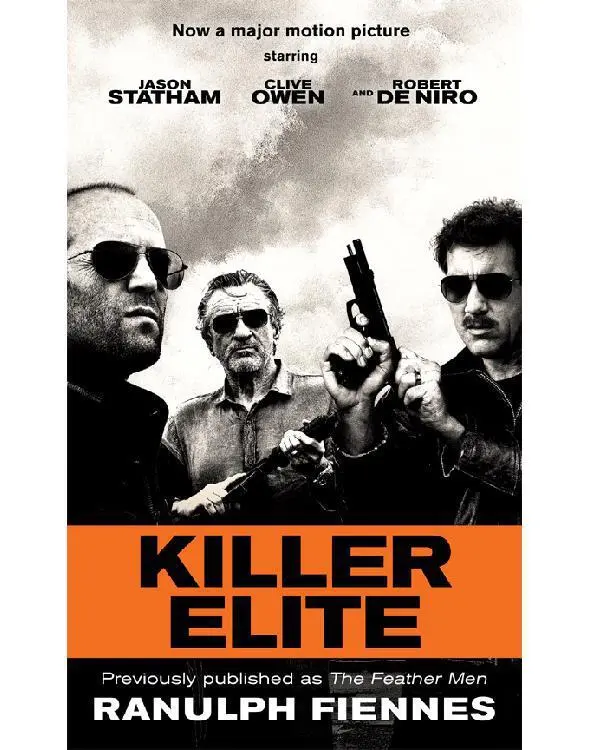
- Название:Killer Elite
- Автор:
- Жанр:
- Год:неизвестен
- ISBN:нет данных
- Рейтинг книги:3 / 5. Голосов: 1
-
Избранное:Добавить в избранное
- Отзывы:
-
Ваша оценка:
Killer Elite: краткое содержание, описание и аннотация
Предлагаем к чтению аннотацию, описание, краткое содержание или предисловие (зависит от того, что написал сам автор книги «Killer Elite»). Если вы не нашли необходимую информацию о книге — напишите в комментариях, мы постараемся отыскать её.
Killer Elite — читать онлайн бесплатно полную книгу (весь текст) целиком
Ниже представлен текст книги, разбитый по страницам. Система сохранения места последней прочитанной страницы, позволяет с удобством читать онлайн бесплатно книгу «Killer Elite», без необходимости каждый раз заново искать на чём Вы остановились. Поставьте закладку, и сможете в любой момент перейти на страницу, на которой закончили чтение.
Интервал:
Закладка:
In January 1959 two troops of SAS men, fresh from the Malayan jungles, surprised the imam’s fighters by a night ascent of a climbers’ route from Kamah village. The attack was led by Captain Peter de la Billiere, who, in 1991, was to command the British forces in the Gulf War.
John landed at Sayq Battle Camp. A messenger from the commandant ushered forward an Arab teenager with frightened eyes, a dirty dishdash (a checked skirtlike wraparound garment) and bare feet. This, said the messenger, was the husband of the evacuation case. John shook the boy’s hand and addressed him in his own tongue. He was of the Beni Riyam tribe and lived in Shiraija. His wife had been bitten by a cobra and was very sick. He had run up to the army camp but all three of the medics were on exercise elsewhere on the jebel.
“Did you kill the snake?” John asked the young Arab and was relieved when he nodded. Knowing the geography of Shiraija, John could see the wisdom of helicopter evacuation to a hospital with a range of serums capable of countering the venom of most Omani vipers. Whenever evacuating snake-bite cases, he tried to give the hospital authorities the snake’s body along with the patient. This ensured the use of the correct serum without delay.
John handed the generator spare to the commandant’s messenger, strapped the boy into the rear of the Bell with a set of headphones, and left for Shiraija. The village was no more than a mile from the Sayq camp but tucked into the upper reaches of a near-vertical ravine. The mountainside below fell away in giddy tiers of irrigated steps. Every layer was tended by artificial channels that overflowed from level to level to the very last of the tiny fertile orchards 3,000 feet below.
Plants and trees with exotic foliage hung heavy with fruit: figs, peaches, almonds, walnuts, berries, bananas and pomegranates, to name but a few. Sugarcane groves thrived on the lower tiers and lawns of lucerne waved in the cool, scented breeze at every level.
Crewman Ali conferred with the young Arab, who, face pressed to the Plexiglas, kept making downward motions. The girl must have been working in the very lowest of the orchards. John circled slowly, banking so the boy could see the terraces below. At length the young Arab shouted into the headsets so that both airmen winced. He had spotted his wife.
Six hundred feet above the victim’s location John found a lucerne bed just wide enough for the helicopter to land without the rotors smashing into the wall of the next terrace. The three of them scrambled down through the orchards to where the girl lay in long grass. Her face was tinted with the yellow dye of the saffron flower. He saw at once that she was dead. The poor lass, John thought: she had died alone and in great pain. Her body was rigid and arched, her eyes wide-open and her tongue extended. She looked so young to be married-no more than twelve, he estimated. Her throat glands were horribly puffed out, so John felt her wrist for a pulse. There was none. He touched one of her eyes but there was no reaction. The snake’s body, broken and battered, lay in the dirt. John saw that it was an eckis, not a cobra, and almost certainly, with its broad flat head, a highly poisonous Schneider.
The boy knelt beside the dead girl. His hands came together at his mouth and tears ran down his face. John clenched the boy’s shoulders and as the deep, dry sobbing began, held him close.
They carried the little body with care to the helicopter. John spoke with the Sayq duty signaler, and when they returned to the camp, a Land Rover with a stretcher and body bag awaited them.
John’s lasting memory of that day was the face of the boy, as lost and alone as a wounded gazelle. He and Ali were silent as they flew back to Seeb. John said nothing to Bridgie that evening, but he felt especially tender toward her and their three-year-old son, Oliver.
15
Mason paid the cab driver at a point where the morning traffic, a honking mishmash of camels and motors, passed through a gap torn in the town wall. Matrah, an ants’ nest of commerce, had changed greatly in the year since Mason’s Omani service. A modern harbor, Port Qaboos, was under construction, and bulldozers were sweeping away much of the old town to make space for modern office units.
Davies was not in a hurry and behaved like any expatriate worker newly arrived in so fascinating a city. He wandered at will through the babble of Asian building workers, gazed awhile at the old and the new in the harbor area, and ambled to the inner walled market of the Khojas, the Sur al-Lawatiyah. Generations of Khoja merchants, originally from Sind, had retained their language and customs while masterminding Matrah commerce from the tangled and labyrinthine corridors of the Lawatiyah.
Mason was forced to close in or risk losing the Welshman. The narrow scented passageways seethed with humanity, and Mason began to sense a certain urgency and purpose to the hitherto random course of his quarry. A head and shoulders above most of the crowd, he managed to keep in touch, but only with difficulty and many a hostile glance from the white-robed denizens of the sooq.
At a divergence of three corridors Mason was unable to wedge a passage between two women in black-beaked Ibadhi masks. “Min fadlak,” he shouted, “indee mushkila,” but the women, both as heavy and round as Soviet shotputters, ignored him. Their fishwife gossip merely gathered strength, each talking, neither listening. Davies disappeared.
A half hour search of every stall in the Lawatiyah and its adjacent streets proved fruitless, so Mason took a cab back to the Gulf Hotel. Davies would return there in due course and Mason had things to prepare that were better done without delay, now that Davies was showing signs of activity.
In his bathroom he reassembled the ten rounds of ammunition with his Lyman crimping tool and heated the rifle barrel over a flat iron obtained from the chambermaid. The black wax melted and he knocked the steel rod loose. Later he would pull the barrel through with petrol-soaked swabs. After packing a travel bag with the detached stock and the barrel, he added some clothing and equipment, then ordered a taxi.
“Muaskar al Murtafa’a,” he instructed the driver, referring to the Northern Headquarters complex of the Sultan’s Armed Forces. At the security gate his taxi was waved past; Mason looked like the officer he had once been. Over four hundred British officers and NCOs worked for their Omani superiors within the sprawling barracks, and the turnover rate was such that no one knew everyone else.
In the lavatory of the officers’ mess, Mason changed into the uniform of the Desert Regiment, which differed from that of other SAF regiments only in the color of beret and belt. He was pleased that during his time back in Europe he had not put on weight. He walked through the camp, returning salutes as appropriate, to the lines of the Motor Transport Section. Hundreds of Bedford lorries, Land Rovers, and Land Cruisers were parked beside a like number of civilian Datsuns and a smattering of Mercedes for use by more senior officers.
A fairly strict vehicle sign-out procedure existed, but Mason had ignored all red tape in days when resources and manpower were smaller and control much tighter, so he found a Datsun with keys in the ignition and drove back to the Gulf Hotel without troubling the “official channels.” He left the car in the hotel parking lot, far enough away from the main entrance for the SAF number plate not to be noticeable, and in any case it appeared to be one of many white Datsuns. He entered the foyer. Davies’s key was still missing from its pigeonhole, so Mason settled down with a Scotch and slightly stale Newsweek in a far corner of the lobby. Without his brown Desert Regiment beret, he was merely an army staff officer taking it easy.
Читать дальшеИнтервал:
Закладка:
Похожие книги на «Killer Elite»
Представляем Вашему вниманию похожие книги на «Killer Elite» списком для выбора. Мы отобрали схожую по названию и смыслу литературу в надежде предоставить читателям больше вариантов отыскать новые, интересные, ещё непрочитанные произведения.











Обсуждение, отзывы о книге «Killer Elite» и просто собственные мнения читателей. Оставьте ваши комментарии, напишите, что Вы думаете о произведении, его смысле или главных героях. Укажите что конкретно понравилось, а что нет, и почему Вы так считаете.