Ranulph Fiennes - Killer Elite
Здесь есть возможность читать онлайн «Ranulph Fiennes - Killer Elite» весь текст электронной книги совершенно бесплатно (целиком полную версию без сокращений). В некоторых случаях можно слушать аудио, скачать через торрент в формате fb2 и присутствует краткое содержание. Жанр: Триллер, на английском языке. Описание произведения, (предисловие) а так же отзывы посетителей доступны на портале библиотеки ЛибКат.
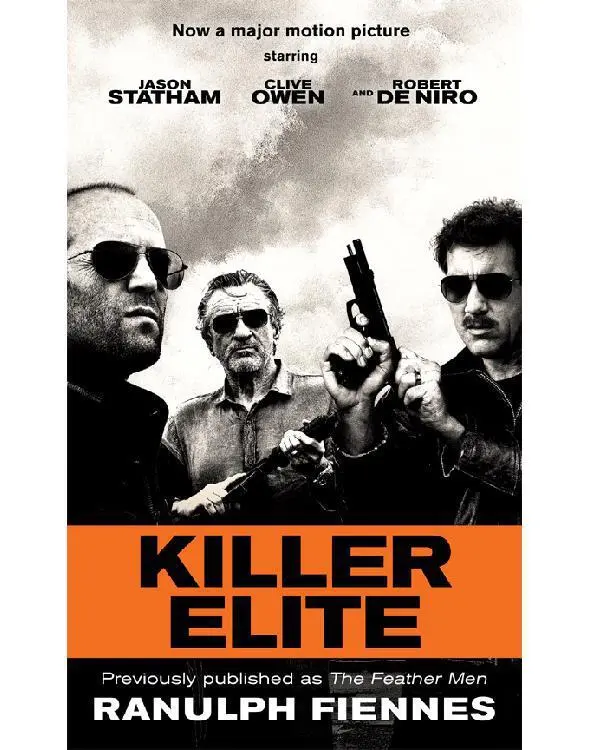
- Название:Killer Elite
- Автор:
- Жанр:
- Год:неизвестен
- ISBN:нет данных
- Рейтинг книги:3 / 5. Голосов: 1
-
Избранное:Добавить в избранное
- Отзывы:
-
Ваша оценка:
Killer Elite: краткое содержание, описание и аннотация
Предлагаем к чтению аннотацию, описание, краткое содержание или предисловие (зависит от того, что написал сам автор книги «Killer Elite»). Если вы не нашли необходимую информацию о книге — напишите в комментариях, мы постараемся отыскать её.
Killer Elite — читать онлайн бесплатно полную книгу (весь текст) целиком
Ниже представлен текст книги, разбитый по страницам. Система сохранения места последней прочитанной страницы, позволяет с удобством читать онлайн бесплатно книгу «Killer Elite», без необходимости каждый раз заново искать на чём Вы остановились. Поставьте закладку, и сможете в любой момент перейти на страницу, на которой закончили чтение.
Интервал:
Закладка:
“We are well on our way to the first target,” de Villiers replied. “These Brits are a pushover. Get them reminiscing and they’ll tell you anything.”
Their driver, Karim Bux, waited at their hotel, the Al Falaj, together with his rented Nissan pickup. They drove southwest along the newly graveled road leading to the oilfields of Fahud. After an hour they crossed the great German-made bridge that spans the wadi Sumail, a valley subject to spectacular perennial floods.
De Villiers leaned across Meier and pointed north up the dark green line of the wadi.
“Be sure to remember that deserted village, Karim Bux, and the date-palm grove below it. If we need an RV”-rendezvous point-“that’s it.”
The road was now flanked to the north by 10,000-foot-high cliffs that soared sheer to the plateau of the Jebel Akhdar. At Izki they bore west and entered ancient Nizwa, the eighth-century citadel of Oman.
Thanks to Maxwell’s telephone call the Nissan was expected at the Jebel Regiment garrison and a soldier escorted them to the officers’ mess. The adjutant, Captain Mohanna Suleiman, was waiting for them.
“I will give you whatever help is possible.”
They sat in comfortable chairs in the mess, a place of brass ashtrays, countless stale newspapers and white-robed mess boys.
The captain explained that Colonel Ashley was away. Soon, he said with pride, Major Ibrahim would be taking command, the very first Omani regimental colonel.
After some talk of little consequence, de Villiers broached the key question. “Captain, sah’b,” he said. “Brigadier Maxwell tells us that, in October 1969, there was a company from the Northern Frontier Regiment stationed in Dhofar. We are writing an account of those times for an American publisher. Do you know anybody who may remember those days?”
The Omani captain smiled. “You are in God’s favor. There is a police officer from Seeb who sometimes visits because he used to command one of our companies and, like our second-in-command Major Mackie, this man was once a British Royal Marine. His name is Milling-John Milling.”
“This John Milling was with which regiment?” de Villiers asked.
“He was with NFR at the time you are asking about. He was transferred to this regiment in 1971 in order to put together our first company. He will be happy to meet you, I am sure. You will find him at the Police Air Wing with their helicopter detachment. Insh’ Allah, all will be well for you.”
As they were leaving the chief clerk passed by. The adjutant stopped him. “Chief,” he said, “these gentlemen are inquiring about Dhofar for a history book. Maybe you can help them.”
The chief clerk told de Villiers all he could and that was enough. Captain Milling had indeed been in the northern jebel in October 1969 and had at that time led a dangerous mission involving the very first adoo informer to help the army.
“Was this action known as Operation Snatch?” Meier asked.
“That I cannot say, but I can assure you there were no other operations in the area at that time and John Milling was definitely the officer in charge.” He chuckled. “Nobody could mistake John, then or now; he is a giant of a man. Why don’t you go and see him for yourselves. I will phone him if you like.”
De Villiers hastily thanked the chief clerk. A phone call would not be necessary. They took their leave and headed back toward Ruwi. The sun dipped below the western jebel and the valleys receded into dim and cheerless voids.
12
The Marches is the ancient name for the country on either side of the Welsh-English border. Here the wild ridges of the Black Mountains give way to hop fields, orchards and high-flowering hedges. The deep gorge of the Wye cuts through the Forest of Dean, and the cathedral city of Hereford, Queen of the Marches, remains serenely prosperous through the deepest of recessions elsewhere in Britain.
Hereford, a somnolent little city, is the home and the heart of the SAS Regiment. Certain pubs in and around the town are patronized by SAS and ex-SAS men, but an outsider would not easily identify them, for the majority are quiet, affable individuals who take great pride in anonymity and, unlike special forces the world over, hardly ever become involved in public brawls.
In 1988 the Bunch of Grapes public house, on the north side of town, was closed because of structural damage and ceased to be a haven for SAS men in civvies. But on February 11, 1977, both bars throbbed with life and music. In a corner of the main downstairs public bar Bob Bennett, on leave from his regiment in Germany, held his mug of John Smith’s beer aloft and, with his friend Ken Borthwick, toasted the Queen.
“May she thrive for another twenty-five,” said Ken. “God bless her.” He was a member of the Territorial Army Volunteer Reserve and a policeman from neighboring Worcestershire, but both men had met up at the Grapes to join friends for a Royal Silver Jubilee Party, one of thousands held across Britain that year.
“Cheers, boys.” The landlord, Tony Burberry, joined the toast. “Long time no see, Ken. How’s the Force?” Tony was a bluff, professional publican with no army ties of his own. His personal chemistry and an aptitude for discretion had first attracted the SAS fraternity to the Imperial, a pub where he was tenant in the mid-sixties. Then, when he moved to the Grapes, the SAS followed him. No man could wish for a better clientele, for they spent good money, drank sensibly, behaved well, and their reputation scared off the town’s less savory elements.
There was the downside, an ever-present fear of IRA bombs, but the boys kept their own security roster, and were more alert and capable than the most expensive security money could buy.
Tony knew three generations of SAS: the Malaya boys, the Borneo crowd, and more recently the Oman BATT men. Memories of the wars in which they had served bound them together as tight as ticks. Of course, they had all operated in other theaters of combat, fought skirmishes in those territories that had taken the fancy of the Foreign and Commonwealth Office for a while, but always in small groups of two, four or six. These groups did not exchange their war stories with one another, nor with anyone else for that matter, which left precious little mutual ground for reminiscence other than the three major campaigns of the postwar years where whole squadrons had acted together.
Bob Bennett, whose home was in Hereford, knew many of the local characters and discussed them with Ken Borthwick. Some of their party began to drift away to other pubs as the evening wore on. A Welshman with a local crumpet clutching his waist found some sitting space at their table. The girl was very drunk but the Welshman still made sense. He crooned her a love song from the Valleys and was cheered by the crowd for his pains.
One of the drinkers, a bear of a man with a hand that completely eclipsed his pint beer mug, was a Fijian whom Bob recognized as an SAS sergeant. He and his friends began to swap memories of long-lost friends from Borneo days, and the Welshman was visibly enthralled. The conversation shunted around to talk of a Fijian named Labalaba whom everyone seemed to know, and then somebody mentioned Salalah.
“I was in Salalah,” the Welshman interjected, “posted to the Muscat Regiment from the Fusiliers. Small-arms instructor to help introduce the boys to the new FN rifle.” He beamed. “It’s really nice to meet people who were there too. Doesn’t happen very often.” He bought them a round. Bob Bennett was included but Ken took his leave.
The Grapes emptied well after closing time and Bob followed the Welshman’s red Escort at a discreet distance. After dropping his girl off in the center of town the Welshman headed west on the A438 toward the village of Brobury. The Escort turned into the drive of Brobury House, at which point Bob parked by the roadside and disappeared into the shadows of the well-kept gardens. He knew the place well. It had recently been bought by an American couple.
Читать дальшеИнтервал:
Закладка:
Похожие книги на «Killer Elite»
Представляем Вашему вниманию похожие книги на «Killer Elite» списком для выбора. Мы отобрали схожую по названию и смыслу литературу в надежде предоставить читателям больше вариантов отыскать новые, интересные, ещё непрочитанные произведения.











Обсуждение, отзывы о книге «Killer Elite» и просто собственные мнения читателей. Оставьте ваши комментарии, напишите, что Вы думаете о произведении, его смысле или главных героях. Укажите что конкретно понравилось, а что нет, и почему Вы так считаете.