Ranulph Fiennes - Killer Elite
Здесь есть возможность читать онлайн «Ranulph Fiennes - Killer Elite» весь текст электронной книги совершенно бесплатно (целиком полную версию без сокращений). В некоторых случаях можно слушать аудио, скачать через торрент в формате fb2 и присутствует краткое содержание. Жанр: Триллер, на английском языке. Описание произведения, (предисловие) а так же отзывы посетителей доступны на портале библиотеки ЛибКат.
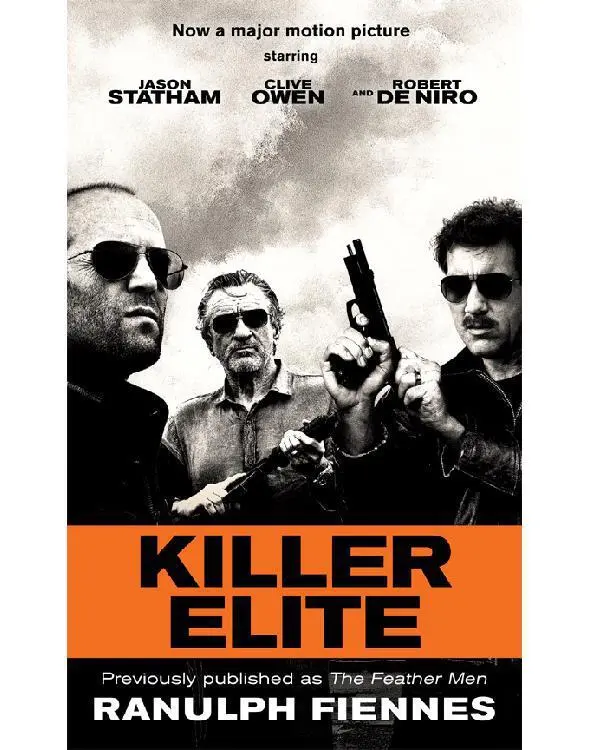
- Название:Killer Elite
- Автор:
- Жанр:
- Год:неизвестен
- ISBN:нет данных
- Рейтинг книги:3 / 5. Голосов: 1
-
Избранное:Добавить в избранное
- Отзывы:
-
Ваша оценка:
Killer Elite: краткое содержание, описание и аннотация
Предлагаем к чтению аннотацию, описание, краткое содержание или предисловие (зависит от того, что написал сам автор книги «Killer Elite»). Если вы не нашли необходимую информацию о книге — напишите в комментариях, мы постараемся отыскать её.
Killer Elite — читать онлайн бесплатно полную книгу (весь текст) целиком
Ниже представлен текст книги, разбитый по страницам. Система сохранения места последней прочитанной страницы, позволяет с удобством читать онлайн бесплатно книгу «Killer Elite», без необходимости каждый раз заново искать на чём Вы остановились. Поставьте закладку, и сможете в любой момент перейти на страницу, на которой закончили чтение.
Интервал:
Закладка:
“We must computerize this problem,” Meier said. “We cannot just search at random.”
De Villiers looked at the Belgian. “I don’t intend to.” His voice was toneless. “We have four months free before we need start on the Miami contract. To make the most of our team we will split up. Davies will cover the case of Sheikh Amr’s second son, who died in 1972. His killer was almost certainly the SAS commander at the Dhofar garrison of Mirbat. The SAS are based in Hereford. Davies, being Welsh and ex-British Army, should have little trouble in making some discreet inquiries there.”
Davies nodded his head but his habitual half smile was not in evidence.
“You and I,” de Villiers addressed Meier, “will trace the man who killed Amr’s first son of 1969. This incident was an ambush in a remote part in the Dhofar jebel covered by a single company of the sultan’s army. The sheikh has no idea where the Omanis keep records of their military actions, what we call war diaries, but that should not be difficult to find out. We will fly to Muscat as soon as Tadnams can arrange visas, or No Objection Certificates as the Omanis call them.”
Meier seemed to find no holes in this program or, if he did, he kept them to himself. “And the other two targets?” he asked.
“Not so easy,” said de Villiers, frowning. “Amr’s third and fourth sons were killed in 1975 during the last year of the war. They died in bitter and confused fighting close to the South Yemen border.”
Sultan Qaboos, seven years after sending his reactionary father to exile in London’s Dorchester Hotel, had dragged Oman out of the Middle Ages and, thanks to determination and mounting oil revenues, installed the full panoply of twentieth-century benefits-schools, roads, hospitals-where there had so recently been only stagnation and suffering. Qaboos, the fourteenth ruler of the Abu Saidi dynasty since its inception in 1744, retained absolute power. The law of the land was Koranic and handled by qadhis in regional courts. The sultan allowed virtually no tourists into Oman, so his police were able to enforce rigid control over foreigners likely to cause trouble.
In his mid-thirties, the sultan was equally handsome in his Savile Row suits at London functions or when clad in full sultanic regalia at ceremonies in Muscat. He spent most of January 1977 at his new palace close to the town of Seeb and conducted daily interviews with ministers and advisers. One of the latter was the retired deputy commander of the Sultan’s Armed Forces, Brigadier Colin Maxwell. After twenty-five years with the forces, which he himself had formed in 1952, Maxwell had retired to become a defense adviser to the sultan.
For an hour the two men discussed the Omanization of the Sultan’s Armed Forces, a process whereby the number of British officers was to be reduced as quickly as their Omani replacements could be trained.
Maxwell left the palace, with its lofty, modern lines and acres of fountain-fed pools. He never ceased to thank the Lord that, as Allah, He had given Qaboos to the people of Oman. Maxwell loved the Omanis and rejoiced that their centuries of strife and backwardness had, through this one man Qaboos, come to an end.
Maxwell’s Omani driver dropped him off at his home in Ruwi, part of the first modern block built in the area. Said Fahher, uncle to Sultan Qaboos and Deputy Minister of Defense, also lived there.
From the front of the apartments the old town of Ruwi sprawled seaward and, just across the nearest wadi, as though Beau Geste was a neighbor, the crenelated ramparts of Bait al Falaj fortress slumbered beneath the red flags of the Sultanate.
Maxwell lived alone but for his staff. For thirty years, since post-Second World War service in Somalia, he had suffered from chronic arthritis, but this had never diminished his natural warmth of character. The expatriate administrative officers of the Sultan’s Armed Forces were known for their internecine feuds and backbiting, but Maxwell was universally liked, for he possessed not an ounce of malice nor cynicism toward his fellow men. On that particular day in January 1977, this was perhaps rather unfortunate.
Toward 7 p.m., as Maxwell relaxed on his balcony, his houseboy announced the arrival of two American military historians who had telephoned earlier in the day. This was nothing new. He had received many such callers ever since his appointment as official historian to the Sultan’s Armed Forces.
Maxwell was delighted that interest in his favorite topic should be spreading as far afield as the U.S., and he spent the next half hour waxing eloquent on the origins of the forces he had created. The two Americans apparently specialized in the worldwide communist expansion of the fifties and sixties. They were especially curious about late 1969, when Marxism had come within a whisker of engulfing Dhofar. The critical factor that had delayed a guerrilla onslaught in that postmonsoon period, when all but a nine-mile coastal strip of Dhofar was under Marxist control, involved a sudden thrust by a small Sultanate force deep into their eastern territory. This incursion, known as Operation Snatch, sparked off what was to become a flood of ex-guerrillas who changed sides and joined the government forces, at that time numbering under three hundred fighting men.
The Operation Snatch force killed a senior political commissar and the leader of an Idaaraat torture squad named Salim, the eldest son of Amr bin Issa, the sheikh of that region.
Maxwell searched through one of his files and at length gave a cry of success.
“Yes,” he said, lighting a stubby French cigarette, “that was a brilliant operation handled by our intelligence officer Tom Greening and commanded by Peter Thwaites. Quite threw the adoo off guard for months.”
“The field commander was Thwaites, you say?” asked de Villiers, taking notes.
“No, no.” Maxwell breathed out a cloud of smoke as pungent as burning camel dung. “Peter commanded all the forces in Dhofar. I am uncertain who the actual man on the ground was but you could find that out from the relevant regiment. They will still have all their old contact reports.” He extracted a military deployment chart from his folder. “Ah,” he beamed with pleasure, “a company from the Northern Frontier Regiment was the only unit stationed anywhere near the area of Operation Snatch. They were my old regiment, you know. In 1955 I formed them from the Batinah Force and led them in their first action, an attack on the Imam at Rostaq.” A small, nostalgic smile creased the brigadier’s sun-ravaged cheeks.
“But come now. You are after the sixties, not the fifties. You must go and see the current CO of NFR. He’ll tell you all you need to know.” He paused. “But wait. NFR are at Simba now.” He shook his head and frowned, but then brightened up. “There is no problem, my friends. I will telephone Ted Ashley at JR-that is, the Jebel Regiment. Ted is their colonel and you will find him at Nizwa, just up the road to the interior. He will help you as much as he can. So will his officers, many of whom are old Dhofar hands. NFR would, of course, be better but they are down in Dhofar now, beyond your reach as it were.”
They parted company with much shaking of hands and mutual affability.
Tadnams had arranged three No Objection Certificates for de Villiers, Meier and an Indian driver. They had learned from Charles Kendall’s of South Kensington, UK agents for the sultanate, that a major new fisheries project was about to be launched and workers were being taken on by the American Temple Black Corporation. The boss’s wife, Shirley Temple, had once been the golden girl of Hollywood and, as idle rumor had it, a teenage idol of the current Minister of Fisheries.
“What are we now,” Meier grunted as they left Brigadier Maxwell’s apartment, “fisheries inspectors or military historians?”
Читать дальшеИнтервал:
Закладка:
Похожие книги на «Killer Elite»
Представляем Вашему вниманию похожие книги на «Killer Elite» списком для выбора. Мы отобрали схожую по названию и смыслу литературу в надежде предоставить читателям больше вариантов отыскать новые, интересные, ещё непрочитанные произведения.












Обсуждение, отзывы о книге «Killer Elite» и просто собственные мнения читателей. Оставьте ваши комментарии, напишите, что Вы думаете о произведении, его смысле или главных героях. Укажите что конкретно понравилось, а что нет, и почему Вы так считаете.