Elizabeth Hand - Generation Loss
Здесь есть возможность читать онлайн «Elizabeth Hand - Generation Loss» весь текст электронной книги совершенно бесплатно (целиком полную версию без сокращений). В некоторых случаях можно слушать аудио, скачать через торрент в формате fb2 и присутствует краткое содержание. Город: Northampton, MA, Год выпуска: 2007, ISBN: 2007, Издательство: Small Beer Press, Жанр: Триллер, Ужасы и Мистика, на английском языке. Описание произведения, (предисловие) а так же отзывы посетителей доступны на портале библиотеки ЛибКат.
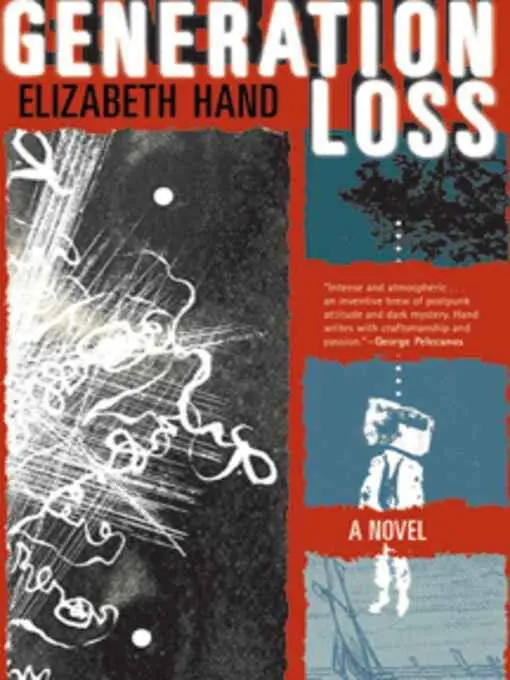
- Название:Generation Loss
- Автор:
- Издательство:Small Beer Press
- Жанр:
- Год:2007
- Город:Northampton, MA
- ISBN:978-1-931520-21-8
- Рейтинг книги:3 / 5. Голосов: 1
-
Избранное:Добавить в избранное
- Отзывы:
-
Ваша оценка:
Generation Loss: краткое содержание, описание и аннотация
Предлагаем к чтению аннотацию, описание, краткое содержание или предисловие (зависит от того, что написал сам автор книги «Generation Loss»). Если вы не нашли необходимую информацию о книге — напишите в комментариях, мы постараемся отыскать её.
Thirty years later she is adrift, on her way down, and almost out when an old acquaintance sends her on a mercy gig to interview a famously reclusive photographer who lives on an island in Maine. When she arrives Down East, Cass stumbles across a decades-old mystery that is still claiming victims, and she finds one final shot at redemption.
Patricia Highsmith meets Patti Smith in this mesmerizing literary thriller.
Praise for Elizabeth Hand’s previous novels: Amazon.com Review
“Inhabits a world between reason and insanity—it’s a delightful waking dream.”
—
“One of the most sheerly impressive, not to mention overwhelmingly beautiful books I have read in a long time.”
—Peter Straub
Generation Loss — читать онлайн бесплатно полную книгу (весь текст) целиком
Ниже представлен текст книги, разбитый по страницам. Система сохранения места последней прочитанной страницы, позволяет с удобством читать онлайн бесплатно книгу «Generation Loss», без необходимости каждый раз заново искать на чём Вы остановились. Поставьте закладку, и сможете в любой момент перейти на страницу, на которой закончили чтение.
Интервал:
Закладка:
Who would ever live here? I thought. And answered: I could .
“Cass.” I capped my camera and put it back beneath my jacket. “Come here, I’ll teach you how to keep a heading. The currents are okay for the moment.”
He showed me how to read the compass, its face tilting beneath a transparent plastic dome; how to hold the tiller steady.
“I’m going below for a second.” He raised his voice above the wind and pointed. “That’s where we’re headed—”
A long black shape skimmed the broken surface of the water. “That’s Tolba. We’re sailing a line of sight—not sailing, motoring. So you just keep heading in that direction, okay?”
I minded the tiller while he went below. It was like fighting with a live stick, but I figured Toby wouldn’t leave if he didn’t think I could hold my own. He returned a minute later with two coffee mugs, a liter of Moxie and a bottle of Captain Morgan’s rum.
“See if this warms you up.”
He poured Moxie into each mug, added a slug of rum, and handed one to me. I took a sip and nearly spat it out.
Toby looked hurt. “You should try it with a little squeeze of fresh lime. Nothing finer.”
I fished beneath my anorak until I found my Jack Daniel’s. Toby finished off his mug and set it down. The deck was treacherous with spray, but he moved easily, keeping the tiller steady. The freezing mist had turned to a fine, steady rain. After a few minutes, Toby shook his head.
“We’re dragging,” he yelled above the wind. “The dinghy. Here, I’ll need you to take over again—”
He opened a storage box and removed a bleach bottle that had been cut to make a scoop, turned and placed my hands on the tiller. “I’ve set it so we’re going into the wind now. That’ll slow us down while I bail. Keep that heading.”
He ducked out from the cockpit and headed toward the stern. I watched him lower himself down into the dinghy and begin bailing then turned my attention back to the tiller.
Ahead of us, Tolba Island rose against the mottled sky. It was like watching a photograph develop: bit by bit, details grew clear. The finely etched tips of spruce on the island’s heights; slashes of white that were ancient birches; a sweep of blood red stone that gave way to a pale, red-pocked strand; a granite pier projecting into the water.
It was big; far bigger than Paswegas.
I looked back to check on Toby.
He shouted, “How you doing?”
“Okay.”
“Almost done here! Hang on—”
Exhaustion seeped through me like another drug. My gut ached from coffee and speed and alcohol. If I crashed now, I’d be down for the count. I fingered the film canister in my pocket that held the stolen pills. I had enough speed to last me another day or two if I rationed it. I had the Percocet for when I needed to sleep. If I held off till I got back to Burnt Harbor, I could hit the road and get as far south as Bangor that night, find a Motel 6 and crash there. Not exactly deluxe accommodations, but better than the Lighthouse.
The Lighthouse…
I thought of that first night in Burnt Harbor, of Kenzie’s white face disappearing into the shadows, like a moth.
She was looking for you, Robert had said . She said you were nice .
Well, that was her first mistake.
She said you were going to give her a ride .
My stomach turned over, but not from the swell. I fumbled for the bottle of Jack Daniel’s.
She wasn’t running away. I knew that. Robert knew it too. She’d been looking for me, but she’d run into someone else. I thought of the boat I’d glimpsed that night in Burnt Harbor—its running lights, one red, one green; then darkness, its engine silenced. I remembered the animal crouched in the tree, its wild maddened eyes.
Fishers never leave the mainland.
“Whooee! Wicked cold out there.” Toby ducked beneath the dodger, shaking sleet from his anorak. He stuffed the scoop back into its bin and patted my shoulder. “You seem to have done okay. Here.”
He took the tiller and angled it slightly. The Northern Sky turned toward the far end of the beach. “Now we’re not going into the wind, we’ll make better time. If you can handle it for a few more minutes, I’ll go down and fire up the Coleman stove and heat us up some coffee, how’s that?”
“Sounds great.”
He grabbed the mugs and went below. I stood, brooding, as we drew closer to the island. Great reddish boulders were scattered on the rocky shore. On the cliffs above the beach, spindly stands of evergreen and birch. A glitter among the trees indicated a house or outbuildings.
Toby returned with two steaming mugs. “Here you go.”
I stared at the island. “It’s so big.”
“Don’t forget there was a whole village once.”
I raised the mug to my face, pressing it against my cheek until it burned. “I can’t believe you just come and go from here.”
“Not often. Fishermen do it all the time.”
“Yeah, and freeze to death for a living.”
“You think we have a choice? Places like Paswegas, we’re like Custer’s Last Stand. People from away, developers—they’re killing us. They move here from New Jersey and New York and they don’t want to let us hunt our own land anymore. The fishermen can’t catch fish. Red tide kills the clammers. We get your Lyme ticks, and your Nile mosquitoes … every bad thing we used to hide from, finds us now. Away isn’t ‘away’ anymore. It’s here.”
He didn’t sound angry the way Suze had: only resigned and sad. I sipped some coffee and scalded my tongue. Didn’t feel bad at all.
“I saw something,” I said. I backed up against the dodger, out of the wind. “Back on Paswegas. An animal, in those pine trees by Aphrodite’s house. I think it was that thing you told me about. A fisher.”
“What’d it look like?”
“Kind of big, or biggish. Black-brown, like a little bear but with a long tail. A lot of fur. It snarled at me.”
“Was it on the ground?”
“It was in a tree. Aphrodite’s dogs came running up, and it climbed away or jumped off or something. I’m sure it was a fisher.”
“Huh.” Toby sipped his coffee and steered the boat toward a long pier that seemed to be made of rusty metal. As we drew closer, I saw that it wasn’t metal but stone, the same bloody color as the boulders on shore. “It does sound like a fisher.”
“When I mentioned it to Suze, she thought I was crazy. She said it was impossible for a fisher to get out to one of the islands.”
“Well, that’s true. But if you saw it … people see things all the time. Wolves, mountain lions. Not on the islands, but back there—”
He cocked his head toward the mainland. “People report them to Fish and Wildlife, but the feds don’t want to admit they’re back in Maine. Once they admit we got mountain lions and wolves living here, you have a whole lot of issues about endangered species. Also a whole lot of pissed-off farmers and hunters, ‘cause the wolves and cougars eat their livestock, and they thin out the deer herd. But they’re here, all right.”
I felt a faint tingling on my neck. “So it’s theoretically possible for a fisher to be there, even if no one’s ever seen one before?”
“Sure. I mean, moose have swum out to the islands, and coyotes and foxes. Back a hundred years ago, there was one or two winters so bad there were places where the reach would freeze, and animals could walk over. You don’t usually find big pine trees on the islands anymore—they were all cut for lumber, or to make masts. Plus they don’t like the salt air. But there’s a few big pines on Paswegas, and there’s a couple of really big ones here on Tolba. So you could have porcupines, and maybe you could have a fisher. Anything’s possible.”
Читать дальшеИнтервал:
Закладка:
Похожие книги на «Generation Loss»
Представляем Вашему вниманию похожие книги на «Generation Loss» списком для выбора. Мы отобрали схожую по названию и смыслу литературу в надежде предоставить читателям больше вариантов отыскать новые, интересные, ещё непрочитанные произведения.




Обсуждение, отзывы о книге «Generation Loss» и просто собственные мнения читателей. Оставьте ваши комментарии, напишите, что Вы думаете о произведении, его смысле или главных героях. Укажите что конкретно понравилось, а что нет, и почему Вы так считаете.