Elizabeth Hand - Generation Loss
Здесь есть возможность читать онлайн «Elizabeth Hand - Generation Loss» весь текст электронной книги совершенно бесплатно (целиком полную версию без сокращений). В некоторых случаях можно слушать аудио, скачать через торрент в формате fb2 и присутствует краткое содержание. Город: Northampton, MA, Год выпуска: 2007, ISBN: 2007, Издательство: Small Beer Press, Жанр: Триллер, Ужасы и Мистика, на английском языке. Описание произведения, (предисловие) а так же отзывы посетителей доступны на портале библиотеки ЛибКат.
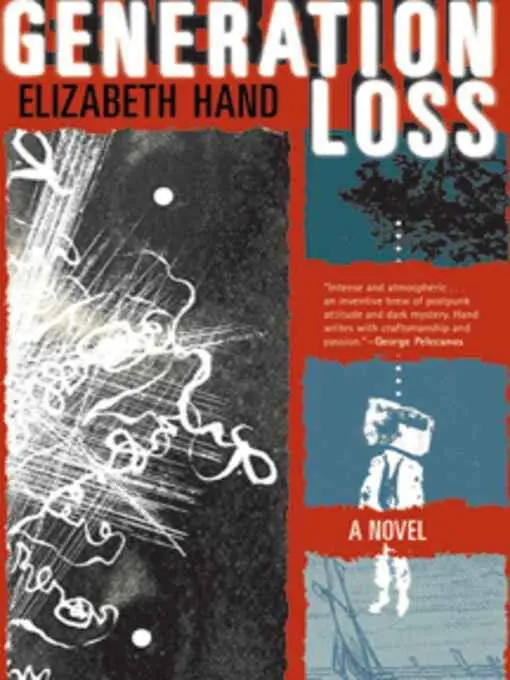
- Название:Generation Loss
- Автор:
- Издательство:Small Beer Press
- Жанр:
- Год:2007
- Город:Northampton, MA
- ISBN:978-1-931520-21-8
- Рейтинг книги:3 / 5. Голосов: 1
-
Избранное:Добавить в избранное
- Отзывы:
-
Ваша оценка:
Generation Loss: краткое содержание, описание и аннотация
Предлагаем к чтению аннотацию, описание, краткое содержание или предисловие (зависит от того, что написал сам автор книги «Generation Loss»). Если вы не нашли необходимую информацию о книге — напишите в комментариях, мы постараемся отыскать её.
Thirty years later she is adrift, on her way down, and almost out when an old acquaintance sends her on a mercy gig to interview a famously reclusive photographer who lives on an island in Maine. When she arrives Down East, Cass stumbles across a decades-old mystery that is still claiming victims, and she finds one final shot at redemption.
Patricia Highsmith meets Patti Smith in this mesmerizing literary thriller.
Praise for Elizabeth Hand’s previous novels: Amazon.com Review
“Inhabits a world between reason and insanity—it’s a delightful waking dream.”
—
“One of the most sheerly impressive, not to mention overwhelmingly beautiful books I have read in a long time.”
—Peter Straub
Generation Loss — читать онлайн бесплатно полную книгу (весь текст) целиком
Ниже представлен текст книги, разбитый по страницам. Система сохранения места последней прочитанной страницы, позволяет с удобством читать онлайн бесплатно книгу «Generation Loss», без необходимости каждый раз заново искать на чём Вы остановились. Поставьте закладку, и сможете в любой момент перейти на страницу, на которой закончили чтение.
Интервал:
Закладка:
I used the boat hook like a walking stick and tried not to lag behind Toby. A dog spied us and ran across the shingle, barking. The men all turned. I half expected someone to shout at us—at me—but they said nothing. Their silence unnerved me, but after a minute they turned away again.
Toby waited for me on the pier. “How you doing?”
“I’m okay.”
He held out a hand, steering me up the granite steps, and we walked to the dinghy. I felt exposed and went as fast as I could, my boots skidding on the slick surface. We reached the dinghy and climbed in. Toby rowed to where the Northern Sky was moored, climbed up on deck, and set down his things. I handed him what I’d brought, and he helped me on board.
“You get this stuff stowed below while I tie up the dinghy. Those water jugs go under the sink down in the galley. The rest of that stuff, just put it so we don’t trip on it.”
I started for the companionway then paused.
“I might want to take some pictures out here. You going to let me use my camera this time?”
Toby loosened a line from a cleat. “I don’t have a problem with that.”
“How come you had a problem with it yesterday?”
“I wasn’t sure yet whether or not you were going to be a problem.”
I felt oddly pleased and gave him a wry smile. He looked at me. “You still don’t have a mirror, do you?”
“Nope.” I stared back, then asked, “The mirror game. Suze told me that was something Denny used to do with everyone.”
He said nothing.
“What was it?” I prodded. “Was it something about that girl? Hannah?”
“No.” He sighed. “It really was a game. We’d get really stoned, then you’d just stare into the mirror until your face started to look all weird, like it was melting or something. The way if you repeat the same word over and over, it starts to sound funny? Like that. It was silly. But then Denny started to do some other stuff. He was reading a lot about primitive religions; he started making up these rituals. That was pretty silly too, at first. But then it just started to get bizarre. He started believing in the stuff he’d made up. He’d force people to do things—look at yourself in the mirror for an hour, three hours. He did it once for a whole day. All day, all night. It—”
He shook icy rain from his parka and shivered. “I was with him. I did it too—stared at myself in this big mirror. Every time I started to nod off he’d poke me. After a while he stopped, but he wasn’t asleep. He just sat there and stared at himself, and then he started whispering to himself. Just kept saying the same thing over and over. Like Chinese water torture.” He glanced at me. “That was when I knew I’d had enough. I got the hell out of there and got a job at Rankin’s Hardware for a few months, just to kind of normalize myself. I know it’s stupid, but I can’t stand it now, seeing myself in a mirror.”
He stared at the sky and shook his head, as though remembering.
“What was he saying?” I asked.
“‘I see you.’” He shielded his eyes from the rain. “‘I see you, I see you. I see you.’ That was all.”
Abruptly he turned and clapped my shoulder. “Go on now. You better get that stuff below.”
I climbed down the companionway and stowed the boat hook and water jugs and my bag. Toby joined me a few minutes later.
“I’ve got some extra foul-weather gear.” He rooted through a cupboard. “You’ll ruin those cowboy boots of yours, sliding around in the salt water. See if these fit.”
The anorak fit, but the Wellingtons were way too big. I said, “I think I better stick with my boots.”
“Suit yourself. Just be careful. Give me a hand with the rest of this stuff.”
It took me a few trips to get everything stowed below. Toby moved quickly and efficiently across the deck, seeming impervious to cold and sleet. When he finished, he beckoned toward the companionway.
’We’ll motor past the point there. Going straight into the wind like this, it would take us three times as long to sail. If the wind changes direction, we might motorsail.”
He squinted as icy spray gusted across the deck. “This could be rough. Think you’ll be okay?”
“I’ll be fine.”
“You sure?” He looked me up and down. “You feel bad, you can try going below. I don’t think that helps much, myself. You’re better here on deck where you can feel the wind. There’s life jackets there—”
He cocked his thumb at several orange vests and a life preserver. “Not that they’ll do you much good. You go overboard, you’ve got eight minutes before hypothermia kicks in. That’s how they train kids down at the yacht club—they throw ‘em in the harbor and toss ‘em a life preserver to help get ‘em to shore.”
“They get them back out, right?”
“That’s what the boat hook’s for.”
I huddled in the stern while Toby went below. After a few minutes I heard the rumble of the engine turning over. Smoke spewed across the water. Toby hopped back up on deck and stood beside me at the tiller as the Northern Sky nosed away from the pier. I tugged the watchcap over my ears and looked across the harbor to the beach.
The men stood in that same small group. A few watched us pull out. The others had turned to watch four dark figures walking slowly down the road from the crest of the island. Two of the figures carried a stretcher. Behind them walked a heavyset man in a black overcoat, and a tall lanky figure. Ray Provenzano.
And Gryffin.
“Look,” I said.
Toby turned. He ran a hand across his brow then raised it in a wave.
On shore, the tall figure stopped. He lifted his head and gazed across the water then slowly lifted his hand. His voice came to us, garbled by wind and the throb of the engine.
“What’d he say?” I asked Toby.
“‘Be careful.’”
I watched as the figures on shore grew smaller and smaller, until they were no bigger than the rocks and, at last, became indistinguishable from them, disappearing completely as we rounded the point.
21
You can get used to anything, even hanging. Even cold. Still, I thought longingly of the little woodstove I’d seen down in the Northern Sky ’s cabin. When I asked Toby about it, he looked at me dubiously.
“Think you can get a fire going? It’s tricky. Time you did, we’d probably be there.”
I reluctantly agreed. We’d left the point behind us. Now Paswegas was a green-black hump, like a breaching whale. There was no real chop, but a lot of long swells. It didn’t make me feel sick, more like being in a gray uneasy dream that I couldn’t quite wake from. Now and then a big wave would catch us sideways, flinging frigid water over the bow. I started counting these to see if there was a pattern, and yeah, every third wave was big, and every twelfth wave was really big. I helped Toby pull up the dodger, a small awning that covered the cockpit, and ducked under it as another wave slapped the boat. It wasn’t much protection, but it kept the worst of the spray from us, and some of the wind. My feet were swollen inside my boots. My face felt as though it had hardened like cement.
Churning sea thrust against roiling sky. The sky pushed back. We fought both of them. A few gulls beat feebly against the clouds. I went below and got my camera, returned to the relative shelter of the dodger and did my best to keep my balance while I shot that unearthly expanse of gray and white and sickly green. Islets rose from the water, some little more than big black rocks, others crowned with salt-withered spruce or birch. I saw tangles of bone white driftwood on rocky beaches, and dead seabirds, creosote-blackened pilings ripped from God knows where. I thought of photos I had seen of Iceland, of volcanic islands rising from the sea.
Читать дальшеИнтервал:
Закладка:
Похожие книги на «Generation Loss»
Представляем Вашему вниманию похожие книги на «Generation Loss» списком для выбора. Мы отобрали схожую по названию и смыслу литературу в надежде предоставить читателям больше вариантов отыскать новые, интересные, ещё непрочитанные произведения.







Обсуждение, отзывы о книге «Generation Loss» и просто собственные мнения читателей. Оставьте ваши комментарии, напишите, что Вы думаете о произведении, его смысле или главных героях. Укажите что конкретно понравилось, а что нет, и почему Вы так считаете.