Dan Brown - Inferno
Здесь есть возможность читать онлайн «Dan Brown - Inferno» — ознакомительный отрывок электронной книги совершенно бесплатно, а после прочтения отрывка купить полную версию. В некоторых случаях можно слушать аудио, скачать через торрент в формате fb2 и присутствует краткое содержание. Город: London, Год выпуска: 2013, Жанр: Триллер, на английском языке. Описание произведения, (предисловие) а так же отзывы посетителей доступны на портале библиотеки ЛибКат.
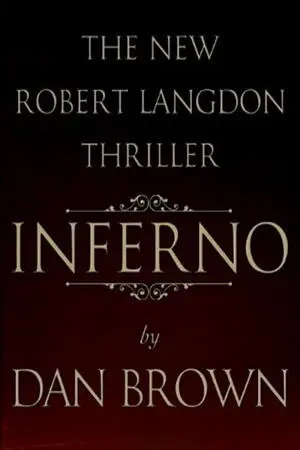
- Название:Inferno
- Автор:
- Жанр:
- Год:2013
- Город:London
- ISBN:нет данных
- Рейтинг книги:4 / 5. Голосов: 2
-
Избранное:Добавить в избранное
- Отзывы:
-
Ваша оценка:
Inferno: краткое содержание, описание и аннотация
Предлагаем к чтению аннотацию, описание, краткое содержание или предисловие (зависит от того, что написал сам автор книги «Inferno»). Если вы не нашли необходимую информацию о книге — напишите в комментариях, мы постараемся отыскать её.
A threat to his life will propel him and a young doctor, Sienna Brooks, into a breakneck chase across the city of Florence. Only Langdon’s knowledge of hidden passageways and ancient secrets that lie behind its historic facade can save them from the clutches of their unknown pursuers.
With only a few lines from Dante’s dark and epic masterpiece,
, to guide them, they must decipher a sequence of codes buried deep within some of the most celebrated artefacts of the Renaissance — sculptures, paintings, buildings — to find the answers to a puzzle which may, or may not, help them save the world from a terrifying threat…
Set against an extraordinary landscape inspired by one of history’s most ominous literary classics,
is Dan Brown’s most compelling and thought-provoking novel yet, a breathless race-against-time thriller that will grab you from page one and not let you go until you close the book.
Inferno — читать онлайн ознакомительный отрывок
Ниже представлен текст книги, разбитый по страницам. Система сохранения места последней прочитанной страницы, позволяет с удобством читать онлайн бесплатно книгу «Inferno», без необходимости каждый раз заново искать на чём Вы остановились. Поставьте закладку, и сможете в любой момент перейти на страницу, на которой закончили чтение.
Интервал:
Закладка:
Neither Langdon nor Sienna said a word as they stood side by side gazing down at the craggy face of Dante Alighieri, still sealed in his Ziploc bag, as if he’d been suffocated. For a moment the image of a face staring up out of a water-filled basin conjured for Langdon his own terrifying experience as a child, stuck at the bottom of a well, staring skyward in desperation.
Pushing the thought from his mind, he carefully reached down and gripped the mask on either side, where Dante’s ears would have been. Although the face was small by modern standards, the ancient plaster was heavier than he’d expected. He slowly lifted the mask out of the font and held it up so that he and Sienna could examine it more closely.
Even viewed through the plastic bag, the mask was remarkably lifelike. Every wrinkle and blemish of the old poet’s face had been captured by the wet plaster. With the exception of an old crack down the center of the mask, it was in perfect condition.
“Turn it over,” Sienna whispered. “Let’s see the back.”
Langdon was already doing just that. The security video from the Palazzo Vecchio had clearly shown Langdon and Ignazio discovering something on the reverse side of the mask — something of such startling interest that the two men had essentially walked out of the palace with the artifact.
Taking exceptional care not to drop the fragile plaster, Langdon flipped the mask over and laid it facedown in his right palm so they could examine the back. Unlike the weathered, textured face of Dante, the inside of the mask was smooth and bare. Because the mask was never meant to be worn, its back side had been filled in with plaster to give some solidity to the delicate piece, resulting in a featureless, concave surface, like a shallow soup bowl.
Langdon didn’t know what he had expected to find on the back of the mask, but it most certainly was not this.
Nothing.
Nothing at all.
Just a smooth, empty surface.
Sienna seemed equally confused. “It’s blank plaster,” she whispered. “If there’s nothing here, what did you and Ignazio see?”
I have no idea , Langdon thought, pulling the plastic bag taut across the plaster for a clearer view. There’s nothing here! With mounting distress, Langdon raised the mask into a shaft of light and studied it closely. As he tipped the object over for a better view, he thought for an instant that he might have glimpsed a faint discoloration near the top — a line of markings running horizontally across the inside of Dante’s forehead.
A natural blemish? Or maybe … something else. Langdon immediately spun and pointed to a hinged panel of marble on the wall behind them. “Look in there,” he told Sienna. “See if there are towels.”
Sienna looked skeptical, but obeyed, opening the discreetly hidden cupboard, which contained three items — a valve for controlling the water level in the font, a light switch for controlling the spotlight above the font, and … a stack of linen towels.
Sienna gave Langdon a surprised look, but Langdon had toured enough churches worldwide to know that baptismal fonts almost always afforded their priests easy access to emergency swaddling cloths —the unpredictability of infants’ bladders a universal risk of christenings.
“Good,” he said, eyeing the towels. “Hold the mask a second?” He gently transferred the mask to Sienna’s hands and then set to work.
First, Langdon retrieved the hexagonal lid and heaved it back up onto the font to restore the small, altarlike table they had first seen. Then he grabbed several of the linen towels from the cupboard and spread them out like a tablecloth. Finally, he flipped the font’s light switch, and the spotlight directly overhead sprang to life, illuminating the baptismal area and shining brightly down on the covered surface.
Sienna gently laid the mask on the font while Langdon retrieved more towels, which he used like oven mitts to slide the mask from the Ziploc bag, careful not to touch it with his bare hands. Moments later, Dante’s death mask lay unsheathed and naked, faceup beneath the bright light, like the head of an anesthetized patient on an operating table.
The mask’s dramatic texturing appeared even more unsettling in the light, the creases and wrinkles of old age accentuated by the discolored plaster. Langdon wasted no time using his makeshift mitts to flip the mask over and lay it facedown.
The back side of the mask looked markedly less aged than the front — clean and white rather than dingy and yellow.
Sienna cocked her head, looking puzzled. “Does this side look newer to you?”
Admittedly, the color difference was more emphatic than Langdon would have imagined, but this side was most certainly the same age as the front. “Uneven aging,” he said. “The back of the mask has been shielded by the display case so has never suffered the aging effects of sunlight.” Langdon made a mental note to double the SPF of his sunscreen.
“Hold on,” Sienna said, leaning in close to the mask. “Look! On the forehead! That must be what you and Ignazio saw.”
Langdon’s eyes moved quickly across the smooth white surface to the same discoloration he had spied earlier through the plastic — a faint line of markings that ran horizontally across the inside of Dante’s forehead. Now, however, in the stark light, Langdon saw clearly that these markings were not a natural blemish … they were man-made.
“It’s … writing,” Sienna whispered, the words catching in her throat. “But …”
Langdon studied the inscription on the plaster. It was a single row of letters — handwritten in a florid script of faint brownish yellow.
“That’s all it says?” Sienna said, sounding almost angry.
Langdon barely heard her. Who wrote this? he wondered. Someone in Dante’s era? It seemed unlikely. If so, some art historian would have spotted it long ago during regular cleaning or restoration, and the writing would have become part of the lore of the mask. Langdon had never heard of it.
A far more likely source quickly materialized in his mind.
Bertrand Zobrist.
Zobrist was the mask’s owner and therefore could easily have requested private access to it whenever he wanted. He could have written the text on the back of the mask fairly recently and then replaced it in the antique case without anyone ever knowing. The mask’s owner , Marta had told them, won’t even permit our staff to open the case without him present.
Langdon quickly explained his theory.
Sienna seemed to accept his logic, and yet the prospect clearly troubled her. “It makes no sense,” she said, looking restless. “If we believe Zobrist secretly wrote something on the back of the Dante death mask, and he also went to the trouble to create that little projector to point to the mask … then why didn’t he write something more meaningful ? I mean, it’s senseless! You and I have been looking all day for the mask, and this is all we find?”
Langdon redirected his focus to the text on the back of the mask. The handwritten message was very brief — only seven letters long — and admittedly looked entirely purposeless.
Sienna’s frustration is certainly understandable.
Langdon, however, felt the familiar thrill of imminent revelation, having realized almost instantly that these seven letters would tell him everything he needed to know about what he and Sienna were to do next.
Furthermore, he had detected a faint odor to the mask — a familiar scent that divulged why the plaster on the back was so much whiter than the front … and the difference had nothing to do with aging or sunlight.
“I don’t understand,” Sienna said. “The letters are all the same.”
Читать дальшеИнтервал:
Закладка:
Похожие книги на «Inferno»
Представляем Вашему вниманию похожие книги на «Inferno» списком для выбора. Мы отобрали схожую по названию и смыслу литературу в надежде предоставить читателям больше вариантов отыскать новые, интересные, ещё непрочитанные произведения.


Обсуждение, отзывы о книге «Inferno» и просто собственные мнения читателей. Оставьте ваши комментарии, напишите, что Вы думаете о произведении, его смысле или главных героях. Укажите что конкретно понравилось, а что нет, и почему Вы так считаете.