Tim Glister - Red Corona
Здесь есть возможность читать онлайн «Tim Glister - Red Corona» весь текст электронной книги совершенно бесплатно (целиком полную версию без сокращений). В некоторых случаях можно слушать аудио, скачать через торрент в формате fb2 и присутствует краткое содержание. Город: London, Год выпуска: 2020, ISBN: 2020, Издательство: Point Blank, Жанр: Исторический детектив, Шпионский детектив, Триллер, на английском языке. Описание произведения, (предисловие) а так же отзывы посетителей доступны на портале библиотеки ЛибКат.
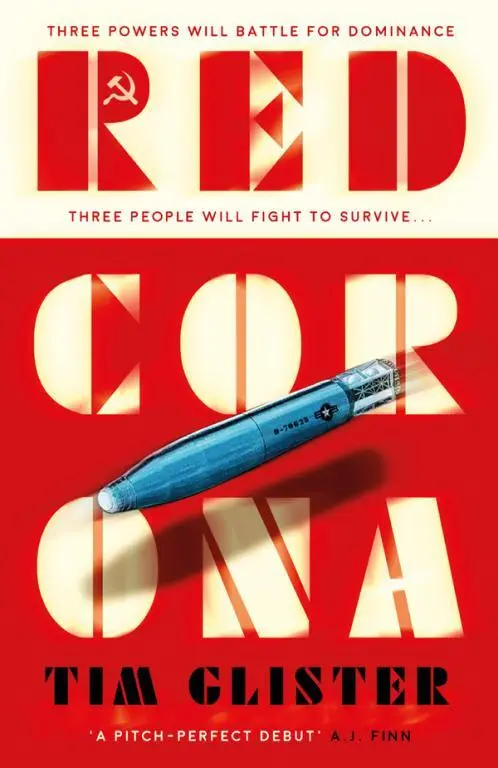
- Название:Red Corona
- Автор:
- Издательство:Point Blank
- Жанр:
- Год:2020
- Город:London
- ISBN:978-1-78607-779-0
- Рейтинг книги:4 / 5. Голосов: 1
-
Избранное:Добавить в избранное
- Отзывы:
-
Ваша оценка:
Red Corona: краткое содержание, описание и аннотация
Предлагаем к чтению аннотацию, описание, краткое содержание или предисловие (зависит от того, что написал сам автор книги «Red Corona»). Если вы не нашли необходимую информацию о книге — напишите в комментариях, мы постараемся отыскать её.
A desperate spy.
It’s 1961, and the white heat of the Space Race is making the Cold War even colder.
The age of global surveillance dawns.
Secret Agent Richard Knox has been hung out to dry by someone in MI5, and he needs to find the traitor in their midst.
Meanwhile in a closed city outside Leningrad, top Soviet Scientist Irina Valera discovers the secret to sending messages through space, a technology that could change the world.
But an accident forces her to flee.
Desperate for a way back into MI5, Knox makes an unlikely ally in Abey Bennett, one of the CIA's only female recruits, while Valera’s technology in the hands of the KGB could be catastrophic.
As three powers battle for dominance, three people will fight to survive….
Red Corona — читать онлайн бесплатно полную книгу (весь текст) целиком
Ниже представлен текст книги, разбитый по страницам. Система сохранения места последней прочитанной страницы, позволяет с удобством читать онлайн бесплатно книгу «Red Corona», без необходимости каждый раз заново искать на чём Вы остановились. Поставьте закладку, и сможете в любой момент перейти на страницу, на которой закончили чтение.
Интервал:
Закладка:
The embassy was used to Russia dangling fake defectors at its front desk, promising the earth or begging for help. But they’d never seen anyone like Valera – someone who truly looked beaten down by despair but who refused to be defeated by it, and who spoke almost perfect Swedish.
However, it still took three hours of conversations and phone calls, including to the physics departments at Stockholm and Uppsala Universities, to establish that Valera was who she said she was, and another one to decide that instead of making her the ambassador’s problem, a seat should be found for her on the 10 p.m. SAS flight from Helsinki to Stockholm.
She’d been given twenty minutes to freshen herself up and change into a clean set of clothes kindly donated by one of the embassy secretaries. Then she was driven out to the airport.
CHAPTER 31
Knox knew trying to confront Manning had been a mistake. An amateurish, egotistical mistake. It was the kind of rash behaviour he’d drag a junior agent over the coals for. Manning wasn’t going to confess to being a double agent just because Knox wanted him to. And if Knox’s concerns about the security of the OECD conference and Operation Pipistrelle were as serious as he claimed, then Peterson was right and he should have taken the Italians’ papers straight to White. But he hadn’t. And he wasn’t going to.
Knox walked south, away from Fortnum’s, cutting through Green Park and then St James’s and down to the river. The hot night had turned into a muggy day, heavy with clouds. It was the kind of weather that reminded Londoners of pea-soupers and the Great Smog of 1952.
Knox needed to clear his head and stop letting his emotions and distrust of Manning get the better of him. He needed a more rational perspective.
He made his way east along Victoria Embankment. Opposite him the South Bank was still suffering its decade-long hangover from the Festival of Britain. Skylon, the slender spire that had been suspended over the riverbank as a vision of the nation’s bright tomorrow, was long gone. As was the grandiosely named Dome of Discovery that had been built next to it. The festival was supposed to be a beacon of hope and change, a celebration of a nation emerging from post-war austerity. And it had been, for the few months it was open.
Knox and Williams had visited the festival, along with everyone else in the city it seemed, over the summer of 1951. It was a welcome distraction from their office hours spent monitoring the swelling ranks of American and Russian agents treating London as their playground, all the while wondering if the stalemate along the 38th parallel would break and turn Korea into another world war.
Only the Royal Festival Hall was left standing now. The rest of the festival grounds had been cleared for redevelopment. So far only the new twenty-seven-storey headquarters of Royal Dutch Shell had started to rise in Skylon’s place.
He crossed over Blackfriars Bridge, stopping briefly to feel the wind blow past him. Even on the most stifling days, the air still moved on the Thames. He watched a heavy barge float downstream and under the bridge to the docks that lined the south side of the river from Blackfriars to beyond Tower Bridge.
He didn’t know what he was going to say to Holland, but he wanted to see him. Maybe sitting with him would help him accept how easily he’d let himself be manipulated, or maybe it would push him to do something about it.
Knox had visited Holland in Guy’s hospital every evening since he’d been rushed there from Highgate. Every evening except yesterday. The nurses who worked nights had no idea how Knox managed to appear at Holland’s bedside out of thin air at the start of their shifts. They’d just check Holland’s private room during their rounds, and suddenly he’d be there. Then, ten minutes or an hour later, they’d look in again and he’d be gone.
The hospital was busier than Knox was used to this afternoon. Visiting hours were in full swing and wives, husbands, parents, and children swarmed through the building. The grown-ups looked worried, resigned, or dog-tired. The children either stared excitedly at their unusual surroundings or ignored them.
Every bed Knox passed on his way to Holland’s room had someone next to it, talking, fussing, or just sitting quietly. And so did Holland’s.
Sarah Holland hadn’t slept properly in days. She’d found her husband lying face down on a thick-pile rug in their living room when she’d come home on Sunday evening after an afternoon visiting friends, his body limp, eyes closed, and breathing shallow and slow. She phoned for an ambulance, then she phoned Leconfield House. And for the last week her whole life had consisted of sitting at her husband’s bedside for two hours every morning and afternoon, and the rest of the time sitting at home, waiting to come back to the hospital, or for someone at Leconfield House to call and tell her something.
‘Sorry, I didn’t realise you were here,’ Knox said, as the door clicked shut behind him. ‘I’ll leave you alone.’
Sarah looked up at him from Holland’s side. She didn’t seem surprised. She looked like she’d been expecting him. She was immaculately dressed in a muted, floral dress. Her hair was neat, her make-up perfect, but Knox could see how tired she was.
‘No you won’t,’ Sarah replied. Her voice was cool, measured. ‘Stay.’
‘How is he?’ Knox asked, looking at Holland. He still wasn’t used to seeing him in his hospital bed, asleep, unable to wake up. Holland was a man with a powerful presence and it didn’t seem right for him to be so reduced, tucked under sheets in a pair of flannel pyjamas instead of behind his desk in one of his dark, pinstriped suits.
‘You’d know as well as me,’ Sarah said. ‘The nurses tell me you visit James every day.’
‘It’s the least I can do.’ Knox had known Sarah for years, but he found himself falling back on the formalities people used when talking to the grieving.
‘Is it?’ Sarah asked, her voice suddenly changing from cool to cold.
‘I’ll come back later,’ Knox said, sensing the change in her tone.
‘The hell you will.’
‘I don’t want to upset you.’
‘You think you’re upsetting me? My husband lying in a coma no one can do anything about upsets me. The one person who could help him refusing to do anything bloody infuriates me.’
Sarah had been privy to most of the details of MI5’s investigation, including Knox’s lack of cooperation.
Knox knew he owed her the truth. Holland had been more than a patron and mentor to him. Though neither of them would ever say it, the older man had become a kind of father to him, a replacement for the one he’d never had the chance to know. And in many ways Sarah had been his surrogate mother, offering her own support, ear, or advice whenever needed.
Knox wanted to tell her where he’d been the night Holland had fallen into the coma. He wanted to tell her she was right to blame him, that it was his fault. He wanted to share with her the secret he and Holland had kept for fifteen years. But he couldn’t, because Holland himself had sworn him to secrecy, and because the more people who knew about it, the more people could be hurt by it.
Sarah, however, didn’t care about that. She just wanted to know what had happened to her husband.
‘Please, just tell me where you were,’ she said, her exhaustion creeping into her voice.
Knox couldn’t bring himself to betray Holland’s trust in him after so long, even to the one person closer to him than Knox was. ‘I can’t,’ he said.
‘After everything we’ve done for you? I’m his wife, for God’s sake.’
Sarah knew her husband’s life was built on secrets, but they’d never kept any from each other. Apart from the one he shared only with Knox.
Читать дальшеИнтервал:
Закладка:
Похожие книги на «Red Corona»
Представляем Вашему вниманию похожие книги на «Red Corona» списком для выбора. Мы отобрали схожую по названию и смыслу литературу в надежде предоставить читателям больше вариантов отыскать новые, интересные, ещё непрочитанные произведения.












Обсуждение, отзывы о книге «Red Corona» и просто собственные мнения читателей. Оставьте ваши комментарии, напишите, что Вы думаете о произведении, его смысле или главных героях. Укажите что конкретно понравилось, а что нет, и почему Вы так считаете.