Tim Glister - Red Corona
Здесь есть возможность читать онлайн «Tim Glister - Red Corona» весь текст электронной книги совершенно бесплатно (целиком полную версию без сокращений). В некоторых случаях можно слушать аудио, скачать через торрент в формате fb2 и присутствует краткое содержание. Город: London, Год выпуска: 2020, ISBN: 2020, Издательство: Point Blank, Жанр: Исторический детектив, Шпионский детектив, Триллер, на английском языке. Описание произведения, (предисловие) а так же отзывы посетителей доступны на портале библиотеки ЛибКат.
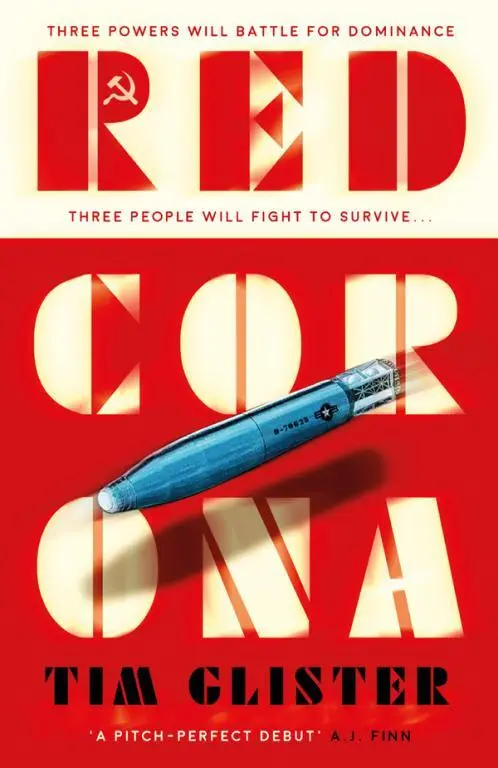
- Название:Red Corona
- Автор:
- Издательство:Point Blank
- Жанр:
- Год:2020
- Город:London
- ISBN:978-1-78607-779-0
- Рейтинг книги:4 / 5. Голосов: 1
-
Избранное:Добавить в избранное
- Отзывы:
-
Ваша оценка:
Red Corona: краткое содержание, описание и аннотация
Предлагаем к чтению аннотацию, описание, краткое содержание или предисловие (зависит от того, что написал сам автор книги «Red Corona»). Если вы не нашли необходимую информацию о книге — напишите в комментариях, мы постараемся отыскать её.
A desperate spy.
It’s 1961, and the white heat of the Space Race is making the Cold War even colder.
The age of global surveillance dawns.
Secret Agent Richard Knox has been hung out to dry by someone in MI5, and he needs to find the traitor in their midst.
Meanwhile in a closed city outside Leningrad, top Soviet Scientist Irina Valera discovers the secret to sending messages through space, a technology that could change the world.
But an accident forces her to flee.
Desperate for a way back into MI5, Knox makes an unlikely ally in Abey Bennett, one of the CIA's only female recruits, while Valera’s technology in the hands of the KGB could be catastrophic.
As three powers battle for dominance, three people will fight to survive….
Red Corona — читать онлайн бесплатно полную книгу (весь текст) целиком
Ниже представлен текст книги, разбитый по страницам. Система сохранения места последней прочитанной страницы, позволяет с удобством читать онлайн бесплатно книгу «Red Corona», без необходимости каждый раз заново искать на чём Вы остановились. Поставьте закладку, и сможете в любой момент перейти на страницу, на которой закончили чтение.
Интервал:
Закладка:
Medev followed them into the forest, lifting his feet up to his knees with every step he took through the deep snow. The weak light of the day was almost completely gone, but after ten minutes of following the path Medev saw two hunched-over figures a hundred metres ahead of him. They turned, saw him, and began to desperately scramble away. Medev called out to the men to stop, but they wouldn’t. He was forced to chase them. By now the snow was up to his thighs and pushing through it was exhausting. He had no idea how the prisoners were managing it, or how long it had taken them to get this far.
‘Stop!’ he shouted again.
But they kept struggling through the snow, grabbing onto each other and the bare trunks of trees to push themselves on until they finally tripped over something hidden in the snow and crashed into a drift.
It took a full minute for Medev to reach them. When he did, he saw that one had a makeshift splint on his right leg, and they were both so gaunt and grey he could barely believe they were still alive at all. He knew there was no way they could survive the journey back to Solovki, or whatever punishment the other guards might inflict on them for their attempted escape. He also knew they’d never survive a night in the snow without shelter. From the looks in both men’s eyes, they knew all this too.
They gave up trying to struggle to their feet and just half kneeled, half slumped in the snow.
‘Please,’ one of them whispered.
It was so dark by then that Medev couldn’t tell which one of them had said it, but he understood what they both wanted. He pulled his pistol from the leather holster on his hip and shot them each in the head. The deep scarlet blood was slow to seep out of their frail, withered bodies. Ten minutes later two more guards arrived, alerted by the sound of gunfire. The next day Medev was promoted.
He was brought out of his memory as the Tu-104 touched the runway at Petrozavodsk airport. The plane taxied to a halt next to a large, black GAZ M21, freshly polished by the local KGB office in preparation for his arrival.
As he sat in the back seat he was handed a slim manila folder – the latest casualty and assessment report from Povenets B. It was considerably more detailed than the one that had been dispatched to Moscow. It also showed just how much that report had played down the scale of the disaster.
He read through the initial findings about the cause of the explosion, the city-wide loss of power that still hadn’t been restored, and the multiple fires that had broken out overnight. Then he scanned the list of the deceased: twenty-seven power plant workers, sixteen children, and two teachers. Finally he reviewed the missing: three more workers and five more children, all presumed dead, and one scientist, unaccounted for. He recognised the scientist’s surname from the reports he received from the GRU. But he was sure he’d seen it somewhere more recently too, much more recently. He checked the names of the dead, and found it halfway down the list of children.
CHAPTER 28
It hadn’t taken long for Zukolev to be moved to a private room in Petrozavodsk hospital. He believed this was because the hospital staff had realised just how important he was. But in reality the doctors had needed their intensive care beds for the more seriously wounded, and Zukolev’s injuries had been relatively minor – just a broken arm and a deep gash across his chin, once all the dust had been cleaned off him.
Now he was propped up in his bed, his injured arm strapped to his side, and his stomach held down by tights sheets. He had a bandage across his jaw, but he was still feeding himself raspberries with his free hand. When he’d demanded them as soon as he’d been transferred to his private room, the nurses looking after him had thought it was some kind of delirious joke brought on by shock, until a man in dusty overalls arrived at the ward station, punnet in hand.
He was savouring a particularly large berry when the door to his room opened and Medev stepped inside.
‘Who are you?’ he asked, berry juice slipping across his lower lip.
Unlike Zukolev, Medev preferred the more anonymous attire of a dark suit to the general’s uniform he could have worn. So Zukolev had no idea that he was talking to someone unfathomably more powerful than him.
Medev quietly closed the door behind him before responding, ‘I’m the person who has to clean up the mess you’ve made.’
Then he crossed the short distance to Zukolev’s bedside, picked up the bowl of berries, and moved them out of reach.
‘How dare you come in here like this.’ Zukolev couldn’t believe this stranger’s impudence. ‘Don’t you know who I am?’
‘You’re Major Yuri Zukolev,’ Medev replied, now at the foot of his bed. ‘GRU administrator of Povenets B. Charged with the safe keeping of three hundred souls.’ His voice was measured, emotionless. ‘And responsible for the deaths of fifty-four of them.’
Zukolev’s face paled. Suddenly, for the first time in a very long time, he was scared.
‘You’re KGB,’ Zukolev said, his voice faint.
Medev didn’t need to confirm Zukolev’s suspicion. His presence was enough.
‘Do you have anything to say in your defence?’ Medev’s voice was still calm.
‘You can’t blame me for the incompetence of my workers,’ Zukolev spluttered.
‘Yes I can.’
Medev moved up the bed towards Zukolev. Zukolev frantically tried to claw his way out from under the sheets holding him down.
‘The GRU will protect me from these baseless accusations,’ Zukolev said. His voice was now high and desperate.
Medev put a hand on Zukolev’s shoulder, as if trying to soothe him. Zukolev stopped moving, frozen in terror.
‘They won’t,’ Medev replied.
The GRU and KGB might trade occasional jurisdictional blows, but everyone knew who held ultimate power. Medev tightened his grip on Zukolev’s shoulder, then pulled a syringe from his jacket pocket and plunged it into Zukolev’s neck. Zukolev tried to call out, but no sound came from his mouth. He was dead by the time Medev slipped quietly back out of the room.
As Medev made his way back down the corridor to the nurses’ station, his mind finally made a connection it had been groping at since his morning briefing from Rykov.
He asked the nurse on duty if he could borrow her phone, then dialled the long list of numbers that could connect him securely to the Lubyanka. When Rykov answered, he told him that under no circumstances could the Americans be allowed to retrieve the next Corona payload. With twenty-two million square kilometres of Soviet Union for them to spy on it would be terrible luck if the Americans had managed to photograph one small, smouldering naukograd . But it wasn’t a risk Medev wanted to take.
CHAPTER 29
Bennett made her way across the north side of Grosvenor Square towards the US embassy. It was an imposing presence. Its hard-edged, Modernist facade took up the whole western side of the square, and a large sculpture of a bald eagle with outstretched wings looked down from its roof on everyone who approached it.
The embassy had opened just over a year ago, and its interior had been designed to be as much of a statement about America’s sense of importance as its brash exterior. The six above-ground levels contained vast conference rooms, banks of communications stations, and row after row of offices – each one’s size correlating precisely with the rank of its occupier. The CIA took up the entire fourth floor, as well as a considerable amount of the building’s subterranean levels, which had been given over to the agency’s local archives.
This was where Bennett headed after flashing her security credentials at an uninterested guard and slipping through one of the small staff entrances on the side of the building.
Читать дальшеИнтервал:
Закладка:
Похожие книги на «Red Corona»
Представляем Вашему вниманию похожие книги на «Red Corona» списком для выбора. Мы отобрали схожую по названию и смыслу литературу в надежде предоставить читателям больше вариантов отыскать новые, интересные, ещё непрочитанные произведения.











Обсуждение, отзывы о книге «Red Corona» и просто собственные мнения читателей. Оставьте ваши комментарии, напишите, что Вы думаете о произведении, его смысле или главных героях. Укажите что конкретно понравилось, а что нет, и почему Вы так считаете.