Tim Glister - Red Corona
Здесь есть возможность читать онлайн «Tim Glister - Red Corona» весь текст электронной книги совершенно бесплатно (целиком полную версию без сокращений). В некоторых случаях можно слушать аудио, скачать через торрент в формате fb2 и присутствует краткое содержание. Город: London, Год выпуска: 2020, ISBN: 2020, Издательство: Point Blank, Жанр: Исторический детектив, Шпионский детектив, Триллер, на английском языке. Описание произведения, (предисловие) а так же отзывы посетителей доступны на портале библиотеки ЛибКат.
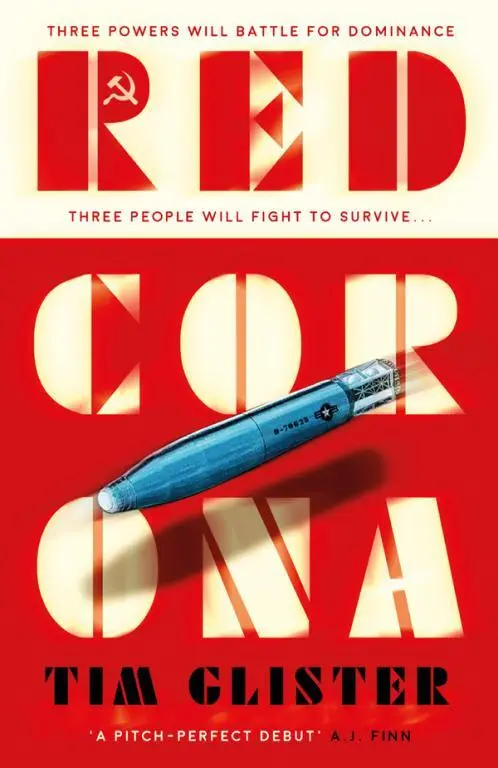
- Название:Red Corona
- Автор:
- Издательство:Point Blank
- Жанр:
- Год:2020
- Город:London
- ISBN:978-1-78607-779-0
- Рейтинг книги:4 / 5. Голосов: 1
-
Избранное:Добавить в избранное
- Отзывы:
-
Ваша оценка:
Red Corona: краткое содержание, описание и аннотация
Предлагаем к чтению аннотацию, описание, краткое содержание или предисловие (зависит от того, что написал сам автор книги «Red Corona»). Если вы не нашли необходимую информацию о книге — напишите в комментариях, мы постараемся отыскать её.
A desperate spy.
It’s 1961, and the white heat of the Space Race is making the Cold War even colder.
The age of global surveillance dawns.
Secret Agent Richard Knox has been hung out to dry by someone in MI5, and he needs to find the traitor in their midst.
Meanwhile in a closed city outside Leningrad, top Soviet Scientist Irina Valera discovers the secret to sending messages through space, a technology that could change the world.
But an accident forces her to flee.
Desperate for a way back into MI5, Knox makes an unlikely ally in Abey Bennett, one of the CIA's only female recruits, while Valera’s technology in the hands of the KGB could be catastrophic.
As three powers battle for dominance, three people will fight to survive….
Red Corona — читать онлайн бесплатно полную книгу (весь текст) целиком
Ниже представлен текст книги, разбитый по страницам. Система сохранения места последней прочитанной страницы, позволяет с удобством читать онлайн бесплатно книгу «Red Corona», без необходимости каждый раз заново искать на чём Вы остановились. Поставьте закладку, и сможете в любой момент перейти на страницу, на которой закончили чтение.
Интервал:
Закладка:
‘No need,’ Peterson said, placing his napkin on the table and shuffling out of the booth. ‘You can give it to me, outside.’
‘I really think the director general should hear it,’ Knox replied.
‘He will. Through me.’
Peterson guided Knox quickly out of the restaurant. Then, on the corner of Jermyn Street, asked him what exactly he thought he was playing at.
‘First buggering off to Cambridge and Holloway without approval, and now trying to make a scene in public. What the hell’s got into you?’
‘You sound stressed, Nicholas,’ Knox replied, his voice full of mock concern.
‘We’re in a period of transition,’ he replied. A political, neutral answer. ‘Everyone is feeling the strain.’
‘They look pretty relaxed to me.’ Knox pointed through the window at the three men still enjoying their lunch, Phillips and Harris hanging on to whatever anecdote Manning was telling them.
‘They haven’t spent all morning keeping the Spanish and Portuguese delegations from each other’s throats,’ Peterson said, somewhat less neutrally. ‘That thankless task fell to me.’
‘And I’m sure you put up a fight.’
Peterson let out a long sigh. ‘I don’t have time for this, Richard. What’s going on?’
‘I know why they were killed.’
‘So?’
It wasn’t the response Knox had expected.
‘You think that justifies talking to Manning like that?’ Peterson asked.
‘They weren’t just troublemakers. They’d worked out a way to replicate Pipistrelle.’
Concern suddenly flickered across Peterson’s face. He stepped closer to Knox.
‘You have proof?’ he asked, lowering his voice.
‘I have their equations. Their real equations.’
‘What the hell does that mean?’
‘Another set of papers. Hidden in their apartment, and not very well.’
Peterson glanced through the restaurant’s wide windows at Manning. Knox enjoyed imagining the cogs turning in his mind.
‘Your conclusion?’ he asked, when he turned back to face Knox.
‘Either they were hiding it from the person who killed them. Or they were hidden after they died, by someone who didn’t want me to see them.’
‘That sounds a little like putting the cart in front of the horse.’
‘Not if this whole thing is a set-up. They were behind a bookcase in the study, where Manning was waiting for us.’
Peterson sighed again, and took half a step back. ‘And that sounds more than a touch paranoid.’
‘Everyone’s a suspect,’ Knox replied, throwing Peterson’s line from the previous night back at him.
‘You seriously want me to believe the director general hid evidence in the middle of a crime scene and a whole team of investigators missed it?’
Peterson’s tone was dismissive but he still peered through the Fountain’s windows again, checking that Manning was still distracted by his lunch guests.
Knox shrugged.
‘It’s unlikely,’ he said. ‘But it’s not impossible, is it?’
Peterson paused before he answered. Knox wondered if Manning’s faithful servant was finally starting to have doubts about his master.
‘If Manning was behind all this, why would he have sent for you in the first place?’ Peterson asked. ‘He could have taken whatever he wanted from that flat and no one would have questioned him.’
‘I don’t know,’ Knox conceded. ‘But it’s a bit too much of a coincidence when the city’s about to become the world’s biggest intelligence powder keg.’
‘And we’re doing everything we can to make sure it doesn’t go off. Which includes not jumping to conclusions. For all we know half of these new calculations are gibberish, and they just stumbled onto something that looks like Pipistrelle by dumb luck.’
‘Or,’ Knox countered, ‘this is just a fragment of what they had, and the fuse has already been lit by someone.’
Peterson thought for another long moment. ‘Even if you’re right,’ he said, finally, ‘and the security of the conference is in question, and your conspiracy is real, you still have to follow proper procedures. Give what you’ve got to White for review and we’ll reassess the threat.’
‘Then what?’
‘Then you go home.’
CHAPTER 27
Medev’s Tupolev Tu-104 jet came into land over Lake Onega a few minutes before one o’clock in the afternoon. He’d been lucky that none of the planes kept on standby for the KGB at Chkalovsky airbase north of Moscow had been requisitioned for other emergencies that morning. He’d left the Lubyanka at half past nine, and was in the air an hour later.
He was the only passenger on the plane, and for the last two hours he’d let his mind reach back into his own memories of Karelia.
He’d been to this corner of the Soviet Union once before. In the winter of 1937 he’d been stationed on the Solovetsky Islands, five hundred kilometres north of Petrozavodsk in the middle of the White Sea. The islands were home to the Solovki special prison camp, where the people who had been deemed the greatest threat to Stalin’s authority were sent during the Great Purge. The islands had originally been a single, vast Orthodox Christian monastery before they were taken over by the Party and turned into what would become the model for all the other gulags that would spring up across the country’s more remote areas.
The islands were not hospitable. Living conditions for the NKVD interrogators, their staff, and the prison guards were harsh. For the prisoners, they were wretched. Many of the academics and intellectuals imprisoned at Solovki lost limbs either to frostbite or to forced labour. Others simply died overnight as temperatures, already below zero during the short days, plunged even further in the long nights.
Medev was a promising, young NKVD lieutenant when he was sent to Solovki. It was a formative experience. For five months, he saw first-hand the casual ruthlessness of absolute power, and learned how much ambition could advance your standing in Stalin’s world, and how much could see you ending up in a mass grave. He also saw that doing what was right and doing what was right in the eyes of the Party were not always the same thing, even if they looked like they were.
The Solovetsky Monastery had originally been taken over to house forced labourers during the construction of the White Sea Canal, which would eventually link the Arctic coast to the Baltic Sea. By 1937 the first section of the canal had been completed and work had moved west.
The White Sea froze over in winter, and the thick ice could damage the entrance of the canal if it was left to build up. So, every day during winter fifty prisoners were taken out across the frozen sea to break the ice at the mouth of the canal. Because of the obvious opportunities for escape, extra men were drafted in for guard duty, often including Medev.
Prisoners, wearing whatever heavy rags they could find, would be marched from the camp before the sun rose, watched over while they worked for six hours without rest or food, and then marched back after the sun had fallen again. Some perished before they even reached the canal, and more as their bodies finally gave up after hours and hours of brutal work. The ones who managed to survive the day tended to make it back to the islands, the prospect of a metre or two of dry floor to rest on suddenly enough to keep them going.
None of the guards paid particularly close attention to how many prisoners died on any day, but one night, as the men were being lined up to head back across the ice, Medev sensed that there weren’t enough of them still standing. He quietly left his position at the back of the loose column and walked towards the forest that ran near the edge of the canal. He immediately saw a messy path cutting through the trees. It looked like two sets of footprints, lopsided as if each was dragging the other.
Читать дальшеИнтервал:
Закладка:
Похожие книги на «Red Corona»
Представляем Вашему вниманию похожие книги на «Red Corona» списком для выбора. Мы отобрали схожую по названию и смыслу литературу в надежде предоставить читателям больше вариантов отыскать новые, интересные, ещё непрочитанные произведения.










Обсуждение, отзывы о книге «Red Corona» и просто собственные мнения читателей. Оставьте ваши комментарии, напишите, что Вы думаете о произведении, его смысле или главных героях. Укажите что конкретно понравилось, а что нет, и почему Вы так считаете.