Matthew Pearl - The Poe Shadow
Здесь есть возможность читать онлайн «Matthew Pearl - The Poe Shadow» весь текст электронной книги совершенно бесплатно (целиком полную версию без сокращений). В некоторых случаях можно слушать аудио, скачать через торрент в формате fb2 и присутствует краткое содержание. Жанр: Исторический детектив, на английском языке. Описание произведения, (предисловие) а так же отзывы посетителей доступны на портале библиотеки ЛибКат.
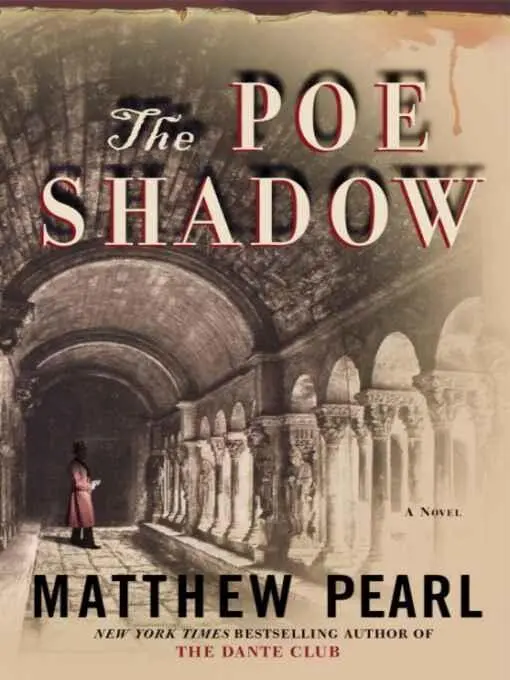
- Название:The Poe Shadow
- Автор:
- Жанр:
- Год:неизвестен
- ISBN:нет данных
- Рейтинг книги:5 / 5. Голосов: 1
-
Избранное:Добавить в избранное
- Отзывы:
-
Ваша оценка:
The Poe Shadow: краткое содержание, описание и аннотация
Предлагаем к чтению аннотацию, описание, краткое содержание или предисловие (зависит от того, что написал сам автор книги «The Poe Shadow»). Если вы не нашли необходимую информацию о книге — напишите в комментариях, мы постараемся отыскать её.
Poe was supposed to be almost anywhere other than Baltimore: he was traveling from Richmond to New York with a planned stop in Philadelphia, not Baltimore. No one knows how he came to be in the city – or, for that matter, how he ended up at the tavern. For some of us, this pretty much describes a really great Saturday night, but when it happens to the master of darkness, just days before his untimely death, it has the makings of a mystery.
Pearl takes us back to those few lost days through the inquiries of Quentin Clark, a Poe-mad young Baltimorean who is dismayed not just by the writer's death but by the press's apathetic reponse to the news. Clark takes it upon himself to look into matters and rectify this slight to his hero. The trouble is, Clark is a stock character from the world of commercial thrillers: a man with a lot to lose, imperiled by his own obsession. Engaged to a beautiful young woman, the son of wealthy and very proper parents and pursuing a career as a lawyer, he may sacrifice them all to his devotion to Poe.
Clark haunts the writer's grave, visits the hospital where he lay dying and tracks down the Poe cousins. But wherever he turns, he's met with indifference or outright obstruction. Finally, in desperation, he turns to another source of information: the pages of a book. Clark has always admired Poe's "Murders in the Rue Morgue" and the other mysteries featuring C. Auguste Dupin, the brilliant Frenchman who solves crimes too baffling for the Paris police. "Dupin's reasoning followed a method Poe called ratiocination," Clark reminds himself, "employing one's imagination to achieve analysis, and one's analysis to climb the heights of imagination."
When Clark stumbles on a newspaper item suggesting that Dupin was based on a real Frenchman, he promptly takes off for the Continent. Of course, there turns out to be more than one candidate for this honor, and soon a couple of testy Frenchmen are racing back to America, eager to snatch whatever glory they might from Poe's death.
Baroquely orchestrated complications ensue, up to and including a threat to the future of the French republic. As he demonstrated in his serial-killers-and-philosophers best seller, "The Dante Club," Pearl is a fine scene-setter and a resolute, if not always inspired, plotter. "The Poe Shadow" is thick with intrigue and thicker still with carefully researched (and ostentatiously displayed) details.
Pearl, who taught literature at Harvard before embarking on his literary career, sometimes displays a wonderfully knowing tone, and enjoys playing with 19th-century lingo. When a Baltimore police officer asks Clark if he has a wife and is told that he has a fiancée, the officer warns: "You should have much to occupy yourself without needing to think of this unhappy affair, then. Or your sweetheart might give you the mitten." Sadly, Pearl's plot is not all sweethearts and mittens.
With its bewildered narrator and its attempt to marry the rational and the spooky, "The Poe Shadow" seems to be modeled on Poe's own writing, but it's missing a crucial element: brevity. Although Pearl has a real affinity for 19th-century America, he overwhelms the strengths of his book with a hurricane of ersatz Victorian prose. He doesn't just disinter Poe's story; he disinters the language of Poe's time. After a while, you feel like you're trapped in a sepia-toned faux-daguerrotype. Pearl has created a museum rather than a world. And no one lives in a museum.
The Poe Shadow — читать онлайн бесплатно полную книгу (весь текст) целиком
Ниже представлен текст книги, разбитый по страницам. Система сохранения места последней прочитанной страницы, позволяет с удобством читать онлайн бесплатно книгу «The Poe Shadow», без необходимости каждый раз заново искать на чём Вы остановились. Поставьте закладку, и сможете в любой момент перейти на страницу, на которой закончили чтение.
Интервал:
Закладка:
"Monsieur," I whispered, taking a seat, "you must tell me directly-how is it you knew the pass-word to admit us?"
"The explanation is rather simple. I did not give the pass-word."
"My dear Duponte! It was like an ‘open sesame'! If this were two centuries earlier, you would have burned as a witch. I cannot stand to continue without being enlightened as to this point!"
Duponte rubbed one of his eyes as though just waking up. "Monsieur Clark. Why have we come here to this building?" he asked.
I did not mind playing the student if it would provide answers. "To see if Baron Dupin had also come in here, and if so what he was looking for tonight before we happened upon him."
"You are right-all right. Now, if you were the proprietor of a secret or private association, would you be most interested in talking with a visitor who gave the correct pass-word, as was given by every simpleton and sot you see in this rum-hole"-this he said without lowering his voice, causing some heads to swivel-"or talking with that one peculiar person who arrives out of place and, quite brashly, provides an absolutely incorrect pass-word?"
I paused. "I suppose the latter," I admitted. "Do you mean to say that you invented a phrase, knowing plainly it was wrong; and that because it was wrong we would be as readily admitted?"
"Exactly. ‘Rosy God' was as good as another. We could have chosen almost any word, as long as our demeanor was equally interested. They would know we were not part of their usual community, and yet be aware that we seriously desired entrance. Now, these suppositions accepted, if our intent was thought to be possibly aggressive, even violent, as they must initially consider, they would rather us inside here, surrounded by their rather large-sized allies and whatever weapons are kept here, than downstairs, where, they might imagine, our own friends could be hiding outside the street door. Would you not think in the same way? Of course, we seek no violent confrontation. Our time here will be brief, and we need no more than a few moments to begin to understand the Baron's interest."
"But how shall you be led to the proprietor here?"
"He shall approach us, if I am right," Duponte answered.
After a few minutes, a paternal man with a white beard stood before us. The menacing doorkeeper lumbered to our other side, closing us in. We rose from the table. The first man, in tones harsher than seemed possible from his looks, introduced himself only as the president of the Whigs of the Fourth Ward and asked why we were there.
"Only to aid you, sir." Duponte bowed. "I believe there was a gentleman trying to enter here in the last hour, probably offering money to your doorkeeper for information."
The proprietor turned to his doorkeeper. "Is it true, Tindley?"
"He waved some hard cash, Mr. George." The doorkeeper nodded sheepishly. "I turned the blockhead away, sir."
"What was it he was asking?" Duponte inquired. Though my companion had no authority here, the doorkeeper seemed to forget that and answered.
"He was all agog to know if we had been interfering in the elections in October of two years ago, laying pipe with voters and such. I told him we were a private Whig club and he would do well to give the pass-word or lope."
"Did you take his money?" asked his chief sternly.
"Course not! I was on the sharp, Mr. George!"
Mr. George glanced peevishly at the doorkeeper at the use of his name. "What do you two have to do with this? Are you sent by the Democrats?"
I could see Duponte was satisfied with what had been so readily revealed: what sort of club this was, what the Baron had wanted, and the name of the leader of this society. Now Duponte's face lit up with a new idea.
"I live far from America, and could not tell a Whig from a Democrat. We have come merely to proffer a friendly caution," said Duponte reassuringly. "That gentleman who called earlier tonight will not be satisfied with your doorkeeper's answer. I think I can put you in the way of detecting the villain of this rascality. He means to quarrel with you over the moral principles of your club."
"That so?" the proprietor said, contemplating this. "Well, thank you kindly for your concern. Now you two cap your luck before there are any more quarrels here."
"Your servant, Mr. George," Duponte said with a bow.
14
THE NEXT DAY,I pressed Duponte on why he had so easily agreed to the Baron Dupin's demand that he refrain from talking to witnesses. It would now be a race to gather information, and we could afford no encumbrance. I was anxious to know Duponte's plans to combat the Baron.
"You intend to deceive him, I suppose? You will, of course, speak to persons who know something of Poe's last visit?"
"I shall remain quite faithful to my pledge. No, I will not interview his witnesses."
"Why? Baron Dupin has done nothing to merit your pledge. He has certainly done nothing to claim any witnesses as his alone. How shall we possibly understand what happened to Poe if we cannot speak to those who saw him personally?"
"They will be useless."
"But would their memories not be fresh from the time of Poe's death, which was but two years ago?"
"Their memories, monsieur, hardly exist at present, but are subsumed by the Baron's tales. The Baron has infected the newspapers and the whispers of Baltimore with his sophistry and craft. All actual witnesses will have become tainted, if they are not already, by the time we would be able to locate them."
"Do you believe they would lie?"
"Not purposefully. Their genuine memories of those events, and the stories they can tell from them, will irrevocably reshape themselves in the image of the Baron's. They are as much his witnesses now as though he has recruited them into a trial and paid them for testimony. No, we cannot gain very much beyond the most basic facts provided by those witnesses, and I suspect we will gather that information through the natural course of events."
You'd probably guess that Duponte was a formal sort of person. You are right and wrong. He did not subscribe to rules of manners and meaningless pleasantries. He smoked cigars inside the house, regardless of who was in the room. He was inclined to ignore you if he had nothing to say, and answer with a single word when he felt it was sufficient. He was in a way a fast friend, for he was your companion without any of the usual rituals or demands of friendship. However, he always bowed and sat with absolutely correct posture (though upon standing there was a noticeable slant of the shoulders). And in his labors he was most strict and serious. In fact, it made you quite uneasy to interrupt him when he was at all occupied. It could be the least important task imaginable, it could be stirring oatmeal, but it would seem leagues more critical than anything you might have to say to break his concentration were the house burning down around his ears.
Yet he grew attached to some of the strangest frivolities. When he was out on the city streets, a distinguished gentleman with a fancy cravat fastened in voluminous folds exclaimed aloud that Duponte was the queerest specimen of man he had ever seen. Duponte, taking no offense, invited the man, who was a painter of some renown here in Baltimore, to share a table with us at a nearby restaurant.
"And tell me your story, dear sir," said the man.
"I would gladly, monsieur," replied Duponte apologetically, "but then there is the likely danger that I would have to hear yours."
"Fascinating!" said the man, unruffled.
The man expressed his eagerness to paint Duponte. It was soon arranged that he would call at Glen Eliza to begin a Duponte portrait. This seemed to me quite absurd considering our other occupations, but I did not object since Duponte was fervent about it.
Читать дальшеИнтервал:
Закладка:
Похожие книги на «The Poe Shadow»
Представляем Вашему вниманию похожие книги на «The Poe Shadow» списком для выбора. Мы отобрали схожую по названию и смыслу литературу в надежде предоставить читателям больше вариантов отыскать новые, интересные, ещё непрочитанные произведения.










Обсуждение, отзывы о книге «The Poe Shadow» и просто собственные мнения читателей. Оставьте ваши комментарии, напишите, что Вы думаете о произведении, его смысле или главных героях. Укажите что конкретно понравилось, а что нет, и почему Вы так считаете.