Махи Бинбин - Marrakech Noir
Здесь есть возможность читать онлайн «Махи Бинбин - Marrakech Noir» весь текст электронной книги совершенно бесплатно (целиком полную версию без сокращений). В некоторых случаях можно слушать аудио, скачать через торрент в формате fb2 и присутствует краткое содержание. Город: New York, Год выпуска: 2018, ISBN: 2018, Издательство: Akashic Books, Жанр: Детектив, на английском языке. Описание произведения, (предисловие) а так же отзывы посетителей доступны на портале библиотеки ЛибКат.
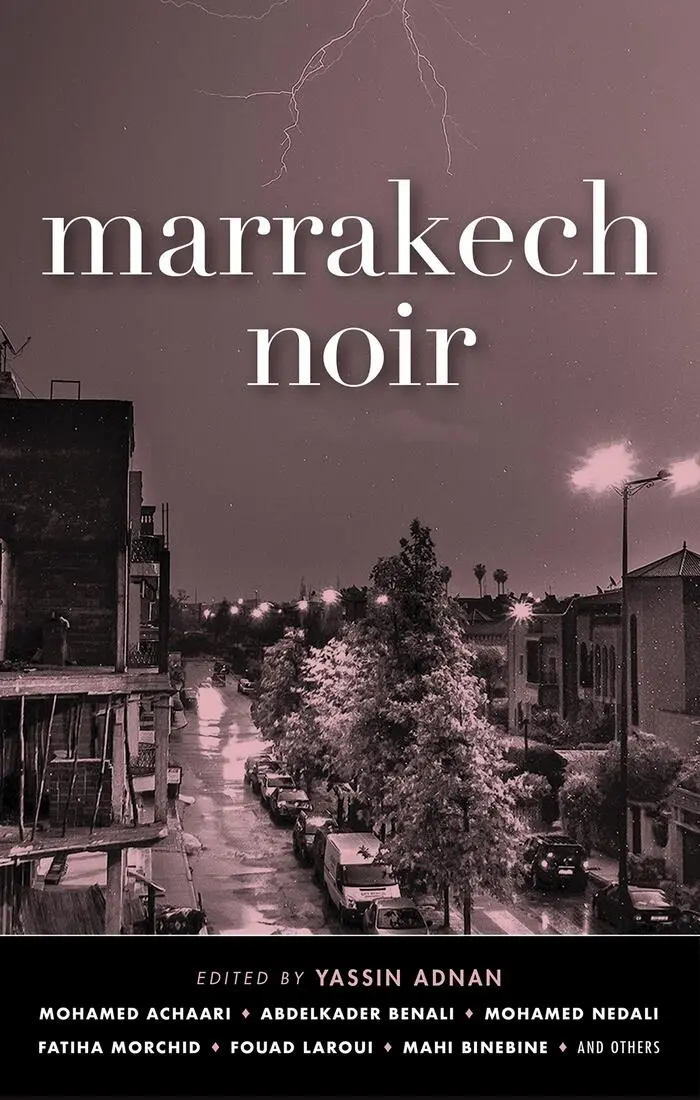
- Название:Marrakech Noir
- Автор:
- Издательство:Akashic Books
- Жанр:
- Год:2018
- Город:New York
- ISBN:978-1-61775-473-9
- Рейтинг книги:5 / 5. Голосов: 1
-
Избранное:Добавить в избранное
- Отзывы:
-
Ваша оценка:
Marrakech Noir: краткое содержание, описание и аннотация
Предлагаем к чтению аннотацию, описание, краткое содержание или предисловие (зависит от того, что написал сам автор книги «Marrakech Noir»). Если вы не нашли необходимую информацию о книге — напишите в комментариях, мы постараемся отыскать её.
Marrakech Noir — читать онлайн бесплатно полную книгу (весь текст) целиком
Ниже представлен текст книги, разбитый по страницам. Система сохранения места последней прочитанной страницы, позволяет с удобством читать онлайн бесплатно книгу «Marrakech Noir», без необходимости каждый раз заново искать на чём Вы остановились. Поставьте закладку, и сможете в любой момент перейти на страницу, на которой закончили чтение.
Интервал:
Закладка:
I arrived at the end of October. And though I was almost overwhelmed with exhaustion, I dreamed of her. Early the next morning I left Hotel Riad Mogador in Gueliz and walked to the Marché Central. I bought a bunch of beautiful roses, thinking Alice and Iman could give them out among the patients. I didn’t call Alice that morning to tell her that I was coming. I felt like a child — I wanted to give her and Iman a joyous surprise.
When I arrived at the hospital, I looked around for Iman. I couldn’t find her. I reached Alice’s office and waited outside while she dealt with the father of a patient. When I opened the door to greet her, she saw me and her face turned white. An odd fear overtook me. I took a step back. At last I went inside, quickly, and shut the door behind me.
Alice was not a demonstrative woman, but she hugged me very warmly that day. More warmth than even a long absence merited. Like someone apologizing for something. Like someone trying to calm an oncoming storm. Iman had killed herself two weeks before my return: death had not postponed her this time. When no one expected it, late at night in bed, she had sliced open the arteries of her wrists. With a marker she had written her last words on her arms. When they found her in the morning the bed was drenched in blood, tears black with makeup weaving tracks across her face, long like the rays of the night. That’s how I imagined her face. How had it happened? I couldn’t understand. How could she commit suicide when she had begun to recover, to settle down? Why should Iman die when she had such capacity to bring joy?
Questions jumped inside me. Iman was no relation of mine, and our friendship was not even long — it had been a month, at best, but that had been enough to send me into mourning now for her strange and extraordinary spirit. Perhaps I had needed a character like her in my life. A personality like that, breathtaking, an unknowable thing. Alice handed me Iman’s diary with a little note affixed to it: I hope you find these stories pleasant. I have missed the surprise of your heart, and of our meetings.
For three days I didn’t leave my hotel room. I thanked the chambermaids from behind the door and asked them to come back later. I had armed myself with two bottles of Absolut and some Marlboros from the duty free. And my best weapon was my weakness. Each time I opened the diary and began to read, Iman’s voice dragged me to a place where time stopped. It was a painful journey through those events and places. She remembered who she was. She remembered her son Selim, who had turned fourteen this year: He must be quite a handsome boy now. She remembered her beloved Samir, who had left her because she betrayed him on a whim. She remembered how she had returned to Marrakech, grieving and defeated, planning to take her son away to spend some time with him. I was broken. You could almost see the cracks in me. Between guilt and sadness, failure and remorse, all my feelings were struggling inside me. And I was trying to keep them away, forever. Hash was the only thing that put a stop to this bleeding from my soul, and the only thing that made it worse.
Iman’s sister refused to allow her son to accompany her to Casablanca where she rented a room in a friend’s apartment. Iman understood her sister’s position. There was no evil intent there: she simply thought Iman was in a state in which she could not take care of a child, given that she was constantly smoking hash. That night Iman went out and met a friend. They went to a Tashfin bar close to Colisée Cinema. She drank a lot and smoked until the fog obscured her vision. They hung out in a car until five thirty in the morning. How could I think of going home at that hour? I wasn’t thinking, or I wouldn’t have done it. Her sister confronted her when she got back, accusing her of negligence. Iman was drunk and high, almost broken, and she slapped her sister. When she slapped me back, I didn’t stop to look at what I had done. I just felt that I had inside me some ungovernable anger that was going to tear out of me like a missile. Unfortunately, it hit my sister.
The following morning, Iman was determined to take Selim away. He began to get his things together to leave, but her sister was even more determined to stop her. When Iman realized it was impossible she grew violent and aggressive: she swore at her sister, and at a cousin who happened to be visiting, and they ended up having to restrain Iman, tying her hands and feet and gagging her to stop her screams. Iman’s eyes remained on the child the whole time as he begged his grandmother not to call the psychiatric clinic. “Wallah, nothing can help your mother but Amerchich!” Iman’s mother screamed.
Amerchich: not just the name of a neighborhood in Daoudiate. Not just a hospital for a particular class of illness. It was a curse. In Marrakech, Amerchich was the kind of insult you hurled at someone to accuse them of both foolishness and insanity, of being unable to live with other people — with well-adjusted, normal people. And it was Iman’s bad luck that her mother had been a nurse before she retired. Naturally, she had contacts at Amerchich.
Between the screaming and exhaustion, the alcohol and the hashish, Iman lost her mind and remembered nothing. From that day on, everything that linked her to her past was erased. She forgot everything. She was rid of everything. Only an obscure and heavy ache remained, crouched in her breast, overwhelming her spirit. An ache whose source she did not know; a pain that led her, several times, to attempt suicide. And also to try to erase the features of her face.
On the last page of her diary she had written a short poem about her father. It had no title. She had written only: My father. Hahahahaha. And the motorcycle. She had drawn a child’s face, smiling. And then the poem:
On the motorcycle
My father branching like bamboo
In trousers (Pat Delphone)
And a fur hat
Dressed for the weekend.
Since he left my mother a year ago
He brings me a kite
That scatters stars.
My eyes store them up
Those holiday days
Of promenade
Of sleep without cost.
The motorcycle prances
The alleys are a serpent
Carving out arcs through the quarters of Marrakech
Kings and lovers abhor them.
He squeezes me to his chest
A windbreak
We sway like wheatsheaves.
It happens on my father’s motorbike
It happens that we also fall
We fall
And explode in riotous laughter.
Translated from Arabic by Hannah Scott Deuchar
Black Love
by Taha Adnan
Hay Saada
With her heart racing, Noura rushed into the house to deliver the good news to her mother, Lalla Ghitha. Her boyfriend Bilal had only just told her — when he was taking her home from college on the back of his motorcycle, down Lalla Aweesh Street in the Aswal neighborhood — that he intended to bring over his mother, Um al-Khayr, to ask for Noura’s hand in marriage. He asked Noura to run the idea by her mother to determine the date of the visit. His brother from Belgium would also be coming to spend New Year’s in Marrakech. And it would be wonderful if he could be there for the announcement of their engagement.
Noura’s face was covered in sweat and beaming with happiness as she entered the kitchen, her words stumbling out of her mouth with the excitement of a child. Lalla Ghitha began slicing eggplant to put in the oven in preparation for the zaalouk salad, which her daughter liked. She appeared to be frowning, as she usually was while cooking, looking as if she’d been forced into doing it. Cutting meat and peeling vegetables with a vengeance like someone settling an old score with nature. Noura was aware of her mother’s tense temperament and she was at ease with her moods, but she didn’t expect this excessive and frightening response after hearing the news.
Читать дальшеИнтервал:
Закладка:
Похожие книги на «Marrakech Noir»
Представляем Вашему вниманию похожие книги на «Marrakech Noir» списком для выбора. Мы отобрали схожую по названию и смыслу литературу в надежде предоставить читателям больше вариантов отыскать новые, интересные, ещё непрочитанные произведения.






Обсуждение, отзывы о книге «Marrakech Noir» и просто собственные мнения читателей. Оставьте ваши комментарии, напишите, что Вы думаете о произведении, его смысле или главных героях. Укажите что конкретно понравилось, а что нет, и почему Вы так считаете.