Elizabeth George - Just One Evil Act
Здесь есть возможность читать онлайн «Elizabeth George - Just One Evil Act» весь текст электронной книги совершенно бесплатно (целиком полную версию без сокращений). В некоторых случаях можно слушать аудио, скачать через торрент в формате fb2 и присутствует краткое содержание. Год выпуска: 2013, ISBN: 2013, Издательство: Dutton, Жанр: Детектив, на английском языке. Описание произведения, (предисловие) а так же отзывы посетителей доступны на портале библиотеки ЛибКат.
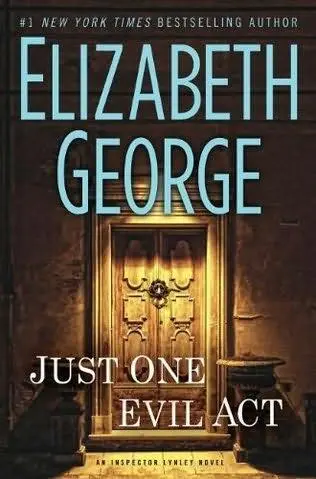
- Название:Just One Evil Act
- Автор:
- Издательство:Dutton
- Жанр:
- Год:2013
- ISBN:978-0-698-13828-5
- Рейтинг книги:5 / 5. Голосов: 1
-
Избранное:Добавить в избранное
- Отзывы:
-
Ваша оценка:
Just One Evil Act: краткое содержание, описание и аннотация
Предлагаем к чтению аннотацию, описание, краткое содержание или предисловие (зависит от того, что написал сам автор книги «Just One Evil Act»). Если вы не нашли необходимую информацию о книге — напишите в комментариях, мы постараемся отыскать её.
bestselling author Elizabeth George offers the latest in her Inspector Lynley series: a gripping child-in-danger story featuring fan favorite Barbara Havers. Detective Sergeant Barbara Havers is at a loss: The daughter of her friend Taymullah Azhar has been taken by her mother, and Barbara can't really help—Azhar had never married Angelina, and his name isn't on Hadiyyah's, their daughter's, birth certificate. He has no legal claim. Azhar and Barbara hire a private detective, but the trail goes cold.
Azhar is just beginning to accept his soul-crushing loss when Angelina reappears with shocking news: Hadiyyah is missing, kidnapped from an Italian marketplace. The Italian police are investigating, and the Yard won't get involved, until Barbara takes matters into her own hands. As she attempts to navigate the complicated waters of doing anything for the case against her superior's orders, her partner, Inspector Thomas Lynley, is dispatched to Italy as the liaison between the Italian police and Hadiyyah's distraught parents.
In time, both Barbara and Lynley discover that the case is far more complex than just a kidnapping, revealing secrets about Angelina; her new lover, Lorenzo; and even Azhar—secrets Barbara may not be willing to accept. With both her job and the life of a little girl on the line, Barbara must decide what matters most and how far she's willing to go to protect it.
Just One Evil Act — читать онлайн бесплатно полную книгу (весь текст) целиком
Ниже представлен текст книги, разбитый по страницам. Система сохранения места последней прочитанной страницы, позволяет с удобством читать онлайн бесплатно книгу «Just One Evil Act», без необходимости каждый раз заново искать на чём Вы остановились. Поставьте закладку, и сможете в любой момент перейти на страницу, на которой закончили чтение.
Интервал:
Закладка:
No one was up and about on the estate when Barbara arrived, but that was no surprise as it was a quarter past six. She found the Ward flat with no trouble at all, and she leaned on the external bell for as long as it took until a man’s voice demanded, “What in God’s name do you want? Do you know what time it is?”
“New Scotland Yard,” Barbara told him. “I need a word. Now.”
This was greeted by silence as the man—presumably Hugo Ward—thought this one over. She gave him five seconds and then rang the bell a second time. He buzzed her inside the place without another word, and she made her way to the flat on the second floor.
Before she could knock, he had the door open. Despite the hour, he was dressed for the day in complete business regalia: three-piece suit, crisp shirt—although hideously two-toned with white collar and blue body—striped tie, and professionally polished shoes. He said, “ You’re the police?” in apparent confusion. Barbara reckoned it was her trainers, which apparently were causing him undue concern. She showed him her police identification. He admitted her into the flat.
“What’s this about?” he asked, not unreasonably.
“A word with your wife,” Barbara told him.
“She’s asleep.”
“Wake her up.”
“Are you aware of the time?”
She wore a wristwatch, and she shook it next to her ear and squinted at it.
“Damn,” she said. “Mickey’s gone belly up.” And to Hugo Ward, “You’ve already mentioned the time, Mr. Ward. And I don’t have a hell of a lot of it to waste. So if you’ll fetch your wife . . . ? Tell her it’s Sergeant Havers, here to share a morning cuppa with her. She knows who I am. Tell her it’s about her trip to Italy last November.”
“She didn’t go to Italy last November.”
“Well someone did. And on her passport.”
“That’s not possible.”
“Believe me, Mr. Ward. In my line of work, you suss out pretty fast that anything’s possible.”
He looked disturbed by the information. That was good. It meant he would be inclined to cooperate. His glance went from Barbara to the corridor behind him. They stood in the small square entry of the flat, where a mirror on one wall reflected a pricey-looking piece of modern art on the other. It was all lines and squiggles suggestive of nothing. But even at that, it did look as if the painter had known what he was doing, although Barbara couldn’t reckon why this should be the case.
She said, “Mr. Ward . . . ? I’m short on time here. D’you want to rouse her from her beauty whatevers, or do you want me to do the honours?”
He said, “Just a moment, then,” and told her to wait in the sitting room, which he called the reception room like some estate agent getting ready to sell the place. This was just off the corridor and like the entry, it was hung with a plethora of modern paintings and decorated with furniture that bore the look of Bathsheba’s distinctive design style. On tables here and there were framed photographs, and Barbara sauntered over to give them the eye as Hugo Ward disappeared to fetch his wife.
She saw that the pictures were of the happy, extended Ward family: the two adult children and their spouses, a winsome grandchild, the beaming paterfamilias, the devoted second wife hanging upon him. They were in various poses on various occasions, and they all reminded Barbara of a quotation that she couldn’t identify but knew that Lynley could have: Someone was protesting too much. In this case it was all about Aren’t we a happy, handsome group? She gave a snort, turned away, and saw that Hugo Ward had come to the reception room’s door.
“She’ll see you when she’s dressed and had her coffee,” he said.
“I don’t think so,” Barbara told him. “Where is she?” She crossed the room and went into the corridor, heading towards three closed doors. “Bedroom’s this way?” she said. “Since it’s just us girls, she won’t be showing me anything I don’t own myself.”
“You bloody hang on!” Ward demanded.
“Love to but you know the situation with time and tide. Is it this door?”
She opened the first that she came to as Hugo Ward blustered behind her, protesting every inch of the way. The first room was a study, beautifully appointed. She gave it a look, clocked more paintings and even more family photos, and went on to the second door, which she opened, singing out, “It’s wakey-wakey time. Early bird, the worm, and you know the rest.”
Bathsheba was sitting up in bed, a cup of coffee on the table next to her, and three newspapers spread out across the covers. So much for her having been asleep, Barbara thought. She eyed Hugo Ward and said, “Naughty, naughty. It’s not nice to lie to the rozzers, you know. Gets right up our noses, that does.”
He said, “Sorry,” to Bathsheba. “She charged in, darling.”
“I can see that,” Bathsheba replied tartly. “Honestly, Hugo. Would it have been too difficult . . . ?” She tossed a paper to one side and reached for her dressing gown.
Barbara said to Hugo Ward, “It’ll be just us girls, like I said,” and closed the door in his face. She could hear him engaged in more blustering on the other side.
Bathsheba rose from the bed and worked her way into her dressing gown. She said to Barbara, “I’ve told you what I know, which is absolutely nothing. The fact that you’ve come to my home before dawn—”
“Open the curtains, Bathsheba, and have a surprise. Sun’s up, birds are twittering, and the worms are dead worried.”
“Very amusing. And you know what I mean. You’ve come at a deliberately ungodly hour to rattle me and there’s nothing to rattle. This might be how the London police are used to operating, but it is not how I am used to operating, and believe me, I’ll be talking to someone about you and your methods the moment you leave.”
“Fine. I stand warned. My timbers are shivering. Now we can talk.”
“I have no intention of—”
“Talking to me? Oh, I think you’ll reconsider that one. You lied to me. I don’t like that as a general rule. When a kid’s been kidnapped, I like it even less.”
“What in God’s name are you talking about?”
“You’re in this up to your earlobes. Hadiyyah’s been missing in Italy for more than a week, and since you were in on things with your sister from the get-go—”
“ What? ” Bathsheba peered at Barbara as if trying to take a reading from her face. She shoved her hair behind her ears and strode to a dressing table, where she sat on its stool. “I have no idea what you’re talking about.”
“That particular kite’s going nowhere this time.” Barbara leaned against the bedroom door and gave Bathsheba a long and steady look. She said, “You lied to me about not having seen Angelina in donkey’s years. You wrote emails to Hadiyyah pretending to be her dad, all nicely set up from University College by who the hell knows. And you gave your sister your passport to travel to Italy last November when she left Azhar.”
“I did nothing of the sort.”
“As it happens, Angelina’s given you up. On all fronts.” This last was a lie. The business about the passport was a long shot. But Hugo’s denial that his wife had been out of the country was helpful in the matter, so as far as Barbara was concerned, a good bluff was in order.
Bathsheba said nothing for a moment. Anyone with a true knowledge of how the police worked would have asked then and there for her solicitor, but in Barbara’s experience people so seldom did. This had always been remarkable to her. In their position, she’d shut it in an instant until she had an attorney alternately massaging her temples and holding her hand. She said, “So?” to Bathsheba Ward. “Want to explain?”
Читать дальшеИнтервал:
Закладка:
Похожие книги на «Just One Evil Act»
Представляем Вашему вниманию похожие книги на «Just One Evil Act» списком для выбора. Мы отобрали схожую по названию и смыслу литературу в надежде предоставить читателям больше вариантов отыскать новые, интересные, ещё непрочитанные произведения.










Обсуждение, отзывы о книге «Just One Evil Act» и просто собственные мнения читателей. Оставьте ваши комментарии, напишите, что Вы думаете о произведении, его смысле или главных героях. Укажите что конкретно понравилось, а что нет, и почему Вы так считаете.