Robert Butler - Hell
Здесь есть возможность читать онлайн «Robert Butler - Hell» весь текст электронной книги совершенно бесплатно (целиком полную версию без сокращений). В некоторых случаях можно слушать аудио, скачать через торрент в формате fb2 и присутствует краткое содержание. Город: New York, Год выпуска: 2009, ISBN: 2009, Издательство: Grove Press, Жанр: humor_satire, на английском языке. Описание произведения, (предисловие) а так же отзывы посетителей доступны на портале библиотеки ЛибКат.

- Название:Hell
- Автор:
- Издательство:Grove Press
- Жанр:
- Год:2009
- Город:New York
- ISBN:978-0-8021-1901-8
- Рейтинг книги:4 / 5. Голосов: 1
-
Избранное:Добавить в избранное
- Отзывы:
-
Ваша оценка:
Hell: краткое содержание, описание и аннотация
Предлагаем к чтению аннотацию, описание, краткое содержание или предисловие (зависит от того, что написал сам автор книги «Hell»). Если вы не нашли необходимую информацию о книге — напишите в комментариях, мы постараемся отыскать её.
, Robert Olen Butler’s uproarious new novel is set in the underworld. Its main character, Hatcher McCord, is an evening news presenter who has found himself in Hell and is struggling to explain his bad fortune. He’s not the only one to suffer this fate—in fact, he’s surrounded by an outrageous cast of characters, including Humphrey Bogart, William Shakespeare, and almost all of the popes and most of the U.S. presidents. The question may be not who is in Hell but who isn’t. McCord is living with Anne Boleyn in the afterlife but their happiness is, of course, constantly derailed by her obsession with Henry VIII (and the removal of her head at rather inopportune moments). Butler’s Hell isn’t as much a boiling lake of fire—although there is that—as it is a Sisyphean trial tailored to each inhabitant, whether it’s the average Joes who die and are reconstituted many times a day to do it all again, or the legendary newspaperman William Randolph Hearst, doomed to obscurity as a blogger mocked by his fellows because he can’t figure out Caps Lock. One day McCord meets Dante’s Beatrice, who believes there is a way out of Hell, and the next morning, during an exclusive on-camera interview with Satan, McCord realizes that Satan’s omniscience, which he has always credited for the perfection of Hell’s torments, may be a mirage—and Butler is off on a madcap romp about good, evil, free will, and the possibility of escape. Butler’s depiction of Hell is original, intelligent, and fiercely comic, a book Dante might have celebrated.
Hell — читать онлайн бесплатно полную книгу (весь текст) целиком
Ниже представлен текст книги, разбитый по страницам. Система сохранения места последней прочитанной страницы, позволяет с удобством читать онлайн бесплатно книгу «Hell», без необходимости каждый раз заново искать на чём Вы остановились. Поставьте закладку, и сможете в любой момент перейти на страницу, на которой закончили чтение.
Интервал:
Закладка:
Now, however, Hatcher is on his own. With, of course, his driver, who is dressed in a button-over leather coat and leggings and a visored chauffeur’s cap and is staring fixedly down the long hood of the Duesenberg to its chrome-plated bronze leaping Pegasus hood ornament. He is Porphyrius Calliopas, the greatest charioteer of the Eastern Roman Empire, whose vast bronze commemorative statue at the Hippodrome in Constantinople was the only one ever erected while its subject was still racing and who personally incited the biggest riot in chariot-racing history, with ten thousand Green and Blue team hooligans killing each other.
Hatcher is ready, and he waits, and then he says to the driver, “You know where we’re going, yes?”
Porphyrius snaps his head around to Hatcher, tries to focus. “Yessir,” he says. He looks back out past Pegasus at the crowd blocking the way before him, squeezes his steering wheel tightly, and they move off, creeping through the clogged streets, the charioteer never having been able to figure out how to drive fast enough in Hell even to shift out of first gear.

Eventually they arrive at Administration Central, another neoclassic, deco-pimped, marble-block building near the center of the city, not far, Hatcher realizes, from the Old Harrowing site of Peachtree Way and Lucky Street that he’d set off for earlier. Hatcher takes up his camera and steps out of the car and walks across an empty plaza — even the dense flow of denizens eddies away from this place — and into a reception hall and elevator corridor so similar to Broadcast Central that he expects to see Albert stuck up on the wall.
Hoover’s office is on the top floor at the end of a hallway. Hatcher hesitates before the outer door. He knows who waits inside. But he also knows what he needs from her. He opens the door.
Lulu rises from her desk instantly, rises above the desk, actually, levitating so that Hatcher has to crane his neck upward to see her. Lulu’s bat wings are folded across her body like a button-over coat. They, unlike Lily’s, have raven streaks in their bleached-blond fur. “Ooooh, Hatcher McCord,” she gurgles, and she opens her wings to flash her naked body. Hatcher concentrates on her beaming face, consciously not looking directly at her body, though he is very aware of it, nonetheless — a peripheral blur of massive breasts and other swellings and ripplings and gapings.
“Business first,” she says and closes her wings. She descends to her desk sits, and her arms emerge from beneath her wings to put on a pair of horn-rimmed glasses and, with a serious pout, pick up some blank papers before her and shuffle them around. “Impressive, oui?” she says. “How I am so very efficient an executive secretary?”
Hatcher is listening to Lulu but thinking about the addresses. Over her shoulder he is aware of her computer. The monitor presently shows the Windows Blue Screen of Death, though this does not alarm him, as the BSoD is the universal screen saver in Hell.
“Oui?” Lulu repeats, with an edge.
“Ah. Mais oui, Mademoiselle Lulu,” Hatcher says. “Très efficient.”
Lulu giggles. “Creep up on the door and go right on in,” she says. “Don’t knock.”
Hatcher goes to the door — not quite creeping, but he is quiet — and faces a little dilemma. Lulu seems to have an agenda. To embarrass Hoover, no doubt. Hatcher doesn’t like to think what Hoover might be doing in there alone. Hatcher is hesitating, and he hears a faint hiss from Lulu. He looks at her. She puts a long, scarlet-tipped forefinger to her lips to insist on silence, and then she shoo-shoos the hand to get him to go in. At this point, he’d rather irritate Hoover than Lulu, so he pushes open the door.
At first glance, Hoover does not seem to be in the office. But four strides away, at the far wall, is Hoover’s massive desk, and the high-backed executive chair is turned with its back to the door. From the other side come gurgly squishy sounds that Hatcher does not want to hear. So he clears his throat loudly. The chair jerks and there are scuffling sounds and one sharp bark of pain and then some whimpering and some more scuffling and some ruffling and chair squeaking, but the chair does not turn for a long moment, and then it swivels quickly and Hoover is dressed in a wide-lapeled dark gray suit and white shirt and powder-blue minion tie and he has set his face in its stern Mr. G-man pose, this whole effect undercut only by the neon red lipstick on his mouth, applied, by all appearances, with meticulous precision.
“McCord,” Hoover says, ducking his chin a little to find his manliest tone.
“Mr. Director,” Hatcher says.
“You look good in a suit,” Hoover says.
Hatcher goes a little icky at this, and whoever or whatever is under the desk apparently acts up, with a brief thumping and rustling, and Hoover squirms a bit in his chair as if he’s kicking something under there.
Hatcher says, “I’m sure you’re busy,” and he makes sure to say this respectfully and without lowering his eyes to the desk. No sense getting into a pissing match with J. Edgar Hoover. He gestures slightly with the camera. “We should get started.”
Hoover pushes back and rises. “Over there,” he says, nodding to a wall covered in wide, floor-to-ceiling drapes. He moves to one end and pulls a cord, and the drapes open to a twentieth-floor panorama of the center of the Great Metropolis.
Hatcher moves to the window and looks out: the sun is still high, denizens throng the web of streets between rubble-strewn rooftops, dense black smoke plumes up from the complex of tanks and pipes and furnaces of the Central Power Station, a vast building-top motley of stone and wood and brick sprawls toward the sawtooth horizon bearing unseen multitudes, and a jumper falls past the window — suicides often come to Administration Central to replay their grief — and then another flashes past, a thin woman feet first with her skirt collapsed over her upper body like a cheap umbrella on a windy day, and Hatcher thumps his forehead hard against the glass trying to follow her, though he can’t see anything immediately below from the angle and she quickly plummets out of his view, and he lifts his face to the nearest street, overflowing with souls, and he strains to look more closely, trying to resolve the dense mosaic into hats and hair and even tiny pointillist suggestions of faces. If your mind is bugged and an Immortal with attitudes and preferences is eavesdropping, how do you go about experiencing the very moment you’re in the midst of living, the thereness of the landscape all about you and the grinding yearnings of the people nearby? If the He or She or It is listening in, you are bent, bullied, persuaded, muddled, and intimidated into certain feelings, and you don’t have a clue whether they’re actually yours or not. But now, looking out this window in the privacy of his mind, Hatcher feels a hot swelling inside him, as if every pore on his body is dilating, and at first he thinks it’s the start of an Immortal’s rage, it will be judgment and pain and more pain. But no. He watches the people in the street and he knows that each head down there is carrying within it its own throng of people and places and feelings from a mortal life once lived through a billion rich and complex moments. And the swelling in Hatcher opens into a bloom of sadness. Because he knows his mind is his own, he knows he is alone, and so he is free to feel this now. He spreads his arms wide and leans heavily against the window, and if one could weep in Hell out of pity, he would be weeping now, but his body won’t do that. Nevertheless, there is a strange stopping inside him, a settling, a fleeting moment’s feeling that in mortal life he would have called contentment. This is Hell as far as you can see. It is Hell for everyone. We are all utterly alone, but we are alone together.
Читать дальшеИнтервал:
Закладка:
Похожие книги на «Hell»
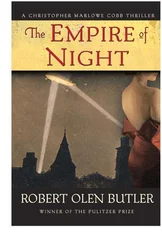
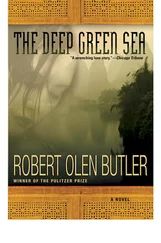
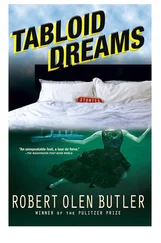
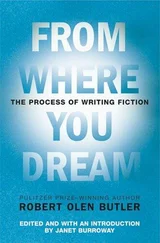
Представляем Вашему вниманию похожие книги на «Hell» списком для выбора. Мы отобрали схожую по названию и смыслу литературу в надежде предоставить читателям больше вариантов отыскать новые, интересные, ещё непрочитанные произведения.








Обсуждение, отзывы о книге «Hell» и просто собственные мнения читателей. Оставьте ваши комментарии, напишите, что Вы думаете о произведении, его смысле или главных героях. Укажите что конкретно понравилось, а что нет, и почему Вы так считаете.