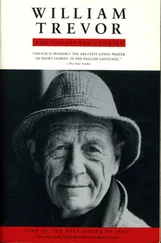
William Trevor - Selected Stories
Здесь есть возможность читать онлайн «William Trevor - Selected Stories» весь текст электронной книги совершенно бесплатно (целиком полную версию без сокращений). В некоторых случаях можно слушать аудио, скачать через торрент в формате fb2 и присутствует краткое содержание. Год выпуска: 2011, ISBN: 2011, Издательство: Penguin, Жанр: Старинная литература, на английском языке. Описание произведения, (предисловие) а так же отзывы посетителей доступны на портале библиотеки ЛибКат.
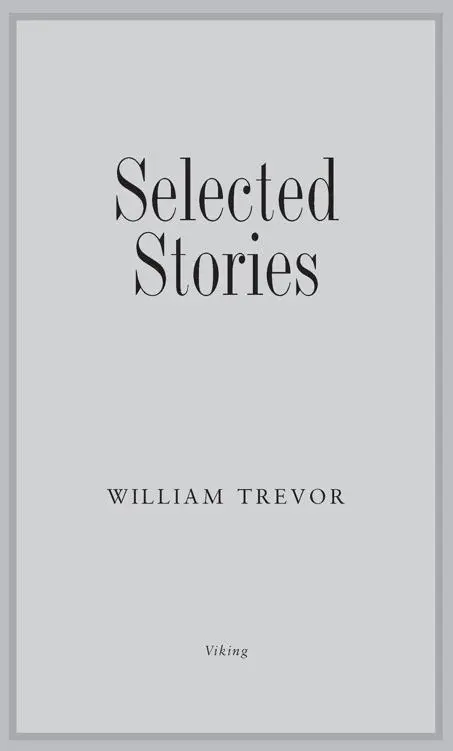
- Название:Selected Stories
- Автор:
- Издательство:Penguin
- Жанр:
- Год:2011
- ISBN:9780143115960
- Рейтинг книги:5 / 5. Голосов: 1
-
Избранное:Добавить в избранное
- Отзывы:
-
Ваша оценка:
Selected Stories: краткое содержание, описание и аннотация
Предлагаем к чтению аннотацию, описание, краткое содержание или предисловие (зависит от того, что написал сам автор книги «Selected Stories»). Если вы не нашли необходимую информацию о книге — напишите в комментариях, мы постараемся отыскать её.
Selected Stories — читать онлайн бесплатно полную книгу (весь текст) целиком
Ниже представлен текст книги, разбитый по страницам. Система сохранения места последней прочитанной страницы, позволяет с удобством читать онлайн бесплатно книгу «Selected Stories», без необходимости каждый раз заново искать на чём Вы остановились. Поставьте закладку, и сможете в любой момент перейти на страницу, на которой закончили чтение.
Интервал:
Закладка:
Michingthorpe talks mostly about himself. In remarking on the particular way a great Victorian author had of looping his I’s or y’s, he manages to make the matter personal to himself, going on to relate that he loops his own letters in that way too, or does not. Responding to a comment or prediction about the weather, he recalls how when he was in Venice once - on the track of a John Cross jotting – rain for six days caused the canals to rise, trapping him in his hotel with nothing better to re-read than Chesterton’s life of Browning, which he had not cared for the first time. If frost is forecast, he recalls that it brings on an ailment. He had an uncle who perished in a storm, struck by the bough of a cherry tree.
Michingthorpe was already running to youthful fat when he first became a trade friend; he is fatter now. The flesh that smudges the contours of his face is pale. Eyes, behind spectacles, are slate-coloured and small. His hair was conventionally short when he was younger; now its grey mat obscures his ears in so distinctive a manner that Clione has heard her waggish son likening Michingthorpe to a New Testament disciple. Had Michingthorpe himself heard that, he would not have minded but possibly would have recalled that as a schoolboy he wrote an essay on the subject of the Last Supper and was awarded a prize for it. He welcomes it when he is spoken of, adverse comments being rarely recognized as such.
When her middle child was three years old, Clione came into the sitting-room one day to hear Michingthorpe explaining why it was that oysters did not agree with him. He recounted occasions, before he was aware that they did not, when disaster had occurred. Still on the subject of his digestion, he next spoke of a dressmaker who had taken a liking to him in his own childhood, always having rock buns ready when he called in to see her. The rock buns had no ill effects, even though on one occasion he had eaten seven. Changing the subject, though without alteration of expression or tone, he reported that when he first wore spectacles everything tilted – whole rooms, and lamp-posts, the pavement when he walked on it. This led to a memory of someone saying, ‘We see God’s world as God would wish us to.’ Once in a zoo he watched a gorilla escape. He recognized on the street one day the late Boris Karloff. Often he speaks of waiters - how skilled or careless one was last week, what he had eaten on that occasion, whose company he was in. His mealtime companions are always from the trade, business conducted over soup and entrée and pudding.
In the past Michingthorpe appeared to dress more ordinarily: clothes that were hardly noticeable in youth – jeans and T-shirts – are more emphatic with his long grey hair, as if they seek to make a point or perpetuate some illusion. There are chunky jerseys to go with them, horn buttons down the front.
‘I dare say we all are someone else’s unpresentable friend,’ Clione has said, causing her husband and children to laugh, because Clione herself is not in the least unpresentable.
The children, who are adults now – the waggish boy, two younger girls - have ages ago come to regard Michingthorpe as they do the familiar items of furniture in their parents’ house. He is something that has been there for as long as the buttoned sofa in the hall has been, and the ugly picture of mules drawing carts on the stairway wall, the davenport on the first-floor landing. For all the children’s lives he has come and gone, expected or not expected, some detail at once related about the journey he has made. ‘Oh, God, that man!’ the children have cried, when young, when older. Not that Michingthorpe has ever noticed them much, seeming not ever to have established which is which. Among themselves they still wonder, as they always have, how it is that he continues to be a welcome visitor in their parents’ house. The fact bewilders them, but then is packed away as one of the small mysteries that haunt the separation of generations.
The children are visitors themselves now, coming back to the house when they are ill or unhappy in a love affair, though often leaving again without mentioning anything; or coming back because they are, all three, affectionately disposed towards both their mother and their father. Their mother’s fifty-first birthday draws them for Sunday lunch one damp February weekend, the last time it will be celebrated in this house, for after nearly twenty-five years there is to be a move. ‘We rattle about like two ageing peas,’ Clione has said, ‘now that you have left us on our own.’ Two days ago an offer was made for a converted oast-house in Sussex. Tomorrow it will be known if it has been accepted.
Clione has privately resolved that if it isn’t she’ll somehow find the extra and pay the asking price. Her childhood was passed in the country, and already she has wondered about keeping a dog – a spaniel – as once she did. Time has been on her hands since her children’s going; she wants to grow her own vegetables again, to have asparagus beds, to cosset anemones and clematis and hellebores. Some intuition tells her she’ll delight in that.
This prospect cheers Clione after her children have left, all together in the late afternoon, and the house in which all of them were born has gone quiet again. She wears a dress she bought specially for her birthday lunch, two shades of green, a silk scarf with an ivy pattern at her throat. Her presents clutter the sitting-room and there are torn cardboard packages on the floor, four different kinds of shiny coloured paper waiting to be folded: at Christmas it can be used again. Her cards are on the mantelpiece. A Rösel pepper-grinder is on the hearthrug beside her where she kneels, her new yellow coffee-maker on the armchair she usually sits in, Mahler’s Sixth Symphony on disc beside it. The glow of smokeless fuel throws back a little heat at her.
Clione misses her children. It is missing them that drew her to the oast-house, to thoughts of vegetables and plants. And the chances are that her children will be drawn to it too, that they’ll come there more often than to the house in London, that they’ll delight in the summer countryside and weekend walks about the lanes, in winter bleakness, the trees skeletal, brown empty hedges. She longs for her children sometimes, wanting to set the time back to when there were children’s worries, so very easy to comfort, to when her children gave her what a husband can’t, not even the most generous. That a child was stillborn is never spoken of by James or by herself; their living children do not know.
She pushes away a surge of melancholy and thinks again about the changing seasons in a garden that does not yet quite exist, about fitting in all the paraphernalia of the Asterisk Press in the upstairs rooms. No longer kneeling, she leans back against the seat of an armchair, her legs slipped more comfortably to one side. Her eyelids droop.
There is something about Michingthorpe’s way of ringing a doorbell that indicates, in this house at least, who it is: a single short ring, shorter than most people’s and never repeated. Michingthorpe knows the sound can be heard in all the rooms, that if the summons is not answered no one is in, even though some lights are on.
Her doze disturbed, Clione imagines him already in the room and bearing, as her children have, a brightly wrapped gift. The unlikely, sleepy fantasy goes on a little longer. She sees herself in gratitude embracing Michingthorpe – which she has never done – and hears her voice exclaiming over what their visitor has brought.
Dusk is giving way to darkness. She shovels more coal on to the fire, then pulls the curtains over all three windows. The hall door bangs downstairs. Minutes later, in his long black overcoat, Michingthorpe is giftless in the sitting-room doorway.
Читать дальшеИнтервал:
Закладка:
Похожие книги на «Selected Stories»
Представляем Вашему вниманию похожие книги на «Selected Stories» списком для выбора. Мы отобрали схожую по названию и смыслу литературу в надежде предоставить читателям больше вариантов отыскать новые, интересные, ещё непрочитанные произведения.




Обсуждение, отзывы о книге «Selected Stories» и просто собственные мнения читателей. Оставьте ваши комментарии, напишите, что Вы думаете о произведении, его смысле или главных героях. Укажите что конкретно понравилось, а что нет, и почему Вы так считаете.