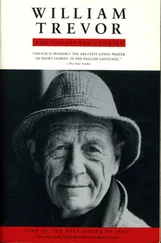
William Trevor - Selected Stories
Здесь есть возможность читать онлайн «William Trevor - Selected Stories» весь текст электронной книги совершенно бесплатно (целиком полную версию без сокращений). В некоторых случаях можно слушать аудио, скачать через торрент в формате fb2 и присутствует краткое содержание. Год выпуска: 2011, ISBN: 2011, Издательство: Penguin, Жанр: Старинная литература, на английском языке. Описание произведения, (предисловие) а так же отзывы посетителей доступны на портале библиотеки ЛибКат.

- Название:Selected Stories
- Автор:
- Издательство:Penguin
- Жанр:
- Год:2011
- ISBN:9780143115960
- Рейтинг книги:5 / 5. Голосов: 1
-
Избранное:Добавить в избранное
- Отзывы:
-
Ваша оценка:
Selected Stories: краткое содержание, описание и аннотация
Предлагаем к чтению аннотацию, описание, краткое содержание или предисловие (зависит от того, что написал сам автор книги «Selected Stories»). Если вы не нашли необходимую информацию о книге — напишите в комментариях, мы постараемся отыскать её.
Selected Stories — читать онлайн бесплатно полную книгу (весь текст) целиком
Ниже представлен текст книги, разбитый по страницам. Система сохранения места последней прочитанной страницы, позволяет с удобством читать онлайн бесплатно книгу «Selected Stories», без необходимости каждый раз заново искать на чём Вы остановились. Поставьте закладку, и сможете в любой момент перейти на страницу, на которой закончили чтение.
Интервал:
Закладка:
Big Ben was chiming eight when he got off the bus, carrying the sports bag slightly away from his body, although he knew that was a pointless precaution. His hands weren’t shaking any more, the sickness in his stomach had passed, but still he was afraid, the same fear that had begun on the bus, cold in him now.
Not far from where Big Ben had sounded there was a bridge over the river. He’d crossed it with Rafferty and Noonan, his first weekend in London, when they’d thought they were going to Fulham only they got it all wrong. He knew which way to go, but when he reached the river wall he had to wait because there were people around, and cars going by. And when the moment came, when he had the bag on the curved top of the wall, another car went by and he thought it would stop and come back, that the people in it would know. But that car went on, and the bag fell with hardly a splash into the river, and nothing happened.
O’Dwyer had work for him, only he’d have to wait until March, until old Hoyne reached the month of his retirement. Working the mixer it would be again, tarring roofs, sweeping the yard at the end of the day. He’d get on grand, O’Dwyer said. Wait a while and you’d never know; wait a while and Liam Pat could be his right-hand man. There were no hard feelings because Liam Pat had taken himself off for a while.
‘Keep your tongue to yourself,’ Mrs Brogan had warned her husband in a quiet moment the evening Liam Pat so unexpectedly returned. It surprised them that he had come the way he had, a roundabout route when he might have come the way he went, the Wexford crossing. ‘I missed the seven train,’ he lied, and Mrs Brogan knew he was lying because she had that instinct with her children. Maybe something to do with a girl, she imagined, his suddenly coming back. But she left that uninvestigated, too.
‘Ah sure, it doesn’t suit everyone,’ Dessie Coglan said in Brady’s Bar. Any day now it was for Rosita and he was full of that. He never knew a woman get pregnant as easy as Rosita, he said. He didn’t ask Liam Pat if he’d used the telephone number he’d given him, if that was how he’d got work. ‘You could end up with fourteen of them,’ he said. Rosita herself was one of eleven.
Liam Pat didn’t say much, either to O’Dwyer or at home or to Dessie Coglan. Time hung heavy while old Hoyne worked out the few months left of his years with O’Dwyer. Old Hoyne had never risen to being more than a general labourer, and Liam Pat knew he never would either.
He walked out along the Mountross road every afternoon, the icy air of a bitterly cold season harsh on his hands and face. Every day of January and a milder February, going by the rusted gates of Mountross Abbey and the signpost to Ballyfen, he thought about the funeral at which there’d been the unwanted presence of the lads, and sometimes saw it as his own.
All his life he would never be able to tell anyone. He could never describe that silent house or the stolid features of Mr McTighe or repeat Feeny’s talk. He could never speak of the girls on the bus, how he hadn’t been able to light a match, or how so abruptly he realized that this was the second attempt. He could never say that he’d stood with the sports bag on the river wall, that nothing had happened when it struck the water. Nor that he cried when he walked away, that tears ran down his cheeks and on to his clothes, that he cried for the bomber who might have been himself.
He might have left the bag on the bus, as he had thought he would. He might have hurried down the stairs and jumped off quickly. But in his fear he had found a shred of courage and it had to do with the boy: he knew that now and could remember the feeling. It was his mourning of the boy, as he might have mourned himself.
On his walks, and when he sat down to his meals, and when he listened to his parents’ conversation, the mourning was still there, lonely and private. It was there in Brady’s Bar and in the shops of the town when he went on his mother’s messages. It would be there when again he took charge of a concrete-mixer for O’Dwyer, when he shovelled wet cement and worked in all weathers. On the Mountross road Liam Pat didn’t walk with the stride of Michael Collins, but wondered instead about the courage his fear had allowed, and begged that his mourning would not ever cease.
A Friend in the Trade
They fell in love when A Whiter Shade of Pale played all summer. They married when Tony Orlando sang Tie a Yellow Ribbon Round the Old Oak Tree . These tunes are faded memories now, hardly there at all, and they’ve forgotten Procol Harum and Suzi Quatro and Brotherhood of Man, having long ago turned to Brahms.
The marriage has managed well, moving with ease through matrimony’s stages, weathering its storms. It seems absurd to Clione when she looks back that she fussed so because at their first dinner party her husband of a month innocently remarked that she hadn’t made the profiteroles herself. It was ridiculous in turn, James has apologized, that he banged out of the house when coffee was spilt over Pedbury’s The Optimistic Gardener , ridiculous that he had not been calm when they missed the night train at the Gare de Lyon, ridiculous that they’d rowed about it when the workmen laid the wrong tiles.
The intensity of passion, and touchiness surfacing quickly, gave way to familial pleasure and familial pressures – three children growing up, their grandparents growing old. Tranquillity came when the children grew up a little more, when a Sunset Home took in a grandfather, a Caring Fold a grandmother. Give and take ruled the middle years; the marriage took on the odds and won. Passed through the battle, surviving dog days’ ennui, love now seems surer than before.
Clione is still as slender as ever she was, with wide blue eyes that still, occasionally, have a startled look. Beauty has not finished with her: her delicately made features – straight classic nose and sculptured lips – are as they always were, and cobweb wrinkles have an attraction of their own. She is glad she did not marry someone else and could not ever have considered being unfaithful. She knows – she doesn’t have to ask – that her husband has not been faithless either.
He deals in first editions and manuscripts. As well, he and Clione run the Asterisk Press together, publishing the verse of poets who are in fashion, novellas, short stories, from time to time a dozen or so pages of reminiscence by a writer whose standing guarantees the interest of collectors. Their business is conducted from home, an old suburban house in south-west London, not far from the river. Provincial auctions are attended in pursuit of forgotten tomes and the letters of the literati, alive or dead. The demands of the Asterisk Press – the choosing of typefaces and bindings, paper of just the right shade and weight, mail-order sales - provide a contrast. A catalogue that combines both sources of livelihood is published every six months or so.
Years ago, the trade in first editions and other rarities threw up Michingthorpe, who specializes mainly in what he calls nineteenth-century jottings. A ‘trade friend’ James calls him, but there is more to it than this designation implies. Since before the children were born, before the funerals of the grandparents, Michingthorpe has been a regular presence in the house near the river. He has brought with him the excitement of jottings that are special; a discovery that defies or contradicts the agreed opinion of academe delights him most of all. But anything will do, for everything is special, or becomes so in Michingthorpe’s possession. Scraps of letters are lovingly laid out; the beginning of a Dickens chapter that was not proceeded with; frustrated Coleridge lines, scratched out, begun again; a note to a tailor; initials on a bill. All have been offered to James and Clione for perusal and admiration.
Читать дальшеИнтервал:
Закладка:
Похожие книги на «Selected Stories»
Представляем Вашему вниманию похожие книги на «Selected Stories» списком для выбора. Мы отобрали схожую по названию и смыслу литературу в надежде предоставить читателям больше вариантов отыскать новые, интересные, ещё непрочитанные произведения.








Обсуждение, отзывы о книге «Selected Stories» и просто собственные мнения читателей. Оставьте ваши комментарии, напишите, что Вы думаете о произведении, его смысле или главных героях. Укажите что конкретно понравилось, а что нет, и почему Вы так считаете.