William Trevor - Two Lives
Здесь есть возможность читать онлайн «William Trevor - Two Lives» весь текст электронной книги совершенно бесплатно (целиком полную версию без сокращений). В некоторых случаях можно слушать аудио, скачать через торрент в формате fb2 и присутствует краткое содержание. Год выпуска: 0101, Издательство: Penguin Publishing, Жанр: Старинная литература, на английском языке. Описание произведения, (предисловие) а так же отзывы посетителей доступны на портале библиотеки ЛибКат.
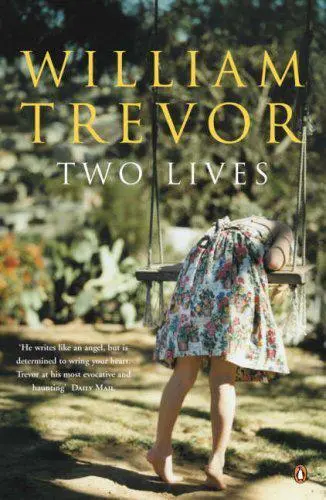
- Название:Two Lives
- Автор:
- Издательство:Penguin Publishing
- Жанр:
- Год:0101
- ISBN:нет данных
- Рейтинг книги:5 / 5. Голосов: 1
-
Избранное:Добавить в избранное
- Отзывы:
-
Ваша оценка:
Two Lives: краткое содержание, описание и аннотация
Предлагаем к чтению аннотацию, описание, краткое содержание или предисловие (зависит от того, что написал сам автор книги «Two Lives»). Если вы не нашли необходимую информацию о книге — напишите в комментариях, мы постараемся отыскать её.
Two Lives — читать онлайн бесплатно полную книгу (весь текст) целиком
Ниже представлен текст книги, разбитый по страницам. Система сохранения места последней прочитанной страницы, позволяет с удобством читать онлайн бесплатно книгу «Two Lives», без необходимости каждый раз заново искать на чём Вы остановились. Поставьте закладку, и сможете в любой момент перейти на страницу, на которой закончили чтение.
Интервал:
Закладка:
‘He bought a motor-car so that he could visit me. It’s asking less that he should see to the graves. Is it still too much?’
He drapes the surplice over his left arm, smoothing the creases and watching them return. She has told him about reading the novels of Turgenev among the tombstones. She has told him that for eight years she has flushed the prescribed drugs down the lavatory, that she does not take them now because they are not necessary. As she stands in the pew, smiling up at him, her life seems as mysterious as an act of God, her innocence and her boundless love arbitrarily there, her last modest wish destined to go ungranted. The distress engendered in him by these thoughts turns into a familiar apprehension: contemplation of this woman’s life could tease away his faith more surely than all his empty churches.
‘May I take communion?’
It will make him late, but he does not demur. The surplice is replaced, the bread and wine unlocked, and measured out and offered. ‘Do this,’ he mutters, ‘in remembrance of me…’
She remembers her cousin reading the bit that likened death to a fisherman. She remembers her husband bringing the bars of chocolate on his visits, Crunchie and Caramel Crisp. She remembers his saying that he’d had the front woodwork of the shop repainted blue. Best to stick with blue, he explained, you knew where you were with blue. ‘I hear your sister’s in a certain condition again,’ he said as well. He’d bought the chocolate bars in Foley’s.
There is a final prayer, a whispering sound that reminds her of a breeze. If he feels inclined, the fisherman keeps the caught fish in the water, still swimming although it’s netted.
‘I must go now,’ the clergyman says, but listens while she tells him about Turgenev’s fisherman. Inviting her into the world of a novelist had been her cousin’s courtship, all he could manage, as much as she could accept. Yet passion came, like consummation in the end. For thirty-one years she’d clung to a refuge in which her love affair could spread itself, a safe house offering sanctuary. For thirty-one years she passed as mad and was at peace.
‘I dress for him,’ she says. ‘I make my face up in our graveyard. It is nice I can dress for him again.’
He smiles, recalling how she giggled when she told him that she had never opened the Rodenkil. Still giggling, she said she once had written I must not be mischievous a hundred times. She bought the Rodenkil from her husband’s friend on purpose. She stained the rissoles green with the Stephens’ ink she’d taken from her cousin’s bedroom. ‘People think the worst of you,’ she added when she’d said all that, and added further that you could hardly blame them.
‘I’m sorry I delayed you,’ she apologises before she turns to go. ‘I’m a dreadful old nuisance.’
He watches as she walks away. Prosperous, she strikes him as just for a moment, her pretty shoes, her brown and black coat, a fragile figure, yet prosperous in her love. Does she tell Elmer Quarry that she dresses for her cousin? Does he pay for her clothes without question, because he doesn’t want to think about any of it? Does love like hers frighten everyone just a little?
‘Goodbye,’ the clergyman calls after her, and she turns and waves, and then is gone.
Alone in the cold church he sees her again for an instant, the child in the schoolroom, glancing across the desks at her delicate cousin. In the bedroom she touches the collar-stud with her lips and takes from the dressing-table drawer the bottle of Stephens’ ink. Warmed by sunlight, her finger traces the letters on an Attridge gravestone; in the blue-washed cottage she bargains for her cousin’s clothes. She arranges the soldiers in a battle she does not understand; she hangs the watch on the nail by the fireplace. Their voices join, entangled, reading about Russians.
She’ll outlive the Quarrys, the clergyman reflects, and sees her differently: old and alone, moving about from room to room in the house above the shop. ‘I have arranged it,’ his own voice promises, the least he can surely do.
There is the funeral, and then the lovers lie together.
My House in Umbria
1
It is not easy to introduce myself. Gloria Grey, Janine Ann Johns, Cora Lamore: there is a choice, and there have been other names as well. Names hardly matter, I think; it is perhaps enough to say I like Emily Delahunty best. ‘Mrs Delahunty,’ people say, although strictly speaking I have never been married. I am offered the title out of respect to a woman of my appearance and my years; and Quinty – who addresses me more than anyone else – once said when I questioned him on the issue: ‘ “Miss Delahunty” doesn’t suit you.’
I make no bones about it, I am not a woman of the world; I am not an educated woman; what I know I have taught myself. Rumour and speculation – even downright lies ’ have abounded since I was sixteen years old. In any person’s life that side of things is unavoidable, but I believe I have suffered more than most, and take this opportunity to set the record straight. Firstly, my presence on the S.S. Hamburg in my less affluent days was as a stewardess, nothing more. Secondly, it is a mischievous fabrication that at the time of the Oleander Avenue scandal I accepted money in return for silence. Thirdly, Mrs Chubbs was dead, indeed already buried, before I met her husband. On the other hand I do not deny that men have offered me gifts, probably all of which I have accepted. Nor do I deny that my years in Africa are marked, in my memory, with personal regret. Unhappiness breeds confusion and misunderstanding. I was far from happy in Ombubu, at the Café Rose.
In the summer of which I now write I had reached my fifty-sixth year – a woman carefully made up, eyes a greenish-blue. Then, as now, my hair was as pale as sand, as smooth as a seashell, the unfussy style reflecting the roundness of my face. My mouth is a full rosebud, my nose classical; my complexion has always been admired. Naturally, there were laughter lines that summer, but my skin, though no longer the skin of a girl, had worn well and my voice had not yet acquired the husky depths that steal away femininity. In Italy men who were strangers to me still gave me a second look, although naturally not with the same excitement as once men did in other places where I’ve lived. I had, in truth, become more than a little plump, and though perhaps I should have dressed with such a consideration in mind this is something I have never been able to bring myself to do: I cannot resist just a hint of drama in my clothes – though not bright colours, which I abhor. ‘I never knew a girl dress herself up so prettily,’ a man who sat on the board of a carpet business used to say, and my tendency to put on a pound or two has not been without admirers. A bag of bones Mrs Chubbs was, according to her husband, which is why – so I’ve always suspected – he took to me in the first place.
Having read so far, you’ll probably be surprised to learn that I’m a woman who prays. When I was a child I went to Sunday school and had a picture of Jesus on a donkey above my bed. In the Café Rose in Ombubu I interested Poor Boy Abraham in praying also, the only person I have ever influenced in this way. ‘He’s retarded, that boy,’ Quinty used to say in his joky way, careless as to whether or not the boy was within earshot. Quinty’s like that, as you’ll discover.
I am the author of a series of fictional romances, composed in my middle age after my arrival in this house. I am no longer active in that field, and did not ever presume to intrude myself into the world of literature – though, in fairness to veracity, I must allow that my modest works dissect with some success the tangled emotions of which they treat. That they have given pleasure I am assured by those kind enough to write in appreciation. They have helped; they have whiled away the time. I can honestly state that I intended no more, and I believe you’ll find I am an honest woman.
Читать дальшеИнтервал:
Закладка:
Похожие книги на «Two Lives»
Представляем Вашему вниманию похожие книги на «Two Lives» списком для выбора. Мы отобрали схожую по названию и смыслу литературу в надежде предоставить читателям больше вариантов отыскать новые, интересные, ещё непрочитанные произведения.



Обсуждение, отзывы о книге «Two Lives» и просто собственные мнения читателей. Оставьте ваши комментарии, напишите, что Вы думаете о произведении, его смысле или главных героях. Укажите что конкретно понравилось, а что нет, и почему Вы так считаете.