Doreen Tovey - Donkey Work
Здесь есть возможность читать онлайн «Doreen Tovey - Donkey Work» весь текст электронной книги совершенно бесплатно (целиком полную версию без сокращений). В некоторых случаях можно слушать аудио, скачать через торрент в формате fb2 и присутствует краткое содержание. Год выпуска: 2013, Издательство: Summersdale Publishers Ltd, Жанр: Старинная литература, на английском языке. Описание произведения, (предисловие) а так же отзывы посетителей доступны на портале библиотеки ЛибКат.
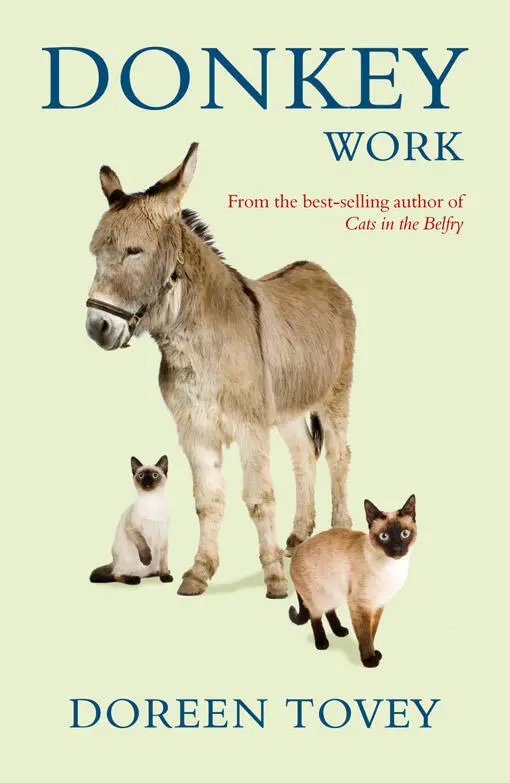
- Название:Donkey Work
- Автор:
- Издательство:Summersdale Publishers Ltd
- Жанр:
- Год:2013
- ISBN:нет данных
- Рейтинг книги:3 / 5. Голосов: 1
-
Избранное:Добавить в избранное
- Отзывы:
-
Ваша оценка:
Donkey Work: краткое содержание, описание и аннотация
Предлагаем к чтению аннотацию, описание, краткое содержание или предисловие (зависит от того, что написал сам автор книги «Donkey Work»). Если вы не нашли необходимую информацию о книге — напишите в комментариях, мы постараемся отыскать её.
Donkey Work — читать онлайн бесплатно полную книгу (весь текст) целиком
Ниже представлен текст книги, разбитый по страницам. Система сохранения места последней прочитанной страницы, позволяет с удобством читать онлайн бесплатно книгу «Donkey Work», без необходимости каждый раз заново искать на чём Вы остановились. Поставьте закладку, и сможете в любой момент перейти на страницу, на которой закончили чтение.
Интервал:
Закладка:
THIRTEEN
Working up for Winter
We kept quiet about the possibility of Annabel being enceinte . The Rector's wife would have worried. Miss Wellington would probably have bought pink wool and started knitting bootees. Father Adams – we could just see him going past the gate. Slapping at his knees. Guffawing 'When they'm keen enough they'm old enough' which was his usual ribald comment in a situation like this and spreading our discomfiture like wildfire round the Rose and Crown.
It quite possibly hadn't happened, of course – but a lot of little incidents seemed to fall into place after Miss Linley's revelation. The nose-nuzzling in the paddock. The elopement itself with Henry disappearing masterfully with his bride into the night. The scene next morning – innocents that we were – when we saw them lying flat out in Miss Linley's field and thought they were tired from walking. Even when you came to think of it, said Charles darkly, the way we'd seen old Henry looking over the fence at the mare and foal and giving himself ideas.
So did Annabel's following after him the way she did the morning of their honeymoon and now not caring a button. And – or was it just the winter coming on – her increased fussiness about food.
She'd been easy enough to feed through the summer. Grass, water, bread, and a strong dislike for carrots. Apart from the cost – and a suspicion that we must have gone wrong somewhere because the whole point of donkeys, according to the article we'd read, was that even in winter all they needed was grazing, water, and a rough old hedge under which to shelter she'd been easy enough to feed in the autumn, too.
Hay, which disappeared into her stomach at the rate of nearly a bale a week now grass was short, and with which she contrived – by dint of emerging enquiringly from her house with a wisp of it in her mouth whenever we called her – to give an impression of being so hard at work we felt apologetic for having disturbed her. Oats, which as far as we could see she would have eaten by the sackful so we had to ration her to a saucepanful per meal, and Charles walking backwards through the paddock at feeding time, carrying a saucepan and warding off a donkey rearing joyfully after him on her hind legs like a Liberty horse, was matched on my part by the day she stopped in the lane, refused to come home until she had eaten all the ivy off a wall, and I fetched a saucepan of oats as bait. I started by waving it enticingly under her nose; I continued by jogging at an encouraging trot ahead of her down the lane; I ended things having got slightly out of hand – going flat out like a competitor in a pancake race, Annabel coming behind me like a greyhound, and I only just made it to the paddock.
Annabel liked oats so much that if we showed her an empty saucepan she would stick her head in it like a fencing mask and, while we held it in place over her nose, march hilariously round the field by way of demonstration. Annabel liked oats so much that when we decided we were still giving her too many and replaced her morning quota with bread she burrowed through it like a terrier, snorted with disgust when she found there were no oats underneath, and upset the bowl with her hoof. Annabel liked oats so much that when, a few weeks after Henry's departure, she suddenly went off them and took of all things to carrots, our eyebrows went up in alarm.
Full of Vitamins, she announced, chewing steadfastly away at the roots she'd previously hated. Made her feel Sick, she said, turning her head away when we offered her oats in our hands. Made her feel even Sicker, she insisted when we made her a hot bran mash, offered it to her knowing horses usually went mad about it, and after one wan sniff she turned languidly aside.
She could, she added as an afterthought – turning immediately back again to sniff the bag I had under my arm in case the mash was the wrong consistency – manage a little dry bran. So she took to bran and hot water consumed from separate bowls – as she often drank water through whatever she was eating the result was presumably mash anyway but Annabel preferred it like that – ate peppermints as avidly as ever, went capriciously off oven-dried bread for a week or two in favour of the same bread Soft with Honey On, and encouraged – as the next thing to worry us – rats.
We already, as we knew, had one rat. He lived in the cottage roof, disturbed us by coming in in the early hours and gnawing on the beam over our bedroom ceiling, and could be seen from time to time – which was the reason he'd taken up residence with us – slipping round the corner to eat the bread we put out for the birds in the yard. He was quite an establishment around the place and even Solomon and Sheba – he was, after all, a pretty big rat – didn't bother with him overmuch. Sometimes he had a session on the beam during the day whereupon the cats, snoozing comfortably on our bed, raised their heads, stared reproachfully at the ceiling, and went back to sleep. Sometimes Solomon did a routine look up a drainpipe like 'What The Butler Saw' and stuck his paw up it. Sometimes, if she had nothing else to do, Sheba sat in the guttering over the kitchen door. Overflowing it like a small blue broody hen, informing callers when they least expected it that she was Waiting up Here for the Rat – and he wished, said the postman, dropping our letters nervelessly into the mud one morning when she spoke to him in the very act of his handing them over, that we'd train our animals to be normal.
Once, after a particularly sleepless night ourselves, we caught the rat in a cage trap, carried it a mile into the hills with the coal tongs, set it free with a warning about disturbing people and started up another mystery. At five o'clock next morning somebody galloped belatedly across our bedroom ceiling, started gnawing post-haste at the beam, stopped when I hammered beneath it, and – after a minute or so's complete silence during which I got back into bed – dropped a stone like a bomb on the plaster-board. Whether our neighbour in the roof had found his way back and was mad with us, or whether it was a newly-imported girl-friend of his we'd captured and after a fruitless search for her he was mad at us about that we never knew. Only that it seemed to be the same rat we saw eating the bread in the yard next morning. Definitely that whoever it was was chewing away on the selfsame beam. And that we were practically walking somnambulists through lack of sleep and expecting the roof to cave in at any moment when suddenly, blessedly, he vanished.
He didn't vanish far. The next place we saw him – unmistakable from his size and light brown colouring –was up in Annabel's house, scuttling across the floor with a piece of bread in his mouth and making for a hole in the wall to which presumably he'd moved on the grounds that Annabel had a bigger stock of bread than the birds and nobody thumped on the ceiling at him in the night. And the next thing we knew he'd got friends up there.
Bread was disappearing from Annabel's bowl at breakfast time practically on a conveyor belt system. Annabel, a little belatedly, for it was her finickiness in leaving bread around that had started this business in the first place, was standing, while she ate, at Invasion Stations – behind her bowl and suspiciously facing the door, which was quite the wrong way round because the rats nipped out from behind her. Half the cats in the neighbourhood started sitting on the wall watching for the rats. Solomon kept going up and fighting the cats. Father Adams, listening to the howls that came constantly from behind Annabel's house where, from the sound of it, murder was being committed, said we couldn't even have rats could us, peaceably like other people.
Читать дальшеИнтервал:
Закладка:
Похожие книги на «Donkey Work»
Представляем Вашему вниманию похожие книги на «Donkey Work» списком для выбора. Мы отобрали схожую по названию и смыслу литературу в надежде предоставить читателям больше вариантов отыскать новые, интересные, ещё непрочитанные произведения.





Обсуждение, отзывы о книге «Donkey Work» и просто собственные мнения читателей. Оставьте ваши комментарии, напишите, что Вы думаете о произведении, его смысле или главных героях. Укажите что конкретно понравилось, а что нет, и почему Вы так считаете.