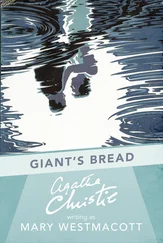
Mary Westmacott - Giant's Bread
Здесь есть возможность читать онлайн «Mary Westmacott - Giant's Bread» весь текст электронной книги совершенно бесплатно (целиком полную версию без сокращений). В некоторых случаях можно слушать аудио, скачать через торрент в формате fb2 и присутствует краткое содержание. Город: London, Год выпуска: 2013, ISBN: 2013, Издательство: HarperCollins Publishers, Жанр: Старинная литература, на английском языке. Описание произведения, (предисловие) а так же отзывы посетителей доступны на портале библиотеки ЛибКат.
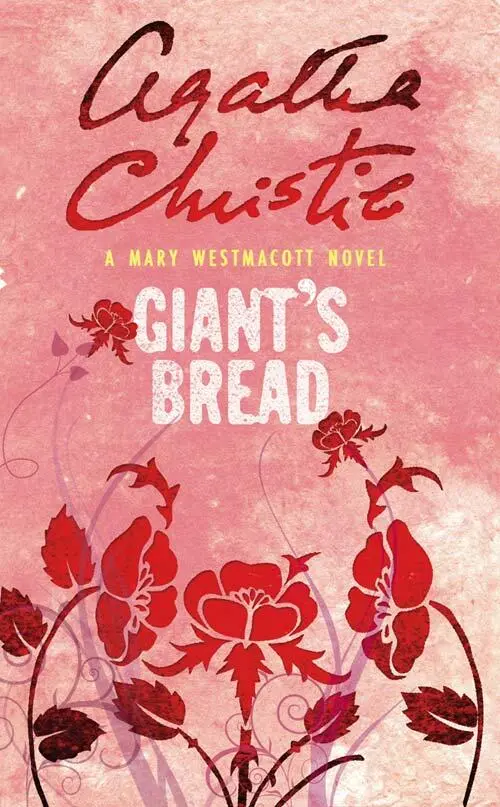
- Название:Giant's Bread
- Автор:
- Издательство:HarperCollins Publishers
- Жанр:
- Год:2013
- Город:London
- ISBN:9780007535002
- Рейтинг книги:3 / 5. Голосов: 1
-
Избранное:Добавить в избранное
- Отзывы:
-
Ваша оценка:
Giant's Bread: краткое содержание, описание и аннотация
Предлагаем к чтению аннотацию, описание, краткое содержание или предисловие (зависит от того, что написал сам автор книги «Giant's Bread»). Если вы не нашли необходимую информацию о книге — напишите в комментариях, мы постараемся отыскать её.
Giant's Bread — читать онлайн бесплатно полную книгу (весь текст) целиком
Ниже представлен текст книги, разбитый по страницам. Система сохранения места последней прочитанной страницы, позволяет с удобством читать онлайн бесплатно книгу «Giant's Bread», без необходимости каждый раз заново искать на чём Вы остановились. Поставьте закладку, и сможете в любой момент перейти на страницу, на которой закончили чтение.
Интервал:
Закладка:
When she told her mother Mrs Vereker said:
‘I knew George was looking out for a place. It’s lucky he’s chosen Abbots Puissants. He’s probably haggled less about the price simply because he was once in love with you.’
The remote way she said ‘once in love with you’ made Nell feel comfortable. She had imagined that her mother might have ‘ideas’ still about George Chetwynd.
That summer they went down and stayed at Abbots Puissants. They were the only guests. Nell had not been there since she was a child. A deep regret came upon her that she could not have lived there with Vernon. The house was truly beautiful, and so were the stately gardens and the ruined Abbey.
George was in the middle of doing up the house and he consulted her taste at every turn. Nell began to feel quite a proprietary interest. She was almost happy again, enjoying the ease and luxury and the freedom from anxiety.
True, once she received the money from Abbots Puissants and had invested it she would have a nice little income, but she dreaded the onus of deciding where to live and what to do. She was not really happy with her mother, and all her own friends seemed to have drifted out of touch. She hardly knew where to go or what to do with her life.
Abbots Puissants gave her just the peace and rest she needed. She felt sheltered there and safe. She dreaded the return to town.
It was the last evening. George had pressed them to remain longer, but Mrs Vereker had declared that they really couldn’t trespass any longer on his hospitality.
Nell and George walked together on the long flagged walk. It was a still, balmy evening.
‘It has been lovely here,’ said Nell, with a little sigh. ‘I hate going back.’
‘I hate your going back too.’ He paused and then said very quietly: ‘I suppose there’s no chance for me, is there, Nell?’
‘I don’t know what you mean?’
But she did know – she knew at once.
‘I bought this house because I hoped some day you’d live here. I wanted you to have the home that was rightly yours. Are you going to spend your whole life nursing a memory, Nell? Do you think he – Vernon – would wish it? I never think of the dead like that – as grudging happiness to the living. I think he would want you to be looked after and taken care of now that he isn’t here to do it.’
She said in a low voice: ‘I can’t … I can’t …’
‘You mean you can’t forget him? I know that. But I’d be very good to you, Nell. You’d be wrapped round with love and care. I think I could make you happy – happier at any rate than you’ll be facing life by yourself. I do honestly and truly believe that Vernon would wish it …’
Would he? She wondered. She thought George was right. People might call it disloyalty, but it wasn’t. That life of hers with Vernon was something by itself – nothing could touch it ever …
But oh! to be looked after, cared for, petted and understood. She always had been fond of George.
She answered very softly … ‘Yes …’
The person who was angry about it was Myra. She wrote long abusive letters to Nell. ‘You can forget so soon. Vernon has only one home – in my heart. You never loved him.’
Uncle Sydney twirled his thumbs and said: ‘That young woman knows which side her bread is buttered’; and wrote her a stereotyped letter of congratulation.
An unexpected ally was Joe who was paying a flying visit to London and came round to see Nell at her mother’s flat.
‘I’m very glad,’ she said, kissing her. ‘And I’m sure Vernon would be. You’re not the kind that can face life on your own. You never were. Don’t you mind what Aunt Myra says. I’ll talk to her. Life’s a rotten business for women – I think you’ll be happy with George. Vernon would want you to be happy, I know.’
Joe’s support heartened Nell more than anything. Joe had always been the nearest person to Vernon. On the night before her wedding, she knelt by her bed and looked up to where Vernon’s sword hung over the head of it.
She pressed her hands over her closed eyes.
‘You do understand, beloved? You do? It’s you I love and always shall … Oh, Vernon, if only I could know that you understood.’
She tried to send her very soul out questing in search of him. He must – he must – know and understand …
Chapter 4
In the town of A_____ in Holland – not far from the German frontier – is an inconspicuous inn. Here on a certain evening in 1917 a dark young man with a haggard face pushed open the door and in very halting Dutch asked for a lodging for the night. He breathed hard and his eyes were restless. Anna Schlieder, the fat proprietress of the inn, looked at him attentively up and down in her usual deliberate way before she replied. Then she told him that he could have a room. Her daughter Freda took him up to it. When she came back, her mother said laconically: ‘English – escaped prisoner.’
Freda nodded but said nothing. Her china-blue eyes were soft and sentimental. She had reasons of her own for taking an interest in the English. Presently she again mounted the stairs and knocked on the door. She went in on top of the knock which, as a matter of fact, the young man had not heard. He was so sunk in a stupor of exhaustion that external sounds and happenings had hardly any meaning for him. For days and weeks he had been on the qui vive, escaping dangers by a hairsbreadth, never daring to be caught napping either physically or mentally. Now he was suffering the reaction. He lay where he had fallen, half sprawling across the bed. Freda stood and watched him. At last she said:
‘I bring you hot water.’
‘Oh!’ he started up. ‘I’m sorry. I didn’t hear you.’
She said slowly and carefully in his own language:
‘You are English – yes?’
‘Yes. Yes, that is –’
He stopped suddenly in doubt. One must be careful. The danger was over – he was out of Germany. He felt slightly lightheaded. A diet of raw potatoes, dug up from the fields, was not stimulating to the brain. But he still felt he must be careful. It was so difficult – he felt queer – felt that he wanted to talk and talk, pour out everything now that at last that fearful long strain was over.
The Dutch girl was nodding her head at him gravely, wisely.
‘I know,’ she said. ‘You come from over there –’
Her hand pointed in the direction of the frontier.
He looked at her, still irresolute.
‘You have escaped – yes. We had before one like you.’
A wave of reassurance passed over him. She was all right, this girl. His legs suddenly felt weak under him. He dropped down on the bed again.
‘You are hungry? Yes. I see. I go and bring you something.’
Was he hungry? He supposed he was. How long was it since he had eaten? One day, two days? He couldn’t remember. The end had been like a nightmare – just keeping blindly on. He had a map and a compass. He knew the place where he wanted to cross the frontier, the spot that seemed to him to offer the best chance. A thousand to one chances against him being able to pass the frontier – but he had passed it. They had shot at him and missed. Or was that all a dream? He had swum down the river – that was it – No, that was all wrong, too. Well, he wouldn’t think about it – he had escaped, that was the great thing.
He leaned forward supporting his aching head in his hands.
Very soon, Freda returned carrying a tray with food on it and a great tankard of beer. He ate and drank whilst she stood watching him. The effect was magical. His head cleared. He had been lightheaded, he realized that now. He smiled up at Freda.
Читать дальшеИнтервал:
Закладка:
Похожие книги на «Giant's Bread»
Представляем Вашему вниманию похожие книги на «Giant's Bread» списком для выбора. Мы отобрали схожую по названию и смыслу литературу в надежде предоставить читателям больше вариантов отыскать новые, интересные, ещё непрочитанные произведения.
![Fredrik Backman - Britt-Marie Was Here [Britt-Marie var här]](/books/61260/fredrik-backman-britt-marie-was-here-britt-thumb.webp)







Обсуждение, отзывы о книге «Giant's Bread» и просто собственные мнения читателей. Оставьте ваши комментарии, напишите, что Вы думаете о произведении, его смысле или главных героях. Укажите что конкретно понравилось, а что нет, и почему Вы так считаете.