Mary Westmacott - Giant's Bread
Здесь есть возможность читать онлайн «Mary Westmacott - Giant's Bread» весь текст электронной книги совершенно бесплатно (целиком полную версию без сокращений). В некоторых случаях можно слушать аудио, скачать через торрент в формате fb2 и присутствует краткое содержание. Город: London, Год выпуска: 2013, ISBN: 2013, Издательство: HarperCollins Publishers, Жанр: Старинная литература, на английском языке. Описание произведения, (предисловие) а так же отзывы посетителей доступны на портале библиотеки ЛибКат.
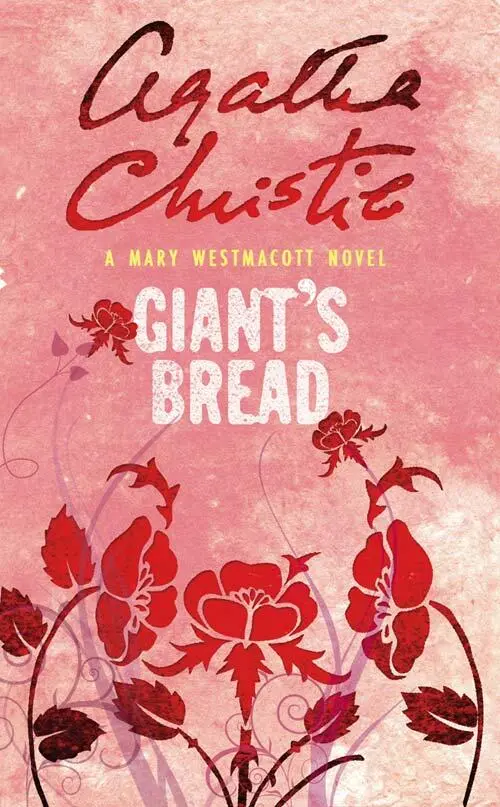
- Название:Giant's Bread
- Автор:
- Издательство:HarperCollins Publishers
- Жанр:
- Год:2013
- Город:London
- ISBN:9780007535002
- Рейтинг книги:3 / 5. Голосов: 1
-
Избранное:Добавить в избранное
- Отзывы:
-
Ваша оценка:
Giant's Bread: краткое содержание, описание и аннотация
Предлагаем к чтению аннотацию, описание, краткое содержание или предисловие (зависит от того, что написал сам автор книги «Giant's Bread»). Если вы не нашли необходимую информацию о книге — напишите в комментариях, мы постараемся отыскать её.
Giant's Bread — читать онлайн бесплатно полную книгу (весь текст) целиком
Ниже представлен текст книги, разбитый по страницам. Система сохранения места последней прочитанной страницы, позволяет с удобством читать онлайн бесплатно книгу «Giant's Bread», без необходимости каждый раз заново искать на чём Вы остановились. Поставьте закладку, и сможете в любой момент перейти на страницу, на которой закончили чтение.
Интервал:
Закладка:
A month after Vernon’s death, Nell was once more back in the ward. Nobody ever referred to her loss and she was grateful. To carry on as usual was the motto of the moment.
Nell carried on.
‘There’s someone asking for you, Nurse Deyre.’
‘For me?’ Nell was surprised.
It must be Sebastian. Only he was likely to come down here and look her up. Did she want to see him or not? She hardly knew.
But to her great surprise her visitor was George Chetwynd. He explained that he was passing through Wiltsbury, and had stopped to see if he could see her. He asked whether she couldn’t come out to lunch with him.
‘I thought you were on afternoon duty,’ he explained.
‘I was changed to the morning shift yesterday. I’ll ask Matron. We’re not very busy.’
Permission was accorded her, and half an hour later she was sitting opposite George Chetwynd at the County Hotel with a plate of roast beef in front of her and a waiter hovering over her with a vast dish of cabbage.
‘The only vegetable the County Hotel knows,’ observed Chetwynd.
He talked interestingly and made no reference to her loss. All he said was that her continuing to work here was the pluckiest thing he had ever heard of.
‘I can’t tell you how I admire all you women. Carrying on, tackling one job after another. No fuss – no heroics – just sticking to it as though it were the most natural thing in the world. I think Englishwomen are fine.’
‘One must do something.’
‘I know. I can understand that feeling. Anything’s better than sitting with your hands in your lap, eh?’
‘That’s it.’
She was grateful. George always understood. He told her that he was off to Serbia in a day or two, organizing relief work there.
‘Frankly,’ he said, ‘I’m ashamed of my country for not coming in. But they will. I’m convinced of that. It’s only a matter of time. In the meantime we do what we can to alleviate the horrors of war.’
‘You look very well.’
He looked younger than she remembered him – well set up, bronzed, the grey in his hair a mere distinction rather than a sign of age.
‘I’m feeling well. Nothing like having plenty to do. Relief work’s pretty strenuous.’
‘When are you off?’
‘Day after tomorrow.’ He paused, then said in a different voice. ‘Look here – you didn’t mind my looking you up like this? You don’t feel I’d no business to butt in?’
‘No – no. It was very kind of you. Especially after I – I –’
‘You know I’ve never borne any rancour over that. I admire you for following your heart. You loved him and you didn’t love me. But there’s no reason we shouldn’t be friends, is there?’
He looked so friendly, so very unsentimental, that Nell answered happily that there wasn’t.
He said: ‘That’s fine. And you’ll let me do anything for you that a friend can? Advise you in any bothers that arise, I mean?’
Nell said she’d be only too grateful.
They left it like that. He departed in his car shortly after lunch, wringing her hand and saying he hoped they’d meet again in about six months’ time, and begging her again to consult him if she were in a difficulty any time.
Nell promised that she would.
The winter was a bad one for Nell. She caught a cold, neglected to take proper care of herself, and was quite ill for a week or so. She was quite unfit to resume hospital work at the end of it, and Mrs Vereker carried her off to London to her flat. There she regained strength slowly.
Endless bothers seemed to arise. Abbots Puissants appeared to need an entire new roof. New water pipes had to be installed. The fencing was in a bad state.
Nell appreciated for the first time the awful drain property can be. The rent was eaten up many times over with the necessary repairs, and Mrs Vereker had to come to the rescue to tide Nell over a difficult corner and not let her get too much into debt. They were living as penuriously as possible. Vanished were the days of outward show and credit. Mrs Vereker managed to make both ends meet by a very narrow margin, and would hardly have done that but for what she won at the bridge table. She was a first-class player and added materially to her income by play. She was out most of the day at a bridge club that still survived.
It was a dull unhappy life for Nell. Worried over money, not strong enough to undertake fresh work, nothing to do but sit and brood. Poverty combined with love in a cottage was one thing. Poverty without love to soften it was another. Sometimes Nell wondered how she was ever going to get through a life that stretched drear and bleak ahead of her. She couldn’t bear things. She simply couldn’t.
Then Mr Flemming urged her to make a decision concerning Abbots Puissants. The tenancy would be up in a month or two. Something must be done. He could not hold out any hopes of letting it for a higher rent. Nobody wanted to rent big places without central heating or modern conveniences. He strongly advised her to sell.
He knew the feeling her husband had had about the place. But since she herself was never likely to be able to afford to live in it …
Nell admitted the wisdom of what he said, but still pleaded for time to decide. She was reluctant to sell it, but she could not help feeling that the worry of Abbots Puissants once off her mind she would be relieved from her heaviest burden. Then one day Mr Flemming rang up to say that he had had a very good offer for Abbots Puissants. He mentioned a sum far in excess of her – or indeed his – expectations. He very strongly advised her to close with it without delay.
Nell hesitated a minute – then said ‘Yes.’
It was extraordinary how much happier she felt at once. Free of that terrible incubus! It wasn’t as though Vernon had lived. Houses and estates were simply white elephants when you hadn’t the necessary money to keep them up properly.
She was undisturbed even by a letter from Joe in Paris.
‘How can you sell Abbots Puissants when you know what Vernon felt about it? I should have thought it would be the last thing you could have done.’
She thought: ‘Joe doesn’t understand.’
She wrote back:
‘What was I to do? I don’t know where to turn for money. There’s been the roof and the drains and the water – it’s endless. I can’t go on running into debt. Everything’s so tiring I wish I were dead …’
Three days later she got a letter from George Chetwynd, asking if he might come and see her. He had, he said, something to confess.
Mrs Vereker was out. She received him alone. He broke it rather apprehensively to her. It was he who had purchased Abbots Puissants.
Just at first she recoiled from the idea. Not George! Not George at Abbots Puissants! Then with admirable common sense he argued the point.
Surely it was better that it should pass into his hands instead of those of a stranger? He hoped that sometimes she and her mother would come and stay there.
‘I’d like you to feel that your husband’s home is open to you at any time. I want to change things there as little as possible. You shall advise me. Surely you prefer my having it, to its passing into the hands of some vulgarian who will fill it with gilt and spurious old masters?’
In the end she wondered why she had felt any objection. Better George than anyone. And he was so kind and understanding about everything. She was tired and worried. She broke down suddenly, cried on his shoulder whilst he put an arm round her and told her that everything was all right, that it was only because she’d been ill.
Nobody could have been kinder or more brotherly.
Читать дальшеИнтервал:
Закладка:
Похожие книги на «Giant's Bread»
Представляем Вашему вниманию похожие книги на «Giant's Bread» списком для выбора. Мы отобрали схожую по названию и смыслу литературу в надежде предоставить читателям больше вариантов отыскать новые, интересные, ещё непрочитанные произведения.
![Fredrik Backman - Britt-Marie Was Here [Britt-Marie var här]](/books/61260/fredrik-backman-britt-marie-was-here-britt-thumb.webp)








Обсуждение, отзывы о книге «Giant's Bread» и просто собственные мнения читателей. Оставьте ваши комментарии, напишите, что Вы думаете о произведении, его смысле или главных героях. Укажите что конкретно понравилось, а что нет, и почему Вы так считаете.