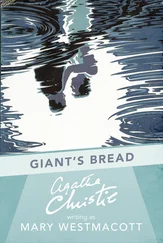
Mary Westmacott - Giant's Bread
Здесь есть возможность читать онлайн «Mary Westmacott - Giant's Bread» весь текст электронной книги совершенно бесплатно (целиком полную версию без сокращений). В некоторых случаях можно слушать аудио, скачать через торрент в формате fb2 и присутствует краткое содержание. Город: London, Год выпуска: 2013, ISBN: 2013, Издательство: HarperCollins Publishers, Жанр: Старинная литература, на английском языке. Описание произведения, (предисловие) а так же отзывы посетителей доступны на портале библиотеки ЛибКат.
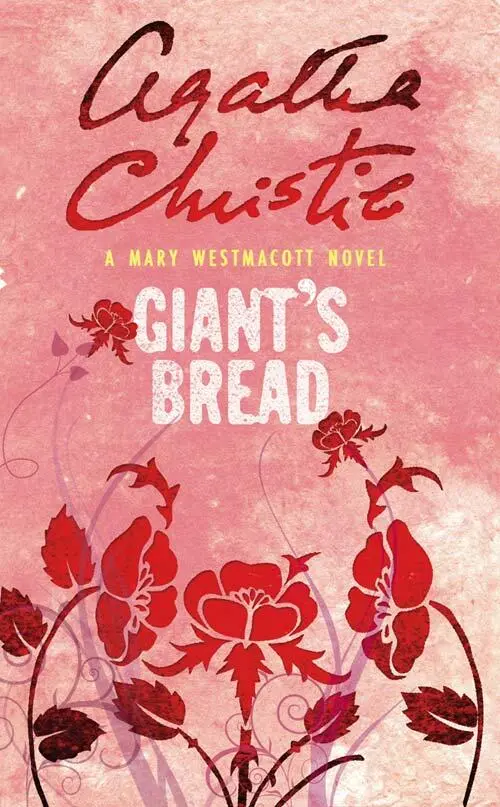
- Название:Giant's Bread
- Автор:
- Издательство:HarperCollins Publishers
- Жанр:
- Год:2013
- Город:London
- ISBN:9780007535002
- Рейтинг книги:3 / 5. Голосов: 1
-
Избранное:Добавить в избранное
- Отзывы:
-
Ваша оценка:
Giant's Bread: краткое содержание, описание и аннотация
Предлагаем к чтению аннотацию, описание, краткое содержание или предисловие (зависит от того, что написал сам автор книги «Giant's Bread»). Если вы не нашли необходимую информацию о книге — напишите в комментариях, мы постараемся отыскать её.
Giant's Bread — читать онлайн бесплатно полную книгу (весь текст) целиком
Ниже представлен текст книги, разбитый по страницам. Система сохранения места последней прочитанной страницы, позволяет с удобством читать онлайн бесплатно книгу «Giant's Bread», без необходимости каждый раз заново искать на чём Вы остановились. Поставьте закладку, и сможете в любой момент перейти на страницу, на которой закончили чтение.
Интервал:
Закладка:
‘I came across her when we were both doing relief work in Serbia. I saw a lot of her. I wrote to you about it.’
‘Did you? I don’t remember.’
Something in her tone seemed to strike him and he said anxiously:
‘It’s all right, isn’t it, dear? I thought it would be a pleasant surprise for you. I always thought she was a great friend of yours. I can put her off in a minute if –’
‘No, no. Of course, I’ll be delighted to see her. I was only surprised.’
George was reassured.
‘That’s all right then. By the way, she told me that a man called Bleibner, a man I knew very well in New York, is also in Wiltsbury. I’d like him to see the Abbey ruins – that sort of thing is a speciality of his. Do you mind if I ask him to lunch too?’
‘No, of course not. Do ask him.’
‘I’ll see if I can get him on the phone now. I meant to do it last night, but it slipped my memory.’
He went indoors again. Nell was left on the terrace frowning slightly.
George in this had been right. For some reason or other, she was not pleased at the thought of Jane’s coming to lunch. She felt very definitely that she didn’t want to see Jane. Already, the mere mention of Jane seemed to have disturbed the serenity of the morning. She thought: ‘I was so peaceful, and now –’
Annoying – yes, it was annoying. She was, had always been, afraid of Jane. Jane was the kind of person you could never be sure about. She – how could one put it? – she upset things. She was disturbing – and Nell didn’t want to be disturbed.
She thought unreasonably: ‘Why on earth did George have to meet her in Serbia? How trying things are.’
But it was absurd to be afraid of Jane. Jane couldn’t hurt her – now. Poor Jane, she must have made rather a mess of things to have come down to acting in a touring company.
One must be loyal to one’s old friends, Jane was an old friend. She should see how loyal Nell could be. And with a glow of self-approval she went upstairs and changed into a dress of dove-coloured georgette with which she wore one very beautifully matched string of pearls that George had given her on the last anniversary of their marriage. She took particular pains over her toilet, satisfying thereby some obscure female instinct.
‘At anyrate,’ she thought, ‘the Bleibner man will be there and that will make things easier.’
Though why she expected things to be difficult she could not have explained.
George came up to fetch her just as she was applying a final dusting of powder.
‘Jane’s arrived,’ he said. ‘She’s in the drawing-room.’
‘And Mr Bleibner?’
‘He’s engaged for lunch unfortunately. But he’s coming along this afternoon.’
‘Oh!’
She went downstairs slowly. Absurd to feel so apprehensive. Poor Jane – one simply must be nice to her. It was such terribly bad luck to have lost her voice and come down to this.
Jane, however, did not seem aware of bad luck. She was sprawling back on the sofa in an attitude of easy unconcern, looking round the room with keen appreciation.
‘Hullo, Nell,’ she said. ‘Well, you seem to have dug yourself in pretty comfortably.’
It was an outrageous remark. Nell stiffened. She couldn’t think for a moment of what to say. She met Jane’s eyes which were full of a mocking maliciousness. They shook hands and Nell said at the same time, ‘I don’t know what you mean?’
‘I meant all this. Palatial dwelling, well-proportioned footmen, highly paid cook, soft-footed servants, possibly a French maid, baths prepared for one with the latest unguents and bath salts, five or six gardeners, luxurious limousines, expensive clothes and I perceive, genuine pearls! Are you enjoying it all frightfully? I am sure you are.’
‘Tell me about yourself,’ said Nell, seating herself beside Jane on the sofa.
Jane’s eyes narrowed.
‘That’s a very clever answer. And I fully deserved it. Sorry, Nell. I was a beast. But you were being so queenly and so gracious. I never can stand people being gracious.’
She got up and began to stroll round the room.
‘So this is Vernon’s home,’ she said softly. ‘I’ve never seen it before – only heard him talk about it.’
She was silent for a minute, then asked abruptly:
‘How much have you changed?’
Nell explained that everything had been left as it was as far as possible. Curtains, covers, carpets, etc., had all been renewed. The old ones were too shabby. And one or two priceless pieces of furniture had been added. Whenever George came across anything that was in keeping with the place he bought it.
Jane’s eyes were fixed on her while she made this explanation and Nell felt uneasy because she couldn’t read the expression in them.
George came in before she had finished talking and they went in to lunch.
The talk was at first of Serbia, of a few mutual friends out there. Then they passed on to Jane’s affairs. George referred delicately to Jane’s voice – the sorrow he had felt – that everyone must feel. Jane passed it off carelessly enough.
‘My own fault,’ she said. ‘I would sing a certain kind of music and my voice wasn’t made for it.’
Sebastian Levinne, she went on to say, had been a wonderful friend. He was willing now to star her in London, but she had wished to learn her trade first.
‘Singing in opera is, of course, acting too. But there are all sorts of things to learn – to manage one’s speaking voice, for instance. And then one’s effects are all different – they must be more subtle, less broad.’
Next autumn, she explained, she was to appear in London in a dramatized version of Tosca .
Then dismissing her own affairs, she began to talk of Abbots Puissants. She led George on to discuss his plans, his ideas about the estate. He was made to display himself the complete country squire.
There was, apparently, no mockery in Jane’s eyes or her voice, but nevertheless Nell felt acutely uncomfortable. She wished George would stop talking. It was a little ridiculous the way he spoke as though he and his forefathers before him had lived for centuries at Abbots Puissants.
After coffee, they went out on the terrace again, and here George was summoned to the telephone and left them with a word of excuse. Nell suggested a tour through the gardens and Jane acquiesced.
‘I’d like to see everything,’ she said.
Nell thought: ‘It’s Vernon’s home she wants to see. That’s why she’s come. But Vernon never meant to her what he meant to me!’
She had a passionate desire to vindicate herself – to make Jane see – See what? She didn’t quite know herself, but she felt that Jane was judging her – condemning her even.
She stopped suddenly as they were walking down a long herbaceous border, gay with Michaelmas daisies against the old rose-coloured brick wall behind it.
‘Jane. I want to tell you – to explain –’
She paused, gathering herself together. Jane merely looked at her inquiringly.
‘You must think it – very dreadful of me – marrying again so soon.’
‘Not at all,’ said Jane. ‘It was very sensible.’
Nell didn’t want that. That wasn’t the point of view at all.
‘I adored Vernon – adored him. When he was killed it nearly broke my heart. I mean it. But I knew so well that he himself wouldn’t wish me to grieve. The dead don’t want us to grieve –’
‘Don’t they?’
Nell stared at her.
‘Oh, I know you’re voicing the popular idea,’ said Jane. ‘The dead want us to be brave and bear up and carry on as usual. They hate us being unhappy about them. That’s what everybody goes about saying – but I never have seen that they’ve any foundation for that cheering belief. I think they’ve invented it themselves to make things easier for them. The living don’t all want exactly the same thing, so I don’t see why the dead should either. There must be heaps of selfish dead – if they exist at all they must be very much the same as they were in life. They can’t be full of beautiful and unselfish feelings all at once. It always makes me laugh when I see a bereaved widower tucking into his breakfast the day after the funeral and saying solemnly, “Mary wouldn’t wish me to grieve!” How does he know? Mary may be simply weeping and gnashing her teeth (astral teeth, of course) at seeing him going on as usual just as though she had never existed. Heaps of women like a fuss being made over them. Why should they change their characters when they’re dead?’
Читать дальшеИнтервал:
Закладка:
Похожие книги на «Giant's Bread»
Представляем Вашему вниманию похожие книги на «Giant's Bread» списком для выбора. Мы отобрали схожую по названию и смыслу литературу в надежде предоставить читателям больше вариантов отыскать новые, интересные, ещё непрочитанные произведения.
![Fredrik Backman - Britt-Marie Was Here [Britt-Marie var här]](/books/61260/fredrik-backman-britt-marie-was-here-britt-thumb.webp)







Обсуждение, отзывы о книге «Giant's Bread» и просто собственные мнения читателей. Оставьте ваши комментарии, напишите, что Вы думаете о произведении, его смысле или главных героях. Укажите что конкретно понравилось, а что нет, и почему Вы так считаете.