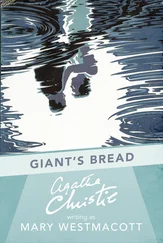
Mary Westmacott - Giant's Bread
Здесь есть возможность читать онлайн «Mary Westmacott - Giant's Bread» весь текст электронной книги совершенно бесплатно (целиком полную версию без сокращений). В некоторых случаях можно слушать аудио, скачать через торрент в формате fb2 и присутствует краткое содержание. Город: London, Год выпуска: 2013, ISBN: 2013, Издательство: HarperCollins Publishers, Жанр: Старинная литература, на английском языке. Описание произведения, (предисловие) а так же отзывы посетителей доступны на портале библиотеки ЛибКат.
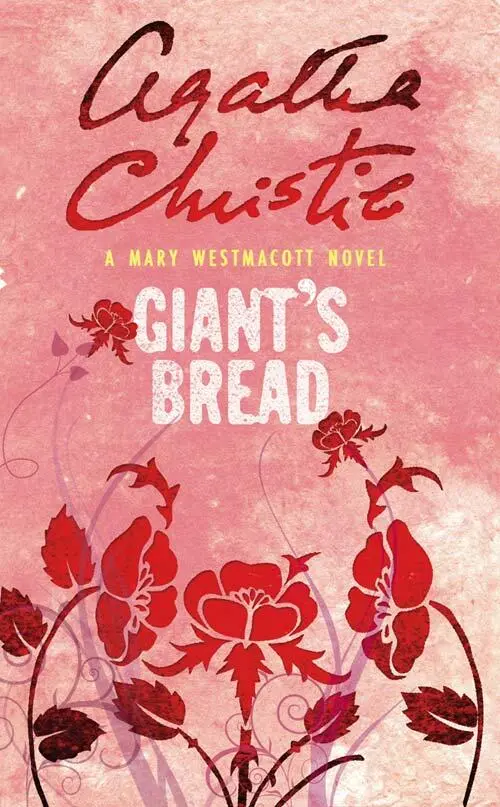
- Название:Giant's Bread
- Автор:
- Издательство:HarperCollins Publishers
- Жанр:
- Год:2013
- Город:London
- ISBN:9780007535002
- Рейтинг книги:3 / 5. Голосов: 1
-
Избранное:Добавить в избранное
- Отзывы:
-
Ваша оценка:
Giant's Bread: краткое содержание, описание и аннотация
Предлагаем к чтению аннотацию, описание, краткое содержание или предисловие (зависит от того, что написал сам автор книги «Giant's Bread»). Если вы не нашли необходимую информацию о книге — напишите в комментариях, мы постараемся отыскать её.
Giant's Bread — читать онлайн бесплатно полную книгу (весь текст) целиком
Ниже представлен текст книги, разбитый по страницам. Система сохранения места последней прочитанной страницы, позволяет с удобством читать онлайн бесплатно книгу «Giant's Bread», без необходимости каждый раз заново искать на чём Вы остановились. Поставьте закладку, и сможете в любой момент перейти на страницу, на которой закончили чтение.
Интервал:
Закладка:
‘Yes.’
‘How many men have you lived with?’
‘One.’
‘And he was not a good man?’
Jane answered evenly:
‘He was a very bad one.’
‘I see. Yes, it is that which is written in your face. Now listen to me, all that you have suffered, all that you have enjoyed, you will put it into my music not with abandon, not with unrestraint, but with controlled and disciplined force. You have intelligence and you have courage. Without courage nothing can ever be accomplished. Those without courage turn their backs on life. You will never turn your back on life. Whatever comes you will stand there facing it with your chin up and your eyes very steady … But I hope, my child, that you will not be too much hurt …’
He turned away.
‘I will send on the score,’ he said over his shoulder. ‘And you will study it.’
He stumped out of the room and the flat door banged.
Jane sat down by the table. She stared at the wall in front of her with unseeing eyes. Her chance had come.
She murmured very softly to herself:
‘I’m afraid.’
For a whole week Vernon debated the question of whether he should or should not take Jane at her word. He could get up to town at the week-end – but then perhaps Jane would be away. He felt miserably self-conscious and shy. Perhaps by now she had forgotten that she had asked him.
He let the week-end go by. He felt that certainly by now she would have forgotten him. Then he got a letter from Joe in which she mentioned having seen Jane twice. That decided Vernon. At six o’clock on the following Saturday, he rang the bell of Jane’s flat.
Jane herself opened it. Her eyes opened a little wider when she saw who it was. Otherwise she displayed no surprise.
‘Come in,’ she said. ‘I’m finishing my practising. But you won’t mind.’
He followed her into a long room whose windows overlooked the river. It was very empty. A grand piano, a divan, a couple of chairs and walls that were papered with a wild riot of bluebells and daffodils. One wall alone was papered in sober dark green and on it hung a single picture – a queer study of bare tree trunks. Something about it reminded Vernon of his early adventures in the Forest.
On the music stool was the little man like a white worm.
Jane pushed a cigarette box towards Vernon, said in her brutal commanding voice, ‘Now, Mr Hill,’ and began to walk up and down the room.
Mr Hill flung himself upon the piano. His hands twinkled up and down it with marvellous speed and dexterity. Jane sang. Most of the time sotto voce , almost under her breath. Occasionally she would take a phrase full pitch. Once or twice she stopped with an exclamation of what sounded like furious impatience, and Mr Hill was made to repeat from several bars back.
She broke off quite suddenly by clapping her hands. She crossed to the fireplace, pushed the bell, and turning her head addressed Mr Hill for the first time as a human being.
‘You’ll stay and have some tea, won’t you, Mr Hill?’
Mr Hill was afraid he couldn’t. He twisted his body apologetically several times and sidled out of the room. A maid brought in black coffee and hot buttered toast which appeared to be Jane’s conception of afternoon tea.
‘What was that you were singing?’
‘ Electra – Richard Strauss.’
‘Oh! I liked it. It was like dogs fighting.’
‘Strauss would be flattered. All the same, I know what you mean. It is combative.’
She pushed the toast towards him and added:
‘Your cousin’s been here twice.’
‘I know. She wrote and told me.’
He felt tongue-tied and uncomfortable. He had wanted so much to come, and now that he was here he didn’t know what to say. Something about Jane made him uncomfortable. He blurted out at last:
‘Tell me truthfully – would you advise me to chuck work altogether and stick to music?’
‘How can I possibly tell? I don’t know what you want to do.’
‘You spoke like that the other night. As though everyone can do just what they like.’
‘So they can. Not always, of course – but very nearly always. If you want to murder someone, there is really nothing to stop you. But you will be hanged afterwards – naturally.’
‘I don’t want to murder anyone.’
‘No, you want your fairy story to end happily. Uncle dies and leaves you all his money. You marry your lady love and live at Abbots – whatever it’s called – happily ever afterwards.’
Vernon said angrily:
‘I wish you wouldn’t laugh at me.’
Jane was silent a minute, then she said in a different voice:
‘I wasn’t laughing at you. I was doing something I’d no business to do – trying to interfere.’
‘What do you mean, trying to interfere?’
‘Trying to make you face reality, and forgetting that you are – what – about eight years younger than I am? – and that your time for that hasn’t yet come.’
He thought suddenly: ‘I could say anything to her – anything at all. She wouldn’t always answer the way I wanted her to, though.’
Aloud he said: ‘Please go on – I’m afraid it’s very egotistical my talking about myself like this, but I’m so worried and unhappy. I want to know what you meant when you said the other evening that of the four things I wanted, I could get any one of them but not all together.’
Jane considered a minute.
‘What did I mean exactly? Why, just this. To get what you want, you must usually pay a price or take a risk – sometimes both. For instance, I love music – a certain kind of music. My voice is suitable for a totally different kind of music. It’s an unusually good concert voice – not an operatic one – except for very light opera. But I’ve sung in Wagner, in Strauss – in all the things I like. I haven’t exactly paid a price – but I take an enormous risk. My voice may give out any minute. I know that. I’ve looked the fact in the face and I’ve decided that the game is worth the candle.
‘Now in your case, you mentioned four things. For the first, I suppose that if you remain in your uncle’s business for a sufficient number of years, you will grow rich without any further trouble. That’s not very interesting. Secondly, you want to live at Abbots Puissants – you could do that tomorrow if you married a girl with money. Then the girl you’re fond of, the girl you want to marry –’
‘Can I get her tomorrow?’ asked Vernon. He spoke with a kind of angry irony.
‘I should say so – quite easily.’
‘How?’
‘By selling Abbots Puissants. It is yours to sell, isn’t it?’
‘Yes, but I couldn’t do that – I couldn’t – I couldn’t …’
Jane leaned back in her chair and smiled.
‘You prefer to go on believing that life is a fairy story?’
‘There must be some other way.’
‘Yes, of course there is another. Probably the simplest. There’s nothing to stop you both going out to the nearest Registry Office. You’ve both got the use of your limbs.’
‘You don’t understand. There are hundreds of difficulties in the way. I couldn’t ask Nell to face a life of poverty. She doesn’t want to be poor.’
‘Perhaps she can’t.’
‘What do you mean by can’t?’
‘Just that. Can’t. Some people can’t be poor, you know.’
Vernon got up, walked twice up and down the room. Then he came back, dropped on the hearth-rug beside Jane’s chair, and looked up at her.
‘What about the fourth thing? Music? Do you think I could ever do that?’
‘That I can’t say. Wanting mayn’t be any use there. But if it does happen – I expect it will swallow up all the rest. They’ll all go – Abbots Puissants – money – the girl. My dear, I don’t feel life’s going to be easy for you. Ugh! a goose is walking over my grave. Now tell me something about this opera Sebastian Levinne says you are writing.’
Читать дальшеИнтервал:
Закладка:
Похожие книги на «Giant's Bread»
Представляем Вашему вниманию похожие книги на «Giant's Bread» списком для выбора. Мы отобрали схожую по названию и смыслу литературу в надежде предоставить читателям больше вариантов отыскать новые, интересные, ещё непрочитанные произведения.
![Fredrik Backman - Britt-Marie Was Here [Britt-Marie var här]](/books/61260/fredrik-backman-britt-marie-was-here-britt-thumb.webp)





Обсуждение, отзывы о книге «Giant's Bread» и просто собственные мнения читателей. Оставьте ваши комментарии, напишите, что Вы думаете о произведении, его смысле или главных героях. Укажите что конкретно понравилось, а что нет, и почему Вы так считаете.