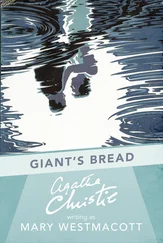
Mary Westmacott - Giant's Bread
Здесь есть возможность читать онлайн «Mary Westmacott - Giant's Bread» весь текст электронной книги совершенно бесплатно (целиком полную версию без сокращений). В некоторых случаях можно слушать аудио, скачать через торрент в формате fb2 и присутствует краткое содержание. Город: London, Год выпуска: 2013, ISBN: 2013, Издательство: HarperCollins Publishers, Жанр: Старинная литература, на английском языке. Описание произведения, (предисловие) а так же отзывы посетителей доступны на портале библиотеки ЛибКат.
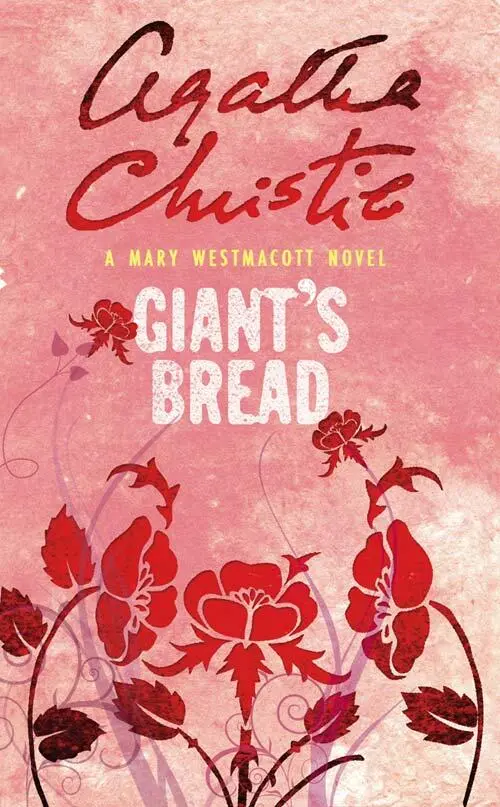
- Название:Giant's Bread
- Автор:
- Издательство:HarperCollins Publishers
- Жанр:
- Год:2013
- Город:London
- ISBN:9780007535002
- Рейтинг книги:3 / 5. Голосов: 1
-
Избранное:Добавить в избранное
- Отзывы:
-
Ваша оценка:
Giant's Bread: краткое содержание, описание и аннотация
Предлагаем к чтению аннотацию, описание, краткое содержание или предисловие (зависит от того, что написал сам автор книги «Giant's Bread»). Если вы не нашли необходимую информацию о книге — напишите в комментариях, мы постараемся отыскать её.
Giant's Bread — читать онлайн бесплатно полную книгу (весь текст) целиком
Ниже представлен текст книги, разбитый по страницам. Система сохранения места последней прочитанной страницы, позволяет с удобством читать онлайн бесплатно книгу «Giant's Bread», без необходимости каждый раз заново искать на чём Вы остановились. Поставьте закладку, и сможете в любой момент перейти на страницу, на которой закончили чтение.
Интервал:
Закладка:
So far, in his life, Vernon had never had the courage to set himself definitely in opposition to everybody. When it was all over, and he was settled in the very cheap rooms which were all he could afford in London, he felt as one might who had overcome invincible odds. Then, and not till then, he went a second time to see Jane Harding.
He had held boyish imaginary conversations with her in his mind.
‘I have done what you told me.’
‘Splendid! I knew you had the courage really.’
He was modest, she applauded. He was sustained and uplifted by her praise.
The reality, as always, fell out quite differently. His intercourse with Jane always did. He was always holding imaginary conversations with Jane in his mind, and the reality was always totally different.
In this case, when he announced, with due modesty, what he had done, she seemed to take it as a matter of course, with nothing particularly heroic about it. She said:
‘Well, you must have wanted to do it or you wouldn’t have done it.’
He felt baffled, almost angry. A curious sense of constraint always came over him in Jane’s presence. He could never be wholly natural with her. He had so much he wanted to say – but he found it difficult to say it. He was tongue-tied – embarrassed. And then suddenly, for no reason, it seemed, the cloud would lift and he would be talking happily and easily, saying the things that came into his head.
He thought: ‘Why am I so embarrassed with her? She’s natural enough.’
It worried him … From the first moment he had met her, he had felt disturbed … afraid. He resented the effect she had on him and yet he was unwilling to admit how strong that effect was.
An attempt to bring about a friendship between her and Nell failed. Vernon could feel that behind the outward cordiality that politeness dictates, there was very little real feeling.
When he asked Nell what she thought of Jane, she answered:
‘I like her very much. I think she’s most interesting.’
He was more awkward approaching Jane, but she helped him.
‘You want to know what I think of your Nell? She is lovely – and very sweet.’
He said, ‘And you really think you’ll be friends?’
‘No, of course not. Why should we?’
‘Well, but –’
He stammered, taken aback.
‘Friendship is not a kind of equilateral triangle. If A likes B and loves C , then C and B , etcetera, etcetera … We’ve nothing in common, your Nell and I. She, too, expects life to be a fairy story, and is just beginning to be afraid, poor child, that it mayn’t be, after all. She’s a Sleeping Beauty waking in the forest. Love, to her, is something very wonderful and very beautiful.’
‘Isn’t it that to you?’
He had to ask. He wanted to know so badly. So often, so often, he’d wondered about Boris Androv, about those five years.
She looked at him with a face from which all expression had died out.
‘Some day – I’ll tell you …’
He wanted to say – ‘Tell me now,’ but he didn’t. He said instead:
‘Tell me, Jane, what is life to you?’
She paused a minute and then said:
‘A difficult, dangerous, but endlessly interesting adventure.’
At last, he was able to work. He began to appreciate to the full the joys of freedom. There was nothing to fray his nerves, nothing to dissipate his energy. It could flow, all in one steady stream, into his work. There were few distractions. At the moment, he had only just enough money to keep body and soul together. Abbots Puissants was still unlet …
The autumn passed and most of the winter. He saw Nell once or twice a week, stolen unsatisfactory meetings. They were both conscious of the loss of the first fine rapture. She questioned him closely about the progress of the opera. How was it going? When did he expect it would be finished? What chances were there of its being produced?
Vernon was vague to all these practical aspects. He was concerned at the moment only with the creative side. The opera was getting itself born, slowly, with innumerable pangs and difficulties, with a hundred setbacks owing to Vernon’s own lack of experience and technique. His conversation was mostly of instrumental difficulties or possibilities. He went out with odd musicians who played in orchestras. Nell went to many concerts and was fond of music, but it is doubtful if she could have told an oboe from a clarinet. She’d always imagined a horn and a French horn to be much the same thing.
The technical knowledge needed in score writing appalled her, and Vernon’s indifference to how and when the opera would be produced made her uneasy.
He hardly realized himself how much his uncertain answers depressed and alienated Nell. He was startled one day when she said to him – indeed not so much said as wailed:
‘Oh, Vernon, don’t try me too hard. It’s so difficult – so difficult … I must have some hope. You don’t understand.’
He looked at her astonished.
‘But, Nell, it’s all right, really . It’s only a question of being patient.’
‘I know, Vernon. I shouldn’t have said that, but you see –’
She paused.
‘It makes it so much more difficult for me, darling,’ said Vernon, ‘if I feel that you’re unhappy.’
‘Oh, I’m not – I won’t be …’
But underneath, choked down, that old feeling of resentment lifted its head again. Vernon didn’t understand or care how difficult things were for her. He never had the faintest conception of her difficulties. He would, perhaps, have called them silly or trivial – they were, in one sense, but in another they weren’t – since the sum total of them went to make up her life. Vernon didn’t see or realize that she was fighting a battle – fighting it all the time. She could never relax. If he could only realize that, give her a word of cheer, show her that he understood the difficult position in which she was placed. But he never would see.
A devastating sense of loneliness swept over Nell. Men were like that – they never understood or cared. Love, that seemed to solve everything. But really it didn’t solve anything at all. She almost hated Vernon. Selfishly absorbed in his work, disliking her to be unhappy because it upset him …
She thought: ‘Any woman would understand.’
And moved by some obscure impulse, she went of her own accord to see Jane Harding.
Jane was in, and if she was surprised to see Nell, she did not show it. They talked for some time on desultory things. Yet Nell had a feeling that Jane was waiting and watching, biding her time.
Why had she come? She didn’t know. She feared and distrusted Jane – perhaps that was why! Jane was her enemy. Yes, but she had a fear that her enemy had a wisdom denied to her. Jane (she put it to herself) was clever. She was, very possibly, bad – yes, she was sure Jane was bad, but somehow or other one might learn from her.
She began rather blunderingly. Did Jane think that Vernon’s music was likely to be successful – that is to say successful soon ? She tried in vain to keep a quaver out of her voice.
She felt Jane’s cool green eyes upon her.
‘Things getting difficult?’
‘Yes, you see –’
It tumbled out, a great deal of it, the shifts, the difficulties, the unspoken force of her mother’s silent pressure, a dimly veiled reference to Someone, name not given, Someone who understood and was kind and was rich.
How easy to say these things to a woman – even a woman like Jane who couldn’t know anything about them. Women understood – they didn’t pooh-pooh trifles and make everything out to be unimportant.
Читать дальшеИнтервал:
Закладка:
Похожие книги на «Giant's Bread»
Представляем Вашему вниманию похожие книги на «Giant's Bread» списком для выбора. Мы отобрали схожую по названию и смыслу литературу в надежде предоставить читателям больше вариантов отыскать новые, интересные, ещё непрочитанные произведения.
![Fredrik Backman - Britt-Marie Was Here [Britt-Marie var här]](/books/61260/fredrik-backman-britt-marie-was-here-britt-thumb.webp)






Обсуждение, отзывы о книге «Giant's Bread» и просто собственные мнения читателей. Оставьте ваши комментарии, напишите, что Вы думаете о произведении, его смысле или главных героях. Укажите что конкретно понравилось, а что нет, и почему Вы так считаете.