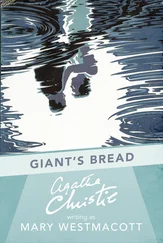
Mary Westmacott - Giant's Bread
Здесь есть возможность читать онлайн «Mary Westmacott - Giant's Bread» весь текст электронной книги совершенно бесплатно (целиком полную версию без сокращений). В некоторых случаях можно слушать аудио, скачать через торрент в формате fb2 и присутствует краткое содержание. Город: London, Год выпуска: 2013, ISBN: 2013, Издательство: HarperCollins Publishers, Жанр: Старинная литература, на английском языке. Описание произведения, (предисловие) а так же отзывы посетителей доступны на портале библиотеки ЛибКат.
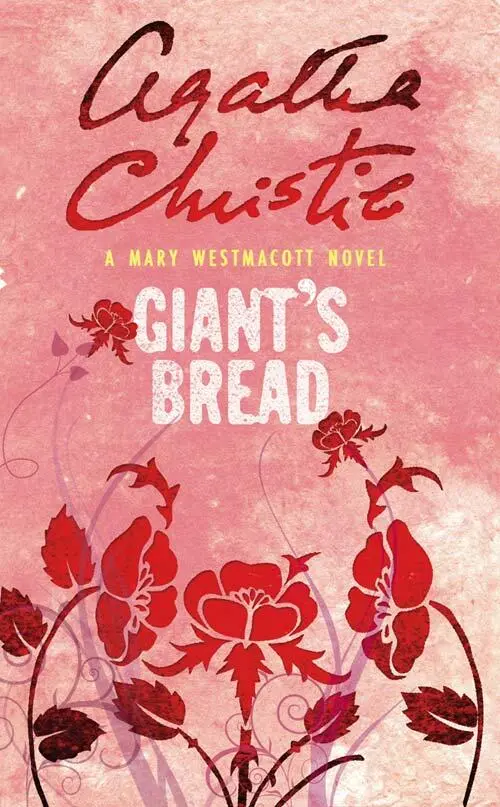
- Название:Giant's Bread
- Автор:
- Издательство:HarperCollins Publishers
- Жанр:
- Год:2013
- Город:London
- ISBN:9780007535002
- Рейтинг книги:3 / 5. Голосов: 1
-
Избранное:Добавить в избранное
- Отзывы:
-
Ваша оценка:
Giant's Bread: краткое содержание, описание и аннотация
Предлагаем к чтению аннотацию, описание, краткое содержание или предисловие (зависит от того, что написал сам автор книги «Giant's Bread»). Если вы не нашли необходимую информацию о книге — напишите в комментариях, мы постараемся отыскать её.
Giant's Bread — читать онлайн бесплатно полную книгу (весь текст) целиком
Ниже представлен текст книги, разбитый по страницам. Система сохранения места последней прочитанной страницы, позволяет с удобством читать онлайн бесплатно книгу «Giant's Bread», без необходимости каждый раз заново искать на чём Вы остановились. Поставьте закладку, и сможете в любой момент перейти на страницу, на которой закончили чтение.
Интервал:
Закладка:
And yet, somewhere, deep down, she felt ashamed …
George Chetwynd began cheerfully to talk of various outside topics.
Chapter 7
August was a difficult month for Vernon. Nell and her mother were in Dinard. He wrote to her and she to him, but her letters told him little or nothing of what he wanted to know. She was having a gay time, he gathered, and enjoying herself though longing for Vernon to be there.
Vernon’s work was of the purely routine order. It required little intelligence. You needed to be careful and methodical, that was all. His mind, free from other distractions, swung back to its secret love, music.
He had formed the idea of writing an opera and had taken for his theme the half-forgotten fairy story of his youth. It was now bound up in his mind with Nell – the whole strength of his love for her flowed into this new channel.
He worked feverishly. Nell’s words about his living comfortably with his mother had rankled, and he had insisted on having rooms of his own. The ones he had found were very cheap, but they gave him an unexpected sense of freedom. At Carey Lodge he would never have been able to concentrate. His mother would have been, he knew, for ever fussing after him, urging him to get to bed. Here, in Arthur Street, he could and often did, sit up till five in the morning if he liked.
He got very thin and haggard looking. Myra worried about his health and urged patent restoratives upon him. He assured her curtly that he was all right. He told her nothing of what he was doing. Sometimes he would be full of despair over his work, at others a sudden sense of power would rush over him as he knew that some small infinitesimal fragment was good.
Occasionally he went to town and spent a week-end with Sebastian, and on two occasions Sebastian came down to Birmingham. Sebastian was Vernon’s most valued stand-by at this time. His sympathy was real, not assumed, and it had a two-fold character. He was interested as a friend and also from his own professional standpoint. Vernon had an enormous respect for Sebastian’s judgment in all things artistic. He would play excerpts on the piano he had hired, explaining as he did so the proper orchestration. Sebastian listened, nodding very quietly, speaking little. At the end he would say:
‘It’s going to be good, Vernon. Get on with it.’
He never uttered a word of destructive criticism, for in his belief, such a word might be fatal. Vernon needed encouragement and nothing but encouragement.
He said one day: ‘Is this what you meant to do at Cambridge?’
Vernon considered for a minute.
‘No,’ he said at last. ‘At least it’s not what I meant originally. After that concert, you know. It’s gone again – the thing I saw then. Perhaps it’ll come back again some time. This is, I suppose, the usual sort of thing, conventional – and all that. But here and there I’ve got what I mean into it.’
‘I see.’
To Joe, Sebastian said plainly what he thought.
‘Vernon calls this the “usual sort of thing”, but, as a matter of fact, it isn’t. It’s entirely unusual. The whole orchestration is conducted on an unusual plan. What it is, though, is immature. Brilliant but immature.’
‘Have you told him so?’
‘Good lord, no. One disparaging word and he’d shrivel up and consign the whole thing to the waste-paper basket. I know these people. I’m spoon-feeding him with praise at present. We’ll have the pruning knife and the garden syringe later. I’ve mixed my metaphors, but you know what I mean.’
In early September Sebastian gave a party to meet Herr Radmaager, the famous composer. Vernon and Joe were bidden to attend.
‘Only about a dozen of us,’ said Sebastian. ‘Anita Quarll, whose dancing I’m interested in – she’s a rotten little devil, though; Jane Harding – you’ll like her. She’s singing in this English Opera business. Wrong vocation, she’s an actress, not a singer. You and Vernon – Radmaager – two or three others. Radmaager will be interested in Vernon – he’s well disposed towards the younger generation.’
Both Joe and Vernon were elated.
‘Do you think I’ll ever do anything, Joe? Really do anything, I mean.’
Vernon sounded dispirited.
‘Why not?’ said Joe valiantly.
‘I don’t know. Everything I’ve done just lately is rotten. I started all right. But now I’m stale as stale. I’m tired before I start.’
‘I suppose that’s because you work all day.’
‘I suppose it is.’
He was silent for a minute or two and then said:
‘It’ll be wonderful meeting Radmaager. He’s one of the only men who write what I call music. I wish I could talk to him about what I really think – but it would be such awful cheek.’
The party was of an informal character. Sebastian had a large studio, empty save for a dais, a grand piano and a large quantity of cushions thrown down at random about the floor. At one end was a hastily put trestle table and on this were piled viands of all descriptions.
You collected what you wanted and then pitched your cushion. When Joe and Vernon arrived a girl was dancing – a small red-haired girl with a lithe, sinewy body. Her dancing was ugly but alluring.
She finished to loud applause and leapt down from the dais.
‘Bravo, Anita,’ said Sebastian. ‘Now then, Vernon and Joe, have you got what you want? That’s right. You’d better sink down gracefully by Jane. This is Jane.’
They sank down as bidden. Jane was a tall creature with a beautiful body and a mass of very dark brown hair coiled low on her neck. Her face was too broad for beauty and her chin too sharp. Her eyes were deep set and green. She was about thirty, Vernon thought. He found her disconcerting, but attractive.
Joe began to talk to her eagerly. Her enthusiasm for sculpture had been waning of late. She had always had a high soprano voice and she was now coquetting with the idea of becoming an opera singer.
Jane Harding listened sympathetically enough, emitting a faintly amused monosyllable from time to time. Finally she said:
‘If you like to come round to my flat, I’ll try your voice, and I can tell you in two minutes just what your voice is good for.’
‘Would you really? That’s awfully kind of you.’
‘Oh, not at all. You can trust me. You can’t trust someone who makes their living by teaching to tell you the truth.’
Sebastian came up and said:
‘What about it, Jane?’
She got up from the floor – rather a beautiful movement. Then, looking round, she said in the curt voice of command one would use to a dog:
‘Mr Hill.’
A small man, rather like a white worm, bustled forward with an ingratiating twist of the body. He followed her up to the dais.
She sang a French song Vernon had never heard before.
‘J’ai perdu mon amie – elle est morte
Tout s’en va cette fois pour jamais
Pour jamais, pour toujours elle emporte
Le dernier des amours que j’aimais .
‘Pauvre nous! Rien ne m’a crie l’heure
Ou la bas se nouait son linceuil
On m’a dit “Elle est morte!” Et tout seul
Je répète “Elle est morte!” Et je pleure …’
Like most people who heard Jane Harding sing, Vernon was quite unable to criticize the voice. She created an emotional atmosphere – the voice was only an instrument. The sense of overwhelming loss, of dazed grief, the final relief of tears.
There was applause. Sebastian murmured:
‘Enormous emotional power – that’s it.’
She sang again. This time it was a Norwegian song about falling snow. There was no emotion in her voice whatsoever – it was like the white flakes of the snow – monotonous, exquisitely clear, finally dying away to silence on the last line.
Читать дальшеИнтервал:
Закладка:
Похожие книги на «Giant's Bread»
Представляем Вашему вниманию похожие книги на «Giant's Bread» списком для выбора. Мы отобрали схожую по названию и смыслу литературу в надежде предоставить читателям больше вариантов отыскать новые, интересные, ещё непрочитанные произведения.
![Fredrik Backman - Britt-Marie Was Here [Britt-Marie var här]](/books/61260/fredrik-backman-britt-marie-was-here-britt-thumb.webp)






Обсуждение, отзывы о книге «Giant's Bread» и просто собственные мнения читателей. Оставьте ваши комментарии, напишите, что Вы думаете о произведении, его смысле или главных героях. Укажите что конкретно понравилось, а что нет, и почему Вы так считаете.