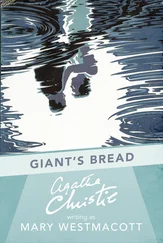
Mary Westmacott - Giant's Bread
Здесь есть возможность читать онлайн «Mary Westmacott - Giant's Bread» весь текст электронной книги совершенно бесплатно (целиком полную версию без сокращений). В некоторых случаях можно слушать аудио, скачать через торрент в формате fb2 и присутствует краткое содержание. Город: London, Год выпуска: 2013, ISBN: 2013, Издательство: HarperCollins Publishers, Жанр: Старинная литература, на английском языке. Описание произведения, (предисловие) а так же отзывы посетителей доступны на портале библиотеки ЛибКат.
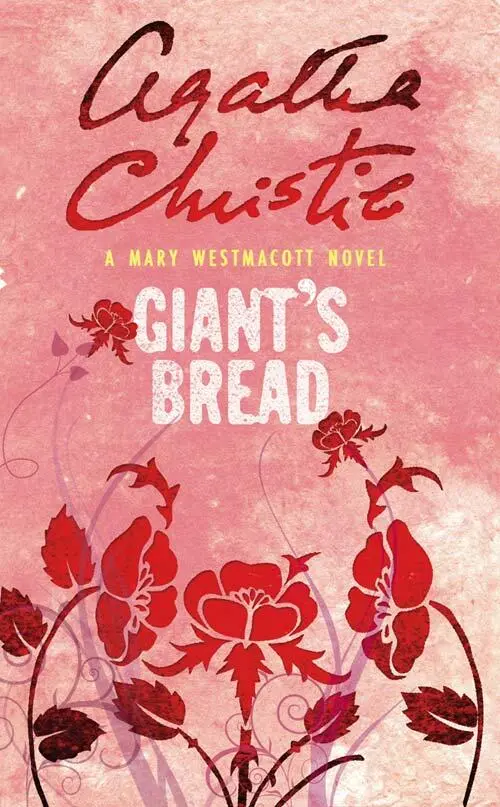
- Название:Giant's Bread
- Автор:
- Издательство:HarperCollins Publishers
- Жанр:
- Год:2013
- Город:London
- ISBN:9780007535002
- Рейтинг книги:3 / 5. Голосов: 1
-
Избранное:Добавить в избранное
- Отзывы:
-
Ваша оценка:
Giant's Bread: краткое содержание, описание и аннотация
Предлагаем к чтению аннотацию, описание, краткое содержание или предисловие (зависит от того, что написал сам автор книги «Giant's Bread»). Если вы не нашли необходимую информацию о книге — напишите в комментариях, мы постараемся отыскать её.
Giant's Bread — читать онлайн бесплатно полную книгу (весь текст) целиком
Ниже представлен текст книги, разбитый по страницам. Система сохранения места последней прочитанной страницы, позволяет с удобством читать онлайн бесплатно книгу «Giant's Bread», без необходимости каждый раз заново искать на чём Вы остановились. Поставьте закладку, и сможете в любой момент перейти на страницу, на которой закончили чтение.
Интервал:
Закладка:
Nell said suddenly in a hard, desperate little voice:
‘You talk like that, but what do you know about being poor?’
Vernon was astonished.
‘But I am poor.’
‘No, you’re not. You’ve been to schools and universities and in the holidays you’ve lived with your mother who’s rich. You don’t know anything at all about it. You don’t know –’
She stopped in despair. She wasn’t clever with words. How could she paint the picture she knew so well? The shifts, the struggles, the evasions, the desperate fight to keep up appearances. The ease with which friends dropped you if you ‘couldn’t keep up with things’, the slights, the snubs – worse – the galling patronage! In Captain Vereker’s lifetime, and since his death, it had always been the same. You could, of course, live in a cottage in the country and never see anyone, never go to dances like other girls, never have pretty clothes, live within your income and rot away slowly! Either way was pretty beastly. It was so unfair – one ought to have money. And always marriage lay ahead of you clearly designated as the way of escape. No more striving and snubs, and subterfuges.
You didn’t think of it as marrying for money. Nell, with the boundless optimism of youth, had always pictured herself falling in love with a nice, rich man. And now she had fallen in love with Vernon Deyre. Her thoughts hadn’t gone as far as marriage. She was just happy – wonderfully happy.
She almost hated Vernon for dragging her down from the clouds. And she resented his easy taking for granted of her readiness to face poverty for his sake. If he’d put it differently. If he’d said: ‘I oughtn’t to ask you; but do you think you could for my sake?’ Something like that.
So that she could feel that her sacrifice was being appreciated. For after all, it was a sacrifice! She didn’t want to be poor – she hated the idea of being poor. She was afraid of it. Vernon’s contemptuous unworldly attitude infuriated her. It was so easy not to care about money when you’d never felt the lack of it. And Vernon hadn’t – he wasn’t aware of the fact but, there it was. He’d lived softly and comfortably, and well.
He said now in an astonished kind of way:
‘Oh, Nell, surely you wouldn’t mind being poor?’
‘I’ve been poor, I tell you. I know what it’s like.’
She felt years and years older than Vernon. He was a child – a baby! What did he know of the difficulties of getting credit? Of the money that she and her mother already owed? She felt suddenly terribly lonely and miserable. What was the good of men? They said wonderful things to you, they loved you, but did they ever try to understand? Vernon wasn’t trying now. He was just saying condemnatory things, showing her how she had fallen in his estimation.
‘If you say that you can’t love me.’
She replied helplessly:
‘You don’t understand –’
They gazed at each other hopelessly. What had happened? Why were things like this between them?
‘You don’t love me,’ repeated Vernon angrily.
‘Oh, Vernon, I do, I do –’
Suddenly, like an enchantment, their love swept over them again. They clung together, kissing. They felt that age-long lovers’ delusion that everything must come right because they loved. It was Vernon’s victory. He still insisted on telling Mrs Vereker. Nell opposed him no longer. His arms round her, his lips on hers. She couldn’t go on arguing. Better to give oneself up to the joy of being loved, to say: ‘Yes – yes, darling, if you like – anything you like –’
Yet, almost unknown to herself, under her love was a faint resentment …
Mrs Vereker was a clever woman. She was taken by surprise but she did not show it, and she adopted a different line from any that Vernon had pictured her taking. She was faintly derisively amused.
‘So you children think you are in love with one another? Well, well!’
She listened to Vernon with such an expression of kindly irony that despite himself his tongue flustered and tripped.
She gave a faint sigh as he subsided into silence.
‘What it is to be young! I feel quite envious. Now, my dear boy, just listen to me. I’m not going to forbid the banns or do anything melodramatic. If Nell really wants to marry you she shall. I don’t say I won’t be very disappointed if she does. She’s my only child. I naturally hope that she will marry someone who can give her the best of everything, and surround her with every luxury and comfort. That, I think, is only natural.’
Vernon was forced to agree. Mrs Vereker’s reasonableness was extremely disconcerting, being so unexpected.
‘But as I say, I’m not going to forbid the banns. What I do stipulate is that Nell should be thoroughly sure that she really knows her own mind. You agree to that, I’m sure?’
Vernon agreed to that with an uneasy feeling of being entangled in a mesh from which he was presently not going to be able to escape.
‘Nell is very young. This is her first season. I want her to have every chance of being sure that she does like you better than any other man. If you agree between yourselves that you are engaged that is one thing – a public announcement of your engagement is another. I could not agree to that. Any understanding between yourselves must be kept quite secret. I think you will see that that is only fair. Nell must be given every chance to change her mind if she wants to.’
‘She doesn’t want to!’
‘Then there is certainly no reason for objecting. As a gentleman you can hardly act otherwise. If you agree to these stipulations, I will put no obstacle in the way of your seeing Nell.’
‘But, Mrs Vereker, I want to marry Nell quite soon.’
‘And what exactly do you propose to marry on?’
Vernon told her the salary he was getting from his uncle and explained the position in regard to Abbots Puissants.
When he had finished she spoke. She gave a brief and succinct résumé of house rent, servants’ wages, the cost of clothes, alluded delicately to possible perambulators, and then contrasted the picture with Nell’s present position.
Vernon was like the Queen of Sheba – no spirit was left in him. He was beaten by the relentless logic of facts. A terrible woman, Nell’s mother – implacable. But he saw her point. He and Nell would have to wait. He must, as Mrs Vereker said, give her every chance of changing her mind. Not that she would, bless her lovely heart.
He essayed one last venture.
‘My uncle might increase my salary. He has spoken to me several times on the advantages of early marriages. He seems very keen on the subject.’
‘Oh!’ Mrs Vereker was thoughtful for a minute or two. ‘Has he any daughters of his own?’
‘Yes, five, and the two eldest are married already.’
Mrs Vereker smiled. A simple boy. He had quite misunderstood the point of her question. Still, she had found out what she wanted to know.
‘We’ll leave it like that, then,’ she said.
A clever woman!
Vernon left the house in a restless mood. He wanted badly to talk to someone sympathetic. He thought of Joe, then shook his head. He and Joe had almost quarrelled about Nell. Joe despised Nell as what she called a ‘regular empty-headed society girl’. She was unfair and prejudiced. As a passport to Joe’s favour, you had to have short hair, wear art smocks and live in Chelsea.
Sebastian, on the whole, was the best person. Sebastian was always willing to see your point of view, and he was occasionally unusually useful with his matter-of-fact common-sense point of view. A very sound fellow, Sebastian.
Rich, too. How queer things were! If only he had Sebastian’s money, he could probably marry Nell tomorrow. Yet, with all that money, Sebastian couldn’t get hold of the girl he wanted. Rather a pity. He wished Joe would marry Sebastian instead of some rotter or other who called himself artistic.
Читать дальшеИнтервал:
Закладка:
Похожие книги на «Giant's Bread»
Представляем Вашему вниманию похожие книги на «Giant's Bread» списком для выбора. Мы отобрали схожую по названию и смыслу литературу в надежде предоставить читателям больше вариантов отыскать новые, интересные, ещё непрочитанные произведения.
![Fredrik Backman - Britt-Marie Was Here [Britt-Marie var här]](/books/61260/fredrik-backman-britt-marie-was-here-britt-thumb.webp)





Обсуждение, отзывы о книге «Giant's Bread» и просто собственные мнения читателей. Оставьте ваши комментарии, напишите, что Вы думаете о произведении, его смысле или главных героях. Укажите что конкретно понравилось, а что нет, и почему Вы так считаете.