Erin Bow - Plain Kate
Здесь есть возможность читать онлайн «Erin Bow - Plain Kate» весь текст электронной книги совершенно бесплатно (целиком полную версию без сокращений). В некоторых случаях можно слушать аудио, скачать через торрент в формате fb2 и присутствует краткое содержание. Год выпуска: 2010, ISBN: 2010, Издательство: Scholastic Inc., Жанр: Старинная литература, на английском языке. Описание произведения, (предисловие) а так же отзывы посетителей доступны на портале библиотеки ЛибКат.
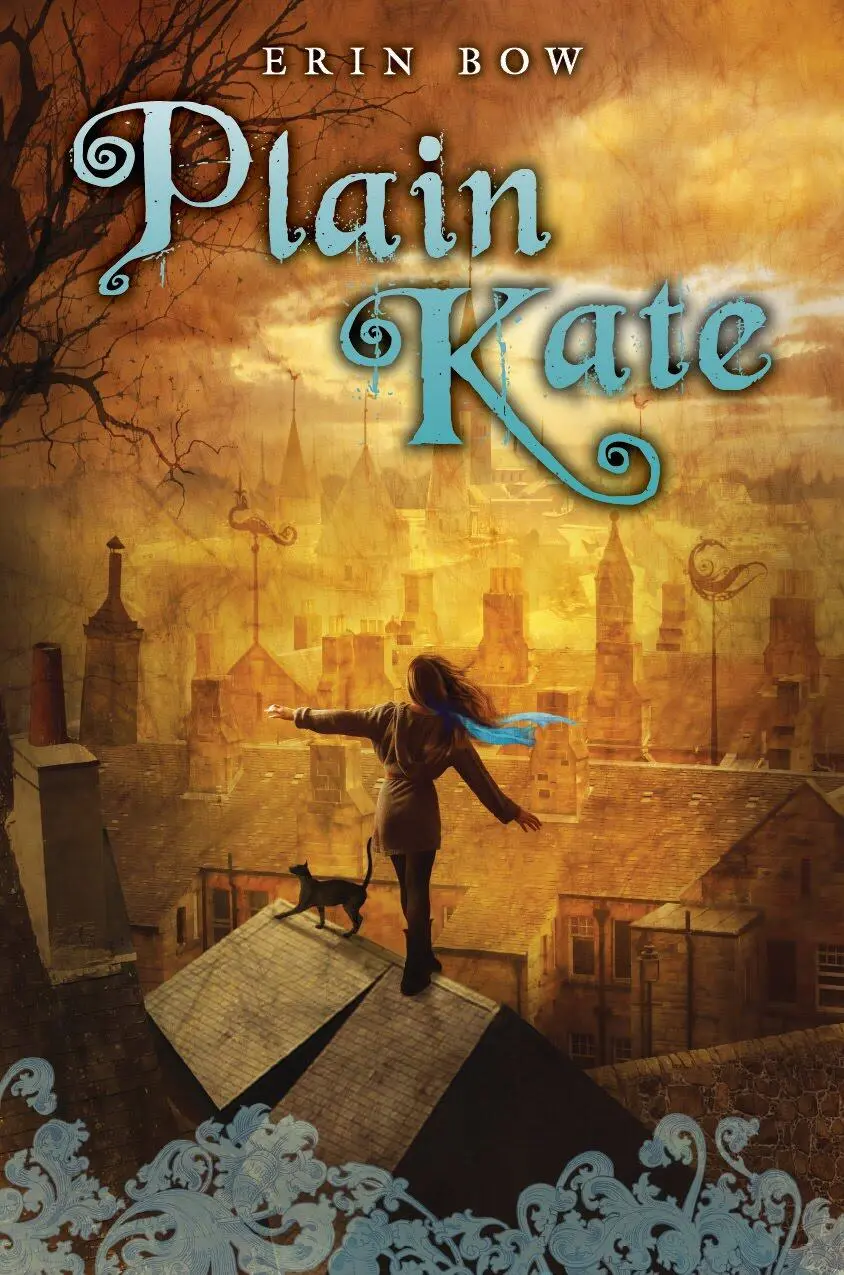
- Название:Plain Kate
- Автор:
- Издательство:Scholastic Inc.
- Жанр:
- Год:2010
- ISBN:9780545166645
- Рейтинг книги:3 / 5. Голосов: 1
-
Избранное:Добавить в избранное
- Отзывы:
-
Ваша оценка:
Plain Kate: краткое содержание, описание и аннотация
Предлагаем к чтению аннотацию, описание, краткое содержание или предисловие (зависит от того, что написал сам автор книги «Plain Kate»). Если вы не нашли необходимую информацию о книге — напишите в комментариях, мы постараемся отыскать её.
Plain Kate — читать онлайн бесплатно полную книгу (весь текст) целиком
Ниже представлен текст книги, разбитый по страницам. Система сохранения места последней прочитанной страницы, позволяет с удобством читать онлайн бесплатно книгу «Plain Kate», без необходимости каждый раз заново искать на чём Вы остановились. Поставьте закладку, и сможете в любой момент перейти на страницу, на которой закончили чтение.
Интервал:
Закладка:
Below them the guards had begun to trickle back into the gate square. They were making piles of the dead: the crushed pikemen and those who had been crushed against the pikes. Kate didn’t look, but she couldn’t shut out the scrapes and heavy thuds. “Taggle,” she said, “find us a way to the center of the city.”
The cat regarded her thoughtfully, steady as two isin-glass lamps. Then he turned and led them away, across the rooftops, fearless and nimble.
The downpour slowed to a cold soaking rain. The steep roofs were slippery, but they didn’t dare go into the streets. Men in the dark garb of the city watch roamed in packs and harried the refugees from doorways and alleys. So Drina and Kate stuck to the roofs, inching, sliding, scraping, keeping out of sight. It was slow and excruciating. The light was sinking by the time they came to a rooftop overlooking the great square.
Across from them towered the city hall, with its pitched roof and heavy-lidded windows, and a church, its spire thick with monsters. A squat building filled the space between church and hall, its windows barred and its windows guarded. “The courts,” Drina whispered. “And there—” She stopped speaking and pointed down.
On a little stage in the center of the square stood the weizi, the carved pillar that should be a town’s heart. But this one was uncarved. And it was stone. That was so strange to Kate’s carver’s heart that she could hardly take it in. A plain pillar—no, Kate realized, it was not a pillar, it was a stake, a burning stake on a little stage, which had seen who knows how many deaths. She swallowed and for a moment wanted to just let the city fall under the rusalka’s wings. That quick death was better than this city deserved.
The stone city, Linay had told her once, had a stone heart. And here it was. Nearby, the canal where Lenore had drowned slapped under the lip of the docks.
The dimming day was quiet and the lid of the sky twisted sounds. Kate wasn’t quite sure whether she could hear screaming. “Linay…” she whispered, and gripped the gutter to steady herself. “Drina. How long do we have? Will they—will they burn him tonight?”
Drina shook her head. “They’ll have a trial…an ordeal.” She was silent so long that Kate almost asked her, almost had to think of a way to ask: How long did they torture your mother?
“Tomorrow,” said Drina, before Kate had to find those words. “They’ll torture him tonight, make him confess. They’ll burn him tomorrow. When people can watch.”
Kate pushed the dripping hair out of her eyes and peered at the squat bulk of the courts, its little windows barred and squinting. “We have to get him out.”
“The grand duke’s army could not get him out,” said Taggle.
“I don’t want to watch him burn,” whispered Drina.
Kate tried to stay practical, and so answered Taggle: “Maybe we can get in.”
“Oh!” said Taggle brightly. “And kill him in his sleep in there!” Despite his cheerful tone, the look he threw the black building was skeptical. “There’s bound to be a cellar or two, I suppose. I will look.” And he jumped fearlessly from the edge of the gutter, sprang down to a ledge Kate hadn’t even seen, down again to slip across a windowsill, and down again to vanish, gray, into the gray light.
The ghost of the scream came again in the chilly twilight. “I’m going to be sick,” Drina choked. She backed away from the edge. Kate turned her back on the square and followed. Farther back on the roof, jammed against a taller wall, they found shelter. It wasn’t much: a ruined dovecote between two huge chimneys, with a scrap of roof and a rain-wrecked honeycomb of dove boxes, white droppings thick over everything. It smelled sharply sour, like the bear cage in which the Roamers had kept the chickens, and in which Kate had been burned. The smell made her skin shudder and her mouth taste metal.
She was sure of it now, as the night fell: Somewhere nearby, Linay was screaming.

In the darkness, Kate waited for Taggle’s return. She held the burl wood carving of Lenore’s face in her hands, using the edge of her knife to polish a rough bit here and there. Drina dozed shivering beside her, the heavy clouds pressed close over her, and the city slept restlessly below her. Taggle was gone a long time, long enough for Kate to struggle in and out of dreams: She was bent over her cabinet box in Samilae, carving, only she had wings instead of a shadow. She was lost in a maze of stone streets and someone was screaming, and then the stones melted. She was holding Taggle’s body in her arms.
She woke with Taggle’s cold nose nudging hers. His fur was damp and smeared with foul mud. She stroked him and loose hairs clung to her hands.
“A dark place, full of blood smell and fear smell and grates and grilles,” he reported. “It would take a rat to slip in—a skinny one. There will be no rescue.”
“I dreamt… ” Kate tipped her head back. The crumbling bricks of the chimney caught and yanked at her hair. “…no rescue.”
Taggle eyed her. “You’re planning something.”
“If I go down there,” she said slowly, “the guard will see that I have no shadow. They’ll arrest me. And then—maybe I can get close to him.”
“No,” said Taggle. “No friend of mine will take on such a fate.”
Kate looked down at Lenore’s carved face. She remembered promising her father that she would be a full master by twenty, and she had been right: This was her masterpiece. But what was going to happen instead was that she was going to die. She said, “Someone will notice my shadow soon, Taggle. It will happen eventually.”
“Not here,” he said. “Not like this. You didn’t see it. You can’t imagine.” The cat sighed and paced up and down in front of the dovecote. Finally he turned to her. “Katerina, this city is a rat’s place. Let us leave the rats to the rats and go on with our adventures. What say you?”
She wanted to say yes. There was nothing to love in the walls of Love. But there had been little to love in Toila either, and yet a stranger had saved them. And in Samilae, where an axe had come from the darkness, Niki had stayed strong and kind. “There must be a basket woman,” said Kate, “or a baker.”
“Well then,” said the cat. “He means to kill himself in this stupid way. We must either kill him before he can, or save him from it.” He shook his head, human, fretful. “I suppose one chance or the other might present itself. Personally I think we should aim for killing him.”
Drina shifted in her thin sleep, and shivered. Kate watched her sleeping for a while, wishing for a scrap of blanket. The rain was so cold. Finally she asked, “Will we…will we all live?”
“I doubt it,” drawled the cat. “We put our lives on claw tip to do this, Katerina. Tell me you are sure.”
“I have to stop him, Taggle. My blood. My shadow. He used me to do this. It’s my fault and I have to fix it.”
Taggle sat up, slender and strong as a column, unshakable. He made no suggestions. Kate rubbed him between the ears. She could still feel the lump where Stivo’s axe had hit him. He climbed into her lap, rumbling, and she huddled into the broken chimney’s meager heat.
“We must get close to him,” said Taggle. “Close enough to spring. If chance comes, we must be ready.”
“The stake,” she said. “He’ll—he’ll be brought there.”

So at first light they found their way down into the square, to the burning place.
The stake was a neatly built thing, and horrible in its neatness. The platform was stone and nearly as tall as they were. A flight of steps was cut into the side. A stone lip would keep the fire contained. And there would be fire: There was already a stack of split logs and branches, like a great stork’s nest, around the stake. They stank of pitch and tallow. More barrels of pitch were lined up like condemned men at the platform’s foot. Kate and Drina wormed their way between these and crouched down to wait.
Читать дальшеИнтервал:
Закладка:
Похожие книги на «Plain Kate»
Представляем Вашему вниманию похожие книги на «Plain Kate» списком для выбора. Мы отобрали схожую по названию и смыслу литературу в надежде предоставить читателям больше вариантов отыскать новые, интересные, ещё непрочитанные произведения.









Обсуждение, отзывы о книге «Plain Kate» и просто собственные мнения читателей. Оставьте ваши комментарии, напишите, что Вы думаете о произведении, его смысле или главных героях. Укажите что конкретно понравилось, а что нет, и почему Вы так считаете.