Erin Bow - Plain Kate
Здесь есть возможность читать онлайн «Erin Bow - Plain Kate» весь текст электронной книги совершенно бесплатно (целиком полную версию без сокращений). В некоторых случаях можно слушать аудио, скачать через торрент в формате fb2 и присутствует краткое содержание. Год выпуска: 2010, ISBN: 2010, Издательство: Scholastic Inc., Жанр: Старинная литература, на английском языке. Описание произведения, (предисловие) а так же отзывы посетителей доступны на портале библиотеки ЛибКат.
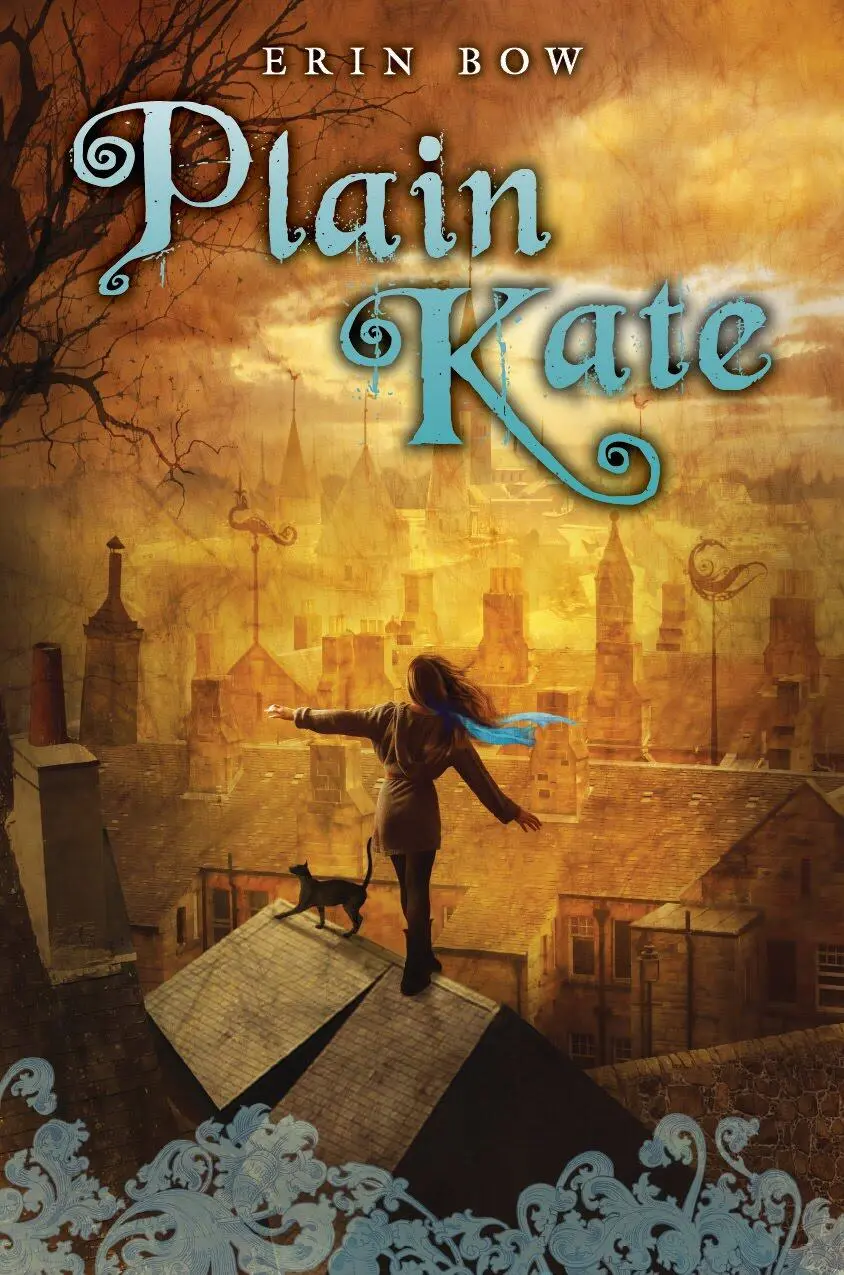
- Название:Plain Kate
- Автор:
- Издательство:Scholastic Inc.
- Жанр:
- Год:2010
- ISBN:9780545166645
- Рейтинг книги:3 / 5. Голосов: 1
-
Избранное:Добавить в избранное
- Отзывы:
-
Ваша оценка:
Plain Kate: краткое содержание, описание и аннотация
Предлагаем к чтению аннотацию, описание, краткое содержание или предисловие (зависит от того, что написал сам автор книги «Plain Kate»). Если вы не нашли необходимую информацию о книге — напишите в комментариях, мы постараемся отыскать её.
Plain Kate — читать онлайн бесплатно полную книгу (весь текст) целиком
Ниже представлен текст книги, разбитый по страницам. Система сохранения места последней прочитанной страницы, позволяет с удобством читать онлайн бесплатно книгу «Plain Kate», без необходимости каждый раз заново искать на чём Вы остановились. Поставьте закладку, и сможете в любой момент перейти на страницу, на которой закончили чтение.
Интервал:
Закладка:
Daj did make the cake. But Kate was frustrated. She could not go to Rye Baro to show her objarka. She could not go to the men’s fire at all, or stir the food, or fetch the water. Every time she tried to do something useful she stumbled over some new rule, and she spent long days sitting on a trestle bench, with her carving in her lap. The rose hedge dripped on her. Cream tried to eat her hair.
It was strange not to be walking, and not to be working. Plain Kate felt sullen and stupid—but the horror raised by the thing they had summoned was fading in her.
Drina brightened day by day, and was soon sitting by Plain Kate, making little bundles of feather and twig and blossom, hiding them in the folds of her skirt whenever anyone glanced their way.
“Charms,” said Kate. They made her uneasy. Linay had called them foolish, and she had a feeling he might know. And she thought they could draw the wrong kind of eyes. But she did not know how to tell any of that to Drina. She settled for: “What if your father sees?”
“Faw,” sniffed Drina, sounding like Taggle when he got a paw wet. “He’s with the Oksar men, getting drunk and talking about the rain as if it were the end of the world. There’s a sleeping sickness or something. They’re all fluttered up like chickens under a hawk.”
Drina plucked a red thread free from the fraying poppies embroidered on her skirt. She bit through it, then tied the bundle off with a jerk. “We need these. They will help me find the right person—someone who knows how to call a shadow. We cannot just go into the market asking. These bundles will show my gift, to those who know how to look.
“Besides,” she said, “they’ll add to your silver.”

They stayed three more days with Pan Oksar, and then they struck the tents, harnessed the horses, knocked the mud from their wheels, and went off down the road to Toila. The first night on the road, Plain Kate went with Daj to the men’s fire, to present her objarka.
Plain Kate curtsied and knelt, and offered the objarka to Rye Baro with both hands.
He took it with both hands. He raised it up.
Plain Kate had brought only one objarka to show: her best. It was an owl-eyed human face with antlers and a seducer’s smile. She stayed kneeling and watched Rye Baro meet the thing’s eyes. She could hear her father’s voice: The magic of carving is to tell people the truth. What was that lush wooden mouth saying?
It was Linay’s mouth, she realized abruptly. That was why it frightened her.
Rye Baro’s face was impassive. No one else spoke. The inspection stretched and stretched. Daj shifted behind Kate, creaking from knee to knee. “By the Black Lady, Rye,” she said. “Don’t tease the child!”
Rye Baro laughed. “Well, does she not know she is good? Good!” He handed the carving to Daj. “You’ve a gift, Kate Carver. Your hands know things.”
Daj looked at the carving. “Aye, good does not begin it. It’s beautiful, mira . In its own horrid way, of course. There’s craft in those hands.”
“Too much craft,” said Stivo, taking the carving. “The gadje don’t know craft. They won’t pay for it. It is good, though”—and here he smiled at her, both scorn and peace offering—“little girl.”
“Soon we will see what the gadje have a mind to pay for,” Rye Baro rumbled. “We will press for Toila tomorrow. And there’s that riding colt that you broke without craft, Stivo. Xeri, the one who eats. See if you can sell him before we’re stuck with the feeding of him for the winter.”
“Ah,” said Behjet, coming to his brother Stivo’s rescue. “Xeri’s a good beast at heart. We’ll wash him in the river and comb him till he shines. All of Toila will cover their eyes against his brightness.”
They fell into talking about the horses, and Plain Kate got up quietly and went back to the red vardo , where Taggle was keeping her bedding warm.
And the next day they went to Toila.
seven
toila
Toila was bigger than Samilae, and had three markets: the market of the animals, the market of the vegetables, and the market of the steps. Which, Drina explained, did not of course sell steps, but was held on the broad steps of the tithe barn, near the river. “It’s a city,” she said as if city were another word for “wonderful.” And she turned a handspring, just because she could. Taggle copied her: gray twist and silver flash.
“It’s a city,” echoed Behjet. “And in a city Roamers must be careful. Remember that, girls. Stay together.”
Behjet and Stivo led the dray colt off down a cobbled alleyway, his hoofbeats thudding off the stone walls of the buildings close at either side. Kate had never seen so much stone. She and Drina seemed small in the middle of it.
“This way,” said Taggle, and sauntered off with a curl in his tail. “They’re selling fish cakes!”
They followed him through little nooks and twists, meeting only narrow-faced saints in niches, guarding nothing. To Kate, so long among the Roamers, the figures she had once carved looked foreign. The girls began to think they were lost. But then the alley turned and spilled through a wooden arch and into the market.
Huge and loud, the market stopped them, gaping. Just in front of them lengths of homespun in russet and ocher and indigo flapped in the wind off the river, tossing little showers of rain, chopping the view into confusing glimpses. Banks of spices. Songbirds screeching in cages. Wheels stacked in a heap. The scorched-metal smell of a smithy, the stink of a tanner. There were stalls and blankets, and barrows and people everywhere. The town’s weizi stabbed upward from the center of the market, like one tree left standing in a shattered forest. Scenes of commerce were carved in its sides.
Drina was pressed close to Kate, her confidence gone. Taggle was perched between Drina’s feet, with his tail straight in the air and his eyes round and shining.
“Move there!” came a voice from behind. A handcart crashed into Kate’s back, crunching into her pack-basket. Plain Kate staggered and the cart spilled tin pitchers and cups clashing across cobbles. The carter glared. “What’s this? A country mouse and a Roamer pickpocket? Taking the air, are we, girls? Seeing the sights? Blocking the road, at any rate.” Plain Kate had stooped to gather the pitchers, but at this she straightened up. She took Drina’s elbow, and they walked off like ladies.
The unpleasant carter had at least helped Drina find her tongue. “The great market of Toila,” she said, “is held only thrice a summer. So it can’t always be so…much.” This seemed to comfort her. They threaded their way into the press and the noise, looking for a place to sell Plain Kate’s carvings.
The girls settled on a place at the bottom of the broad steps—a prime spot neglected by the other sellers because it had recently been favored by some horse. Drina, a horsewoman in her heart, kicked the knobs of dung away with no trace of disgust. Nearby a fiddler with white hair was playing for coin. Plain Kate’s heart jerked, but then the fiddler turned, and she saw his face, and it was not Linay.
“We should have brought a blanket,” said Drina, startling Kate free of her focus on the fiddler. “For your charms.”
“Objarka, not charms,” Kate corrected. “They’re not magic. I don’t have a blanket, but my sleep roll is in my pack.” She hated to put the clean fur down on the dung-smirched cobbles, but she did. She spaced the carved faces evenly, and when that was done, she looked up. There was no gathered crowd, but a few passersby gave glances, pursing mouths and raising eyebrows. That was enough to tell Kate, who had spent her life in a market, that her work would sell.
Читать дальшеИнтервал:
Закладка:
Похожие книги на «Plain Kate»
Представляем Вашему вниманию похожие книги на «Plain Kate» списком для выбора. Мы отобрали схожую по названию и смыслу литературу в надежде предоставить читателям больше вариантов отыскать новые, интересные, ещё непрочитанные произведения.









Обсуждение, отзывы о книге «Plain Kate» и просто собственные мнения читателей. Оставьте ваши комментарии, напишите, что Вы думаете о произведении, его смысле или главных героях. Укажите что конкретно понравилось, а что нет, и почему Вы так считаете.