Unknown - i a3f9967826fa0ec9
Здесь есть возможность читать онлайн «Unknown - i a3f9967826fa0ec9» весь текст электронной книги совершенно бесплатно (целиком полную версию без сокращений). В некоторых случаях можно слушать аудио, скачать через торрент в формате fb2 и присутствует краткое содержание. Жанр: Старинная литература, на английском языке. Описание произведения, (предисловие) а так же отзывы посетителей доступны на портале библиотеки ЛибКат.
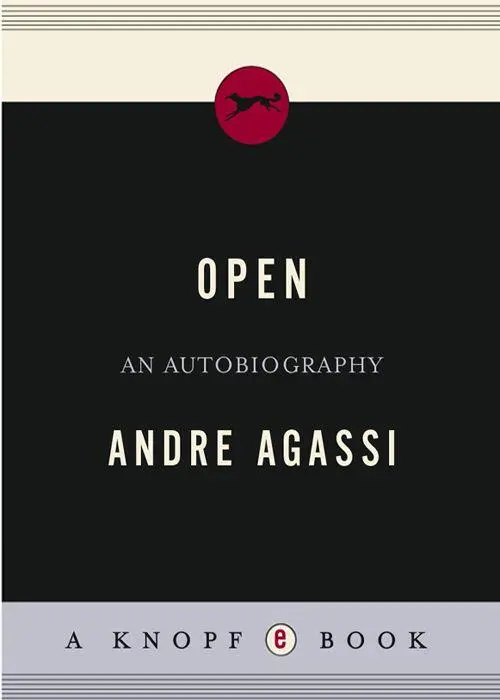
- Название:i a3f9967826fa0ec9
- Автор:
- Жанр:
- Год:неизвестен
- ISBN:нет данных
- Рейтинг книги:5 / 5. Голосов: 1
-
Избранное:Добавить в избранное
- Отзывы:
-
Ваша оценка:
i a3f9967826fa0ec9: краткое содержание, описание и аннотация
Предлагаем к чтению аннотацию, описание, краткое содержание или предисловие (зависит от того, что написал сам автор книги «i a3f9967826fa0ec9»). Если вы не нашли необходимую информацию о книге — напишите в комментариях, мы постараемся отыскать её.
i a3f9967826fa0ec9 — читать онлайн бесплатно полную книгу (весь текст) целиком
Ниже представлен текст книги, разбитый по страницам. Система сохранения места последней прочитанной страницы, позволяет с удобством читать онлайн бесплатно книгу «i a3f9967826fa0ec9», без необходимости каждый раз заново искать на чём Вы остановились. Поставьте закладку, и сможете в любой момент перейти на страницу, на которой закончили чтение.
Интервал:
Закладка:
Stan says, You have to figure out a way to occupy more of their day. Otherwise it’s one step forward, two steps back. You really want to make a difference? You want to have a lasting impact? You need more of their day. In fact, you need all of their day.
So in 1997 I huddle again with Perry, and we hit on the idea of adding education to our work. Then we decide to make education our work. But how? We briefly consider opening a private school, but the bureaucratic and financial obstacles are too much. By chance I catch a story on 60 Minutes about charter schools, and it’s the eureka moment. Charter schools are partly state funded, partly privately funded. The challenge is raising money, but the benefit is retaining full control. With a charter school we could do things the way we want. We’d be free to build something unique. Special. And if it works, it can spread like wildfire. It can be a model for charter schools around the nation. It can change education as we know it.
I can’t believe the irony. A 60 Minutes piece caused my father to send me away, to break my heart, and now a 60 Minutes piece lights the way home, gives me the map to find my life’s meaning, my mission. Perry and I resolve to build the best charter school in America. We resolve to hire the best teachers, pay them well, and hold them accountable for grades and test scores. We resolve to show the world what can be done when you set standards outrageously high and open the purse strings. We shake on it.
I’ll give millions of my own money to launch the school, but we’ll need to raise many more millions. We’ll issue a $40 million bond, then pay it off by parlaying and trading on my fame.
At last my fame will have a purpose. All those famous people I’ve met at parties and through Brooke—I’ll ask them to give their time and talent to my school, to visit the children, and to perform at an annual fund-raiser, which we’re calling the Grand Slam for Children.
WHILE PERRY AND I are scouting locations for our school, I get a call from Gary Muller, a South African who used to play and coach on the tour. He’s organizing a tennis event in Cape Town to raise money for the Nelson Mandela Foundation. He asks if I’d like to take part.
We don’t know if Mandela’s going to be there, he says.
If there’s even a remote chance, I’m in.
Gary calls right back. Good news, he says. You’re going to get to meet The Man.
You’re kidding.
He’s confirmed. He’s coming to the event.
I grip the phone tighter. I’ve admired Mandela for years. I’ve followed his struggles, his im-prisonment, his miraculous release and stunning political career, with awe. The idea of actually meeting him, speaking to him, makes me dizzy.
I tell Brooke. It’s the happiest she’s seen me in a long time, which makes her happy. She wants to come. The event happens to be a short flight from where she stayed while filming her Africa movie, back in 1993, when we first started faxing.
She immediately goes shopping for matching safari outfits.
J.P. shares my reverence for Mandela, so I invite him to join us on the trip, and bring his wife, Joni, whom Brooke and I both love. The four of us fly to South America, then catch another plane to Johannesburg. Then we hop a rickety prop plane into the heart of Africa.
A storm forces us to make an unscheduled landing. We batten down in a straw-roofed hut in the middle of nowhere, and over the sound of the thunder we can hear hundreds of animals run for cover. Looking out of the hut, over the vast savannah, watching storm clouds whirl along the horizon, J.P. and I agree this is one of those moments. We’re both reading Mandela’s memoir, Long Walk to Freedom, but feeling like heroes in a Hemingway novel. I think about something Mandela said once in an interview: No matter where you are in life, there is always more journey ahead. And I think of one of Mandela’s favorite quotes, from the poem Invictus, which sustained him during those moments when he thought his journey had been cut short: I am the master of my fate: I am the captain of my soul.
After the storm passes we pile back into the prop plane and fly to a game reserve. We spend three days on safari. Every morning, before dawn, we climb into a Jeep. We drive and drive, then abruptly stop. We sit for twenty minutes in pitch dark, the engine running. As the dawn slowly breaks we find that we’re on the banks of a vast fog-covered marsh, surrounded by dozens of different kinds of animals. We see hundreds of impala. We see at least seventy-five zebras. We see scores of giraffes as tall as two-story buildings, dancing around us and gliding among the trees, nibbling from the highest branches, a sound like celery being crunched. We feel the landscape speaking to us: All these animals, beginning their day in a dangerous world, exude tremendous calm and acceptance—why can’t you?
With us are a driver and a shooter. The shooter is named Johnson. We love Johnson.
He’s our African Gil. He stands guard. He knows we love him, and he smiles with the pride of a crack shot. He also knows the landscape better than the impalas do. At one point he waves his hand at the trees and a thousand small monkeys, as if on cue, fall to the ground, like autumn leaves.
In South Africa, on safari with Brooke, late 1997, days before meeting Mandela
We’re driving deep into the bush one morning when the Jeep shudders, swerves, and we go spinning off to the right.
What happened?
We nearly ran over a lion sleeping in the middle of the road.
The lion sits up and stares with an expression that says, You woke me. His head is enormous. His eyes are the color of lemon-lime Gatorade. The smell of him is a musk so primal that it makes us lightheaded.
He has hair like I used to have.
Do not make a sound, the driver whispers.
Whatever you do, Johnson whispers, do not stand up.
Why?
The lion looks at us as one big predator. Right now he’s afraid of us. If you stand, he’ll see that we’re several smaller people.
Fair enough.
After a few minutes, the lion backs away, into the bush. We drive on.
Later, returning to our campsite, I lean into J.P. and whisper: I need to tell you something.
Fire away.
I’m going through—well, a tough time right now. I’m trying to put some bad stuff behind me.
What’s the problem?
I can’t go into it. But I wanted to apologize if I seem—different.
Well, now that you mention it, you do. You have. But what’s going on?
I’ll tell you when I know you better.
He laughs.
Then he sees that I’m not kidding. He asks, Are you OK?
I don’t know. I honestly don’t know.
I want to tell him about the depression, the confusion, the time with Slim, the pending suspension from the ATP. But I can’t. Not now. Not until it’s all farther behind me. At the moment it feels like the lion, still inches away and glowering. I don’t want to give voice to my problems, for fear of rousing them, making them pounce. I just want to alert J.P. to their presence.
I also tell him that I’m doubling down on tennis, and if I can pull through this tough time, if I can come back, everything is going to be different. I’m going to be different. But even if I can’t, even if I’m finished, even if I lose everything, I’m still going to be different.
He says, Finished?
I just wanted you to know.
It’s like a confession, a testimony. J.P. looks at me with sadness. He squeezes my arm and tells me, in so many words, that I am the captain of my fate.
WE TRAVEL TO CAPE TOWN, where I play tennis with obvious impatience, like a child doing chores on Saturday morning. Then, at last, it’s time. We helicopter to a compound, and Mandela himself greets us at the helipad. He’s surrounded by photographers, dignitaries, reporters, aides—and he towers above them all. He looks not only taller than I expected, but stronger, healthier. He looks like a former athlete, which surprises me, given his years of hard labor and torture. But of course he is a former athlete, a boxer in his youth—and in prison, he says in his memoir, he kept fit by running in place in his cell and playing tennis occasionally on a crude, makeshift court. For all his strength, however, his smile is sweet, almost angelic.
Читать дальшеИнтервал:
Закладка:
Похожие книги на «i a3f9967826fa0ec9»
Представляем Вашему вниманию похожие книги на «i a3f9967826fa0ec9» списком для выбора. Мы отобрали схожую по названию и смыслу литературу в надежде предоставить читателям больше вариантов отыскать новые, интересные, ещё непрочитанные произведения.


Обсуждение, отзывы о книге «i a3f9967826fa0ec9» и просто собственные мнения читателей. Оставьте ваши комментарии, напишите, что Вы думаете о произведении, его смысле или главных героях. Укажите что конкретно понравилось, а что нет, и почему Вы так считаете.