Unknown - i a3f9967826fa0ec9
Здесь есть возможность читать онлайн «Unknown - i a3f9967826fa0ec9» весь текст электронной книги совершенно бесплатно (целиком полную версию без сокращений). В некоторых случаях можно слушать аудио, скачать через торрент в формате fb2 и присутствует краткое содержание. Жанр: Старинная литература, на английском языке. Описание произведения, (предисловие) а так же отзывы посетителей доступны на портале библиотеки ЛибКат.
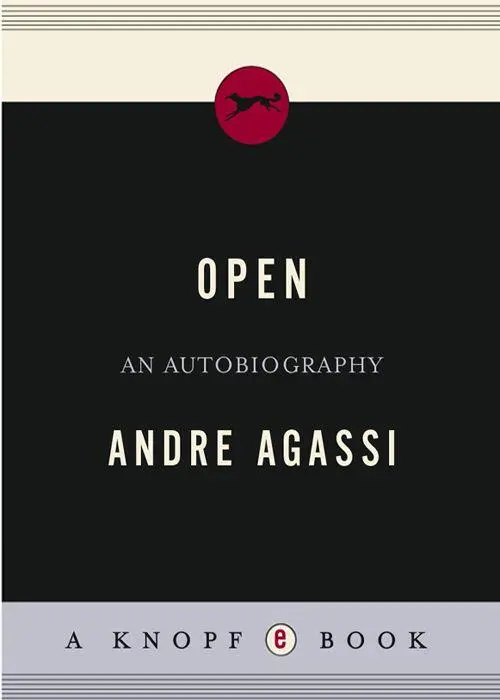
- Название:i a3f9967826fa0ec9
- Автор:
- Жанр:
- Год:неизвестен
- ISBN:нет данных
- Рейтинг книги:5 / 5. Голосов: 1
-
Избранное:Добавить в избранное
- Отзывы:
-
Ваша оценка:
i a3f9967826fa0ec9: краткое содержание, описание и аннотация
Предлагаем к чтению аннотацию, описание, краткое содержание или предисловие (зависит от того, что написал сам автор книги «i a3f9967826fa0ec9»). Если вы не нашли необходимую информацию о книге — напишите в комментариях, мы постараемся отыскать её.
i a3f9967826fa0ec9 — читать онлайн бесплатно полную книгу (весь текст) целиком
Ниже представлен текст книги, разбитый по страницам. Система сохранения места последней прочитанной страницы, позволяет с удобством читать онлайн бесплатно книгу «i a3f9967826fa0ec9», без необходимости каждый раз заново искать на чём Вы остановились. Поставьте закладку, и сможете в любой момент перейти на страницу, на которой закончили чтение.
Интервал:
Закладка:
So I’ll lose today. Congratulations, Chang. I hope you and your Messiah will be very happy.
But losing on purpose isn’t easy. It’s almost harder than winning. You have to lose in such a way that the crowd can’t tell, and in a way that you can’t tell—because of course you’re not wholly conscious of losing on purpose. You’re not even half conscious. Your mind is tanking, but your body is fighting on. Muscle memory. It’s not even all of your mind that purposely loses, but a breakaway faction, a splinter group. The deliberately bad decisions are made in a dark place, far below the surface. You don’t do those tiny things you need to do. You don’t run the extra few feet, you don’t lunge. You’re slow to come out of stops. You hesitate to bend or dig. You get handsy, not using your legs and hips. You make a careless error, compensate for the error with a spectacular shot, then make two more errors, and slowly but surely you slide backward. You never actually think, I’m going to net this ball. It’s more complicated, more insidious.
At the post-match news conference Brad tells reporters: Today, Andre hit the wall.
True, I think. So very true. But I don’t tell Brad that I hit the wall every day. It would crush him to know that today the wall felt good, that I kissed the wall, that I’m glad I lost, that I’d rather be on that plane back to Los Angeles than lacing them up for a rematch with our old friend B. B. Socrates. I’d rather be anywhere but here—even Hollywood, my next stop. Since I lost, I’ll get home just in time to watch the Super Bowl, followed by the special hour-long episode of Friends, featuring Brooke Shields.
19
PERRY GRINDS ME EVERY DAY, asking what’s wrong, what’s the matter. I can’t tell him. I don’t know. More accurately, I don’t want to know. I don’t want to admit to Perry or myself that a loss to Pete can have this kind of lingering effect. For once I don’t want to sit with Perry and try to unravel the skeins of my subconscious. I’ve given up on understanding myself. I have no interest in self-analysis. In the long, losing struggle with myself, I’m tanking.
I go to San Jose and get annihilated by Pete. Definitely not what the doctor ordered. I lose my temper several times during the match, cursing at my racket, screaming at myself. Pete looks bemused. The umpire penalizes me for swearing.
Oh, you like that? Here, take this.
I serve a ball into the upper deck.
I go to Indian Wells, lose to Chang in the quarters. I can’t face the post-match press conference. I skip out, pay a hefty fine. I go to Monte Carlo. I lose to Alberto Costa of Spain in fifty-four minutes. As I walk off the court I hear whistles, catcalls. They may as well be coming from inside my heart. I want to yell at the crowd: I agree!
Gil asks me, What is it?
I tell him. I come right out with it. Since losing to Pete at the U.S. Open, I’ve lost the will.
Then let’s not do this, Gil says. We’ve got to be clear on what we’re doing.
I want to quit, I say, but I don’t know how—or when.
At the 1996 French Open I’m coming unglued. I’m screaming at myself all through my first-round match. I receive an official warning. I scream louder. I’m penalized a point. I’m one motherfucking cocksucker away from getting DQ’d for the tournament. Rain starts to fall, and during the delay I sit in the locker room and stare straight ahead as if hypnotized. When play resumes I outlast my opponent, Jacobo Díaz, whom I can’t see. He’s as blurry and watery as the reflections in the rain puddles along the alleys of the court.
Beating Díaz merely delays the inevitable. In the next round I lose to Chris Woodruff, from Tennessee. He always reminds me of a country-western singer, and plays as if he’d rather be performing at a rodeo. He’s even more awkward on clay, and to compensate he gets aggressive, especially on his backhand. I can’t counter his aggression. I make sixty-three unforced errors. He reacts with unbridled joy, and I gaze at him, coveting not his victory but his enthusiasm.
Sportswriters accuse me of tanking, not going for every ball. They never get it right. When I tank, they say I’m not good enough; when I’m not good enough, they say I tank. I nearly tell them I wasn’t tanking, that I was torturing myself for not being good enough. Whenever I know that I don’t deserve to win, that I’m unworthy of winning, I torture myself. You could look it up.
But I don’t say anything. Once again I leave the stadium without sitting for the obligatory news conference. Once again I happily pay the fine. Money well spent.
BROOKE TAKES ME TO A JOINT in Manhattan where the front room is smaller than a phone booth but the main dining room is big and warm and mustard yellow. Campagnola—I like the way she says it, I like the way it smells, I like the way we both feel as we walk in off the street. I like the autographed photo of Sinatra next to the coat room.
This is my favorite place in New York, Brooke says, so I christen it my favorite too. We sit in a corner, eating a light meal in that hazy twilight hour between the lunch crowd and the dinner rush. They don’t normally serve food at this hour, but the manager says in our case they’ll make an exception.
Campagnola quickly becomes an extension of our kitchen, and then of our entire relationship. Brooke and I go there to remind ourselves of the reasons we’re good together. We go there on special occasions, and we go there to make humdrum weekdays feel like special occasions. We go there so often and so automatically after every match at the U.S. Open that the chefs and waiters begin to set their watches by us. In a fifth set I sometimes find myself thinking of the gang at Campagnola, knowing that they’re keeping one eye on the TV while prepping the mozzarella, tomatoes, and prosciutto. I know, as I’m bouncing the ball, just about to serve, that I’ll soon be seated at the corner table, eating buttery fried shrimp with white wine sauce and lemon, plus a side of raviolis so soft and sweet they should count as dessert. I know that when Brooke and I walk in the door, win or lose, the place will erupt with applause.
Campagnola’s manager, Frankie, is always dressed razor sharp, Gil sharp. Italian suit, flowered tie, silk handkerchief. He always greets us with a gap-toothed smile and a fresh batch of funny stories. He’s a second father to me, Brooke says when she introduces us, and those are magic words. Surrogate father is a role for which I have the greatest respect, so I like Frankie right away. Then he buys us a bottle of red, tells us about the celebs and grifters and bankers and mobsters who hang out in his joint, makes Brooke laugh until her cheeks are pink, and now I like him for my own reasons.
Frank says, John Gotti? You want to know about Gotti? He always sits right over there, corner table, facing out. If anybody’s going to take him down, he wants to see it coming.
I feel the same way, I say.
Frankie laughs darkly, then nods. I know, right?
Frankie is honest, hardworking, sincere, my kind of people. I find myself looking for his face the moment we walk through the door. I feel better, my aches and anxieties fade, when Frankie throws out his arms and smiles and whisks us to our table. Sometimes he kicks out other customers, and Brooke and I pretend not to notice their frowning and complaining.
Frankie’s chief virtue, in my book, is the way he talks about his kids. He loves them, brags about them, pulls out photos of them at the drop of a hat. But clearly he worries about their future. Running a hand over his tired face one night, he tells me his kids are only in grade school, but he’s already stressed about college. He groans about the cost of higher education. He doesn’t know how he’s going to make it.
Читать дальшеИнтервал:
Закладка:
Похожие книги на «i a3f9967826fa0ec9»
Представляем Вашему вниманию похожие книги на «i a3f9967826fa0ec9» списком для выбора. Мы отобрали схожую по названию и смыслу литературу в надежде предоставить читателям больше вариантов отыскать новые, интересные, ещё непрочитанные произведения.





Обсуждение, отзывы о книге «i a3f9967826fa0ec9» и просто собственные мнения читателей. Оставьте ваши комментарии, напишите, что Вы думаете о произведении, его смысле или главных героях. Укажите что конкретно понравилось, а что нет, и почему Вы так считаете.